Microwave rice can be a healthy choice on busy weeknights. The short answer is yes, often it is, especially if the pouch is mostly plain rice with little added salt or fat, and you use it as part of a balanced meal rather than the whole meal on its own.
Where it becomes less healthy is usually not the rice itself, but what has been added to it, how much is in the pouch, and how often it replaces meals built around vegetables, protein and fibre. A packet of plain brown or basmati rice is very different from a creamy, heavily seasoned pouch designed to taste like a takeaway side.
What microwave rice is and what makes one pouch different from another
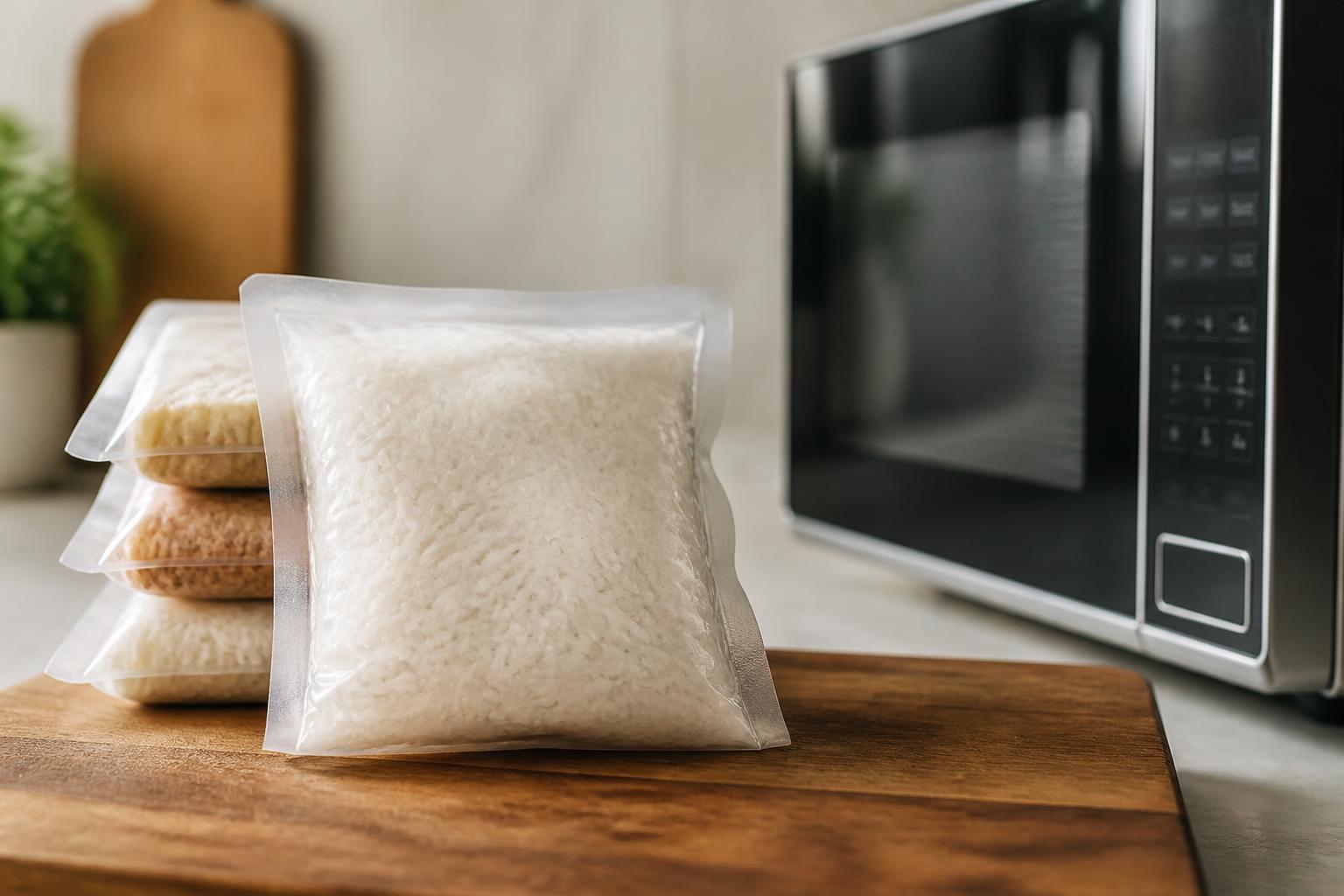
Microwave rice is pre-cooked rice that has already been steamed or boiled during manufacture, then sealed in a pouch or tray so it can be reheated in a couple of minutes. That is what makes it convenient. You are not cooking raw rice from scratch, you are warming fully cooked rice that has been packed to keep it safe and shelf stable until opened.
That convenience matters on weeknights. It removes rinsing, simmering and timing from the job of getting dinner on the table. It also reduces the chance of undercooked rice or a pan boiling dry. For people who are tired, short on time, or cooking for one, that can be the difference between making a quick meal and ordering something less balanced.
Nutritionally, microwave rice starts from the same place as other cooked rice. The main ingredient is usually rice, which provides carbohydrate and some protein, with small amounts of vitamins and minerals depending on the variety. Brown rice and wholegrain blends usually provide more fibre than white rice. Basmati, jasmine, long grain, brown, red rice blends and quinoa mixes all differ slightly in texture and nutrition, but the biggest health differences usually come from what else is added.
One pouch may contain only rice and a little oil. Another may include flavourings, sauces, coconut milk, butter, cream, sugar or a fair amount of salt. Some are sold as savoury side dishes rather than plain rice, and it shows on the label. That is why two products sitting next to each other in the same aisle can be very different choices.
The pack size matters too. In the UK, many microwave rice pouches are sold as two portions, but plenty of people eat the whole pouch. If the front says two servings but the pouch is treated as one, the salt, calories and saturated fat all need to be judged on the full pack, not the smaller serving listed first in the nutrition table.
Is microwave rice healthy?
For most people, microwave rice can fit perfectly well into a healthy diet. It is not automatically less healthy just because it is processed. Processing is a broad term, and not all processed foods are nutritionally poor. Pre-cooking and packing rice for convenience is a form of processing, but that alone does not make it a bad option.
The better way to answer whether microwave rice is healthy is to look at four things. First, what is in it. Second, how much you are eating. Third, what you eat with it. Fourth, how often it appears in place of less processed staples.
If you choose a plain pouch with a short ingredient list, microwave rice is usually nutritionally similar to cooked rice you would make at home. It gives you a quick base for a meal and can help you avoid skipping dinner or relying on something much higher in salt, saturated fat or calories. In that sense, convenience can support healthier eating rather than undermine it.
It is also useful to keep perspective. Rice is mainly a carbohydrate food. It is not meant to provide everything on its own. Judging it as though it should contain the protein of fish, the fibre of beans and the micronutrients of vegetables misses the point. A pouch of rice is a component of a meal, not the finished article.
The less positive side is that some microwave rice products are designed for flavour first. They may contain more oil, more saturated fat, and more salt than you would add at home. Some include creamy or buttery ingredients that shift them from a simple starch to something closer to a rich side dish. That does not mean you need to avoid them entirely, but it does mean they are best treated differently from plain rice.
Wholegrain options deserve a mention. Brown microwave rice can be a particularly useful choice because it combines convenience with more fibre than white rice. Fibre helps with fullness and supports digestive health. If you are trying to make everyday meals more filling, wholegrain pouches can help.
So, is microwave rice healthy? Often yes, especially the simpler versions. It is healthiest when it is plain or lightly seasoned, sensibly portioned, and paired with foods that add protein, fibre and vegetables.
What to check on the label before you buy
The quickest way to compare pouches is to turn them over and read both the ingredients list and the nutrition table. If you want a refresher on the basics, our guide to reading food packaging labels with less guesswork goes through the format used on UK packs.
Start with the ingredients. Ideally, the first ingredient should simply be rice, or rice plus other grains or pulses if it is a blend. A little oil is common and not necessarily a problem. What you want to notice are extras that change the nutrition significantly, such as butter, cream, coconut cream, lots of flavourings, or a long list of added ingredients.
Next, check the salt. In the UK, labels may show salt directly, which is easier than sodium. Plain rice can be very low in salt, while flavoured pouches may contain much more. As a rough guide, foods with 0.3g of salt or less per 100g are considered low in salt, while 1.5g or more per 100g is high. A microwave rice pouch does not need to meet the low threshold to be acceptable, but if you are comparing two similar products, the lower salt one is often the better everyday choice.
Then look at saturated fat. This matters most for products with added sauces, coconut, butter or creamy flavourings. Plain rice is naturally low in saturated fat. If a pouch is much higher, it is usually because of added ingredients rather than the rice itself.
Fibre is worth checking, especially if you are deciding between white and brown rice. Wholegrain and pulse-based blends generally come out better here. Higher fibre options tend to be more filling and can make a quick meal feel more substantial.
Portion size is one of the biggest traps. Many UK microwave rice pouches are labelled as two servings. If you know you will eat the whole pouch, read the nutrition per 100g and per pack, or calculate the full amount from the stated serving. This is particularly important for salt and calories. A product can look moderate per serving but much less so when the whole pack is eaten.
Wholegrain content is another useful marker. If the front says wholegrain, brown rice, or a grain blend, check how much of the mix is actually wholegrain. Some products contain only a small proportion, while others are mostly wholegrain rice. The ingredients list is ordered by weight, so it gives you a good clue.
If you have allergies or intolerances, read the pack carefully, especially for flavoured varieties. We have a separate guide on reading allergen labels without missing the risks, which is useful for rice pouches with added seasonings and sauces.
One final UK point, front of pack traffic light labels are common but not universal. When they are present, they can help you compare salt, fat, saturates and sugar at a glance. Still, the full nutrition panel and ingredients list tell you more.
When microwave rice is less healthy
Microwave rice becomes a poorer choice in a few predictable situations.
The first is when it is heavily flavoured. Rice with creamy sauces, strong seasonings, added cheese, butter or coconut can contain considerably more salt and saturated fat than plain rice. That may be fine occasionally, but it is not the same everyday option as a simple pouch of brown or basmati rice.
The second is when the portion quietly doubles. Eating a full pouch that is labelled as two servings is common, especially if the rice is the main part of the meal. That can push the meal towards being high in calories without adding much protein or veg to balance it.
The third is when rice becomes the whole dinner. A pouch eaten on its own, or with only a little sauce, is unlikely to be especially filling for long. It is usually low in vegetables and may be low in protein. That can leave you hungry later, or reaching for snacks because the meal was not balanced.
The fourth is frequency. There is nothing wrong with using microwave rice regularly, but if every rushed dinner is a refined white rice pouch with a salty sauce and very little else, the pattern matters more than any single product. A healthy diet is built from repeated habits.
Another issue is assuming all convenience foods are equivalent. Plain microwave rice is one thing. A pouch marketed as spicy, smoky, creamy or take-away style can be much closer to a ready-made side dish. The more ingredients added for flavour, the more carefully it is worth checking the label.
How to make microwave rice part of a balanced meal
The easiest way to make microwave rice work well is to treat it as the carbohydrate part of dinner, then build around it.
Add vegetables generously. Frozen peas, sweetcorn, spinach, broccoli, peppers, green beans and stir fry mixes all cook quickly and pair easily with rice. Even adding a handful of microwave steamed veg on the side improves the balance of the meal.
Add a source of protein. Good quick options include beans, lentils, eggs, tofu, tinned fish, leftover chicken, prawns or a fillet of salmon. Protein helps with fullness and turns a side into a meal.
A few practical combinations work particularly well on busy nights:
Plain brown rice with black beans, salsa and mixed peppers.
Basmati rice with a couple of fried or poached eggs and wilted spinach.
Wholegrain rice with tinned mackerel or salmon, peas and lemon.
Long grain rice with chickpeas, roasted vegetables and a spoon of yoghurt.
Jasmine rice with tofu, broccoli and a lighter soy, ginger and garlic dressing.
If you are using a more strongly flavoured pouch, keep the rest of the meal simpler. For example, a seasoned rice pouch may work best with plain grilled chicken or baked fish and a large side of vegetables, rather than another salty or rich component.
You can also stretch one pouch further by mixing in vegetables and pulses. Stirring through lentils, edamame beans, peas or chopped mushrooms increases fibre and bulk without much extra effort. This is useful if one pouch feels too small for two people but too much for one.
For people trying to stay fuller for longer, the most effective upgrades are usually more veg, a clear protein source, and choosing wholegrain rice more often. Those changes matter more than chasing a perfect pouch.
Food safety matters with cooked rice
Cooked rice needs careful handling because it can carry bacteria called Bacillus cereus. These bacteria can survive cooking, and if cooked rice is left standing at room temperature for too long, they can multiply and produce toxins that may cause food poisoning. Reheating will not always make those toxins harmless.
That is why the safety advice around cooked rice matters, whether it came from a saucepan or a microwave pouch.
If the pouch says heat and eat, follow the pack instructions. Some microwave rice is intended to be eaten immediately after heating and not reheated again. Once opened, treat it like any other cooked rice.
If you do not use all of it, cool leftovers quickly and refrigerate them as soon as possible. In UK food safety advice, cooked rice should not be left out at room temperature for long. Get it into the fridge promptly, ideally within an hour or two, and sooner in a warm kitchen.
Store leftovers chilled and eat them within a short time, usually by the next day. When reheating, make sure the rice is steaming hot all the way through. Reheat only once.
If you have packed rice into a lunchbox or meal prep container, the same principles apply. Chill it quickly after cooking or opening, keep it cold, and do not let it sit around for hours before eating.
This is one area where convenience can help. A sealed pouch that is opened only when needed reduces the amount of time cooked rice spends hanging around. The main risk tends to come after opening, when leftovers are forgotten on the side or cooled too slowly.
Microwave rice is not automatically a nutritional compromise. For many UK households, it is a practical staple that can make balanced dinners easier to manage. Choose simpler pouches more often, check salt and portion size, and add the foods that rice does not provide on its own. Done that way, it is a useful shortcut, not a problem food.

Questions about this article or a correction to suggest? Get in touch. Read more about our editorial approach.