Reading allergen information properly means doing more than scanning for one familiar word. In the UK, the safest approach is to check the full ingredients list, look for the allergen emphasis, read any precautionary warning such as “may contain”, and treat loose food as a separate conversation rather than assuming it works like a packaged product.
That matters because labels help you identify declared ingredients, but they do not remove every risk. A label can tell you that milk, egg or peanuts are intentionally used. It cannot always tell you exactly how much accidental cross-contact risk exists, whether a recipe changed since the last time you bought it, or whether a café dish was assembled exactly as you expected. Used properly, food allergen labels are an essential starting point, not the whole decision.
What UK allergen labels are designed to tell you
In the UK, allergen labelling is there to help people identify whether a food contains any of the allergens that must be declared by law when they are used as ingredients. On prepacked food, that usually means you can check the ingredients list and see the relevant allergen clearly emphasised.
That sounds straightforward, but it is worth separating two different jobs that readers often expect one label to do.
The first job is ingredients information. This tells you what the manufacturer has intentionally put into the product. If wheat flour, skimmed milk powder or sesame seeds are part of the recipe, that should be declared and highlighted in the ingredients list.
The second job is broader food safety decision-making. That is the part where you decide whether the product is suitable for you or someone you are buying for, taking into account not just ingredients but also precautionary warnings, the type of food, the manufacturing setting, and the severity of the allergy involved.
Those are not the same thing. A product can have no allergen warning beyond the ingredients list and still not be appropriate for every allergic person. Equally, a product can contain a “may contain” statement even though the allergen is not an intentional ingredient.
In the UK, this framework sits within specific food information and food safety rules. Since Natasha’s Law came into force, foods that are prepacked for direct sale, often shortened to PPDS, must carry a label with the name of the food and a full ingredients list with allergens emphasised. That changed what many people see in places such as cafés, sandwich shops and bakery counters where food is packed on site before sale. It also means UK readers may notice a difference between PPDS foods and other loose foods sold in the same setting.
If you want a wider refresher on the rest of a pack, not just allergens, our guide to reading food packaging labels with less guesswork is a useful companion.
Which allergens must be declared?
UK law requires businesses to declare 14 allergens when they are used as ingredients in food. These are:
- Celery
- Cereals containing gluten, namely wheat, rye, barley, oats, spelt, kamut, and their hybridised strains
- Crustaceans
- Eggs
- Fish
- Lupin
- Milk
- Molluscs
- Mustard
- Peanuts
- Sesame
- Soya
- Sulphur dioxide and sulphites, where they are present at more than 10 mg/kg or 10 mg/litre, expressed as SO2
- Tree nuts, namely almond, hazelnut, walnut, cashew, pecan, Brazil nut, pistachio and macadamia or Queensland nut
A few points in that list often catch people out.
First, “cereals containing gluten” is broader than many shoppers expect. It is not only wheat. Rye, barley and oats may also matter, depending on the condition or allergy involved. If someone is avoiding gluten because of coeliac disease, the question becomes different again, because coeliac disease is not the same as an IgE-mediated food allergy, even though the label reading habits can overlap.
Second, tree nuts are not one single ingredient in legal terms. The specific nuts in the legal list are the ones that must be declared. Peanuts are declared too, but they are separate from tree nuts because they are legumes, not nuts botanically. That distinction matters on labels.
Third, sulphites have a threshold. They must be declared when present above 10 mg/kg or 10 mg/litre, expressed as SO2. That is more technical than most allergen rules, but it is part of the legal requirement.
Where UK rules and EU rules differ in practice, the main point for everyday shoppers is that the UK retained the familiar 14-allergen approach after leaving the EU, so food sold in Great Britain still follows a very similar allergen declaration structure to what many readers will remember from EU labelling. Northern Ireland has its own position under post-Brexit arrangements, but for a shopper reading packs, the list of 14 declared allergens remains the key practical reference.
How to read an ingredients list properly
On prepacked food in the UK, declared allergens must be emphasised within the ingredients list. In practice, that emphasis is usually shown in bold, CAPITALS, italics, underlining, or a contrasting background. There is no single mandatory style, so the point is not the format itself but the fact that the allergen stands out from the surrounding text.
A careful read usually means working through the list in this order:
First, read the whole ingredients list, not just the allergen summary if one is provided. A “contains” box can be helpful, but the ingredients list is the core legal information.
Second, look for the emphasised allergens wherever they appear, including inside compound ingredients. For example, a lasagne may list pasta, sauce and cheese as separate components, and each of those may contain allergens. You may see something like “pasta (durum WHEAT semolina, EGG)” or “pesto (basil, cashew NUTS, hard cheese (MILK))”. If you only skim the first few words, you can miss the allergen buried inside a compound ingredient.
Third, recognise less familiar ingredient names. Milk may appear as whey, casein, caseinate, buttermilk powder or skimmed milk powder. Egg can show up in mayonnaise, meringue pieces or some glazes. Wheat may appear as semolina, couscous, bulgur wheat or farina. Soya may appear as soya flour, soya protein or tofu. Fish and crustaceans may be present in sauces, pastes and flavourings that do not look obvious from the front of pack.
Fourth, remember that “gluten-free” and “wheat-free” are not interchangeable terms, and neither is the same thing as “allergen-free”. Someone with a wheat allergy may need to avoid products that a person with coeliac disease could eat, and vice versa depending on the product and the source ingredients.
It is also worth checking every time you buy, even for products you know well. Recipes change. A cereal bar that used to contain no milk powder may now include it. A crisp flavour may switch from one seasoning blend to another. Imported products can also present ingredients in slightly different ways, which is one reason we suggest a more methodical approach in our article on how to read food labels for everyday healthier choices.
One more practical point, “vegan” is not an allergen claim. A vegan product should not intentionally contain milk or egg, but that does not automatically tell you anything about cross-contact with those allergens, and it says nothing about other allergens such as sesame, mustard or nuts.
What 'may contain' and similar warnings really mean
Precautionary allergen labelling includes phrases such as “may contain”, “not suitable for” someone with a named allergy, or “made in a factory that also handles” a particular allergen. These statements are not the same as ingredients declarations.
They are used to flag a risk of unintended allergen presence, often called cross-contact. That can happen when different products are made in the same site, on shared equipment, or in environments where cleaning and segregation reduce risk but cannot guarantee complete absence.
The key point is that “may contain” does not tell you the amount of allergen present, the likelihood that it is present in that pack, or how safe the product will be for a particular individual. It is a caution, not a measurement.
This is why a “may contain nuts” warning cannot be read as meaning “contains only tiny traces” or “is probably fine”. It also cannot be read as meaning “definitely contains nuts”. It sits in an uncertain middle ground, and that is frustrating, but it is better understood as a risk management statement than as a precise ingredient fact.
In the UK, precautionary warnings are not meant to be used as a substitute for good manufacturing controls. Businesses should not apply them casually to every product. In reality, shoppers still see them quite widely, and the wording is not fully standardised in a way that gives you a simple risk ranking from one phrase to another.
That means you should not assume that “made in a factory that also handles peanuts” is safer than “may contain peanuts”, or the other way round, unless you have direct information from the manufacturer that explains the difference.
For severe allergies, this is usually the point where a label alone stops being enough. Some people follow advice from their allergy specialist to avoid all products with precautionary allergen labelling for their trigger food. Others are given more tailored advice. The label supports that decision, but it does not make it for you.
How allergen information works for loose food, cafés and takeaways
Loose food does not work exactly like a supermarket packet. In the UK, businesses selling non-prepacked food still have to provide allergen information, but the format may be different.
For loose food sold in cafés, restaurants, bakeries, deli counters and takeaways, you should be able to get information about the 14 declared allergens. Sometimes this appears in writing on a menu, shelf ticket, allergen folder or digital ordering system. Sometimes you are told to ask staff.
That is a reasonable question to ask, and a responsible business should be able to answer it clearly. In practice, the most useful questions are specific:
- Does this dish contain any of the 14 allergens, especially the one I need to avoid?
- Is the allergen in the recipe, garnish, sauce, dressing or side?
- Is the food made to order, or prepared in advance?
- Is there a risk of cross-contact in fryers, grills, chopping areas or serving utensils?
- Has anything been substituted today?
Those questions matter because loose food often changes more quickly than packaged food. A café may switch bread supplier. A takeaway may use a different marinade. A bakery may display one item beside another with shared tongs. Staff need accurate information from recipes, specifications and kitchen procedures, but the customer still needs to ask in a way that gets beyond a quick “I think it’s fine”.
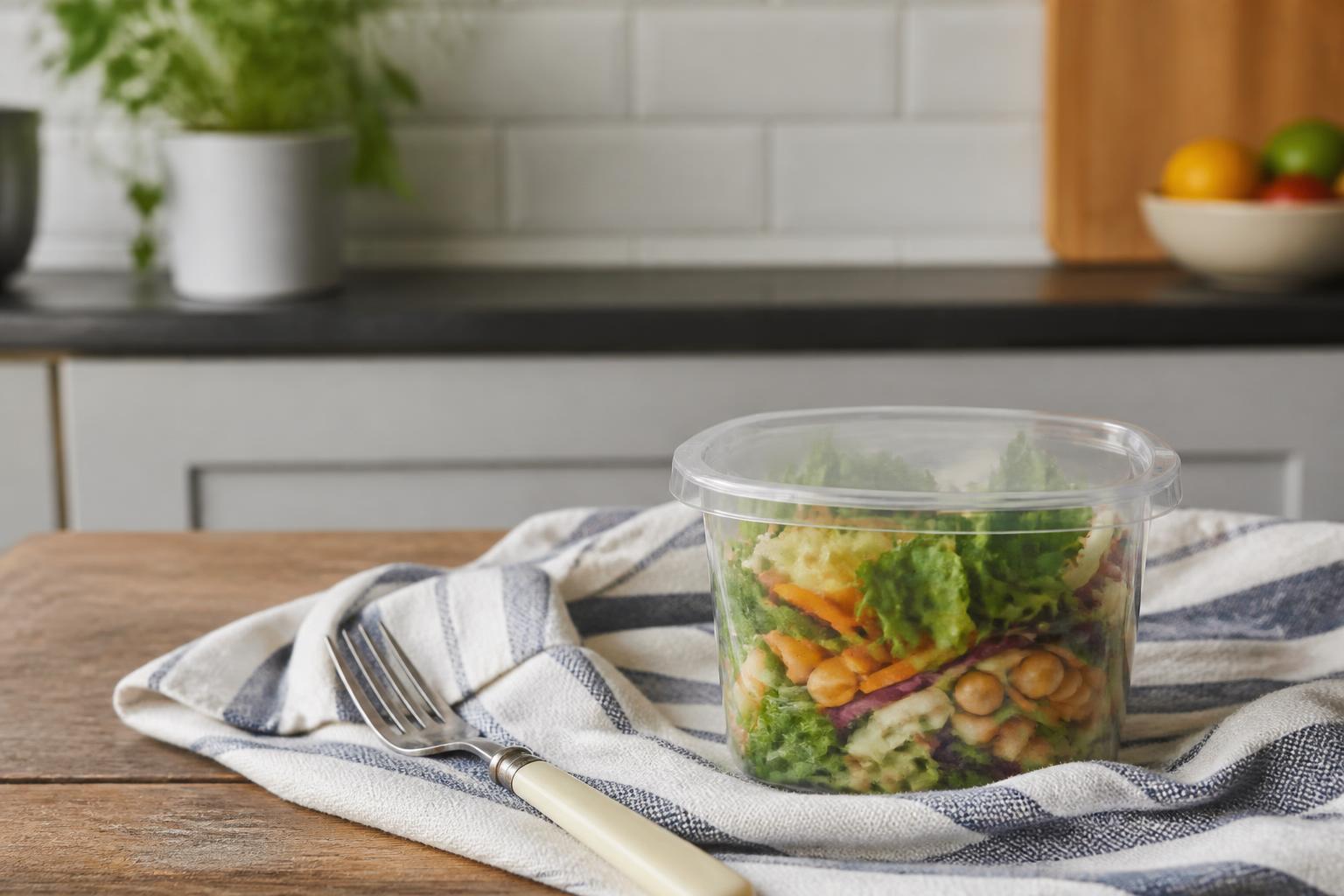
For PPDS food, the position is stricter. If a sandwich, salad pot or wrap is packed on the same premises before you choose it, it should carry a full ingredients list with allergens emphasised. That is one of the biggest practical changes many UK readers have seen in smaller food businesses over recent years.
When ordering online, check both the product description and any allergen section, but do not assume the app tells the whole story. If the allergy is serious, contacting the business directly is often the sensible step, especially for customisable meals where sauces, toppings and sides can change.
What labels do not guarantee
Allergen labels are useful, but they have limits.
They do not guarantee that a product without a precautionary warning is free from accidental traces. A business may have assessed the risk and decided a warning was not needed, but that is not the same as a clinical promise of zero presence.
They do not guarantee that a recipe has not changed since the last time you bought the item. This is one of the most common real-world ways people get caught out. New flavourings, seasoning blends, coatings and fillings can introduce allergens into products that once seemed familiar.
They do not guarantee that every member of staff in a food business will describe a dish in the same way unless the business has good allergen controls. That is why written information, recipe sheets and clear kitchen procedures matter so much for loose food.
They do not guarantee that “free from” and ordinary products are managed to the same standard. A “free from” claim is stronger and more specific than the absence of an allergen in an ordinary recipe. Products marketed as gluten-free or dairy-free are generally produced to meet the conditions of that claim. An ordinary product with no milk ingredient listed is simply that, a product with no declared milk ingredient. Those are not identical assurances.
They also do not settle the question of personal tolerance or medical advice. Some people react to extremely small amounts. Others have different advice from their clinician about precautionary labels, refined oils or specific processed ingredients. The pack cannot account for those individual differences.
For everyday shopping, the best habit is consistency. Read the ingredients list every time. Check the allergen emphasis. Read any “may contain” wording in full. Ask direct questions for loose food. Treat “free from” claims as different from ordinary products. And if you are comparing several packaged options at once, it helps to be just as methodical with the rest of the label, including serving size and ingredient order, as we explain in our guide to comparing food labels properly.
The simplest way to avoid missing risks is to stop looking for one clue and start reading the whole picture. That is what UK allergen labelling is designed to support, and it is still the best defence against the kind of easy assumptions that lead to avoidable mistakes.

Questions about this article or a correction to suggest? Get in touch. Read more about our editorial approach.