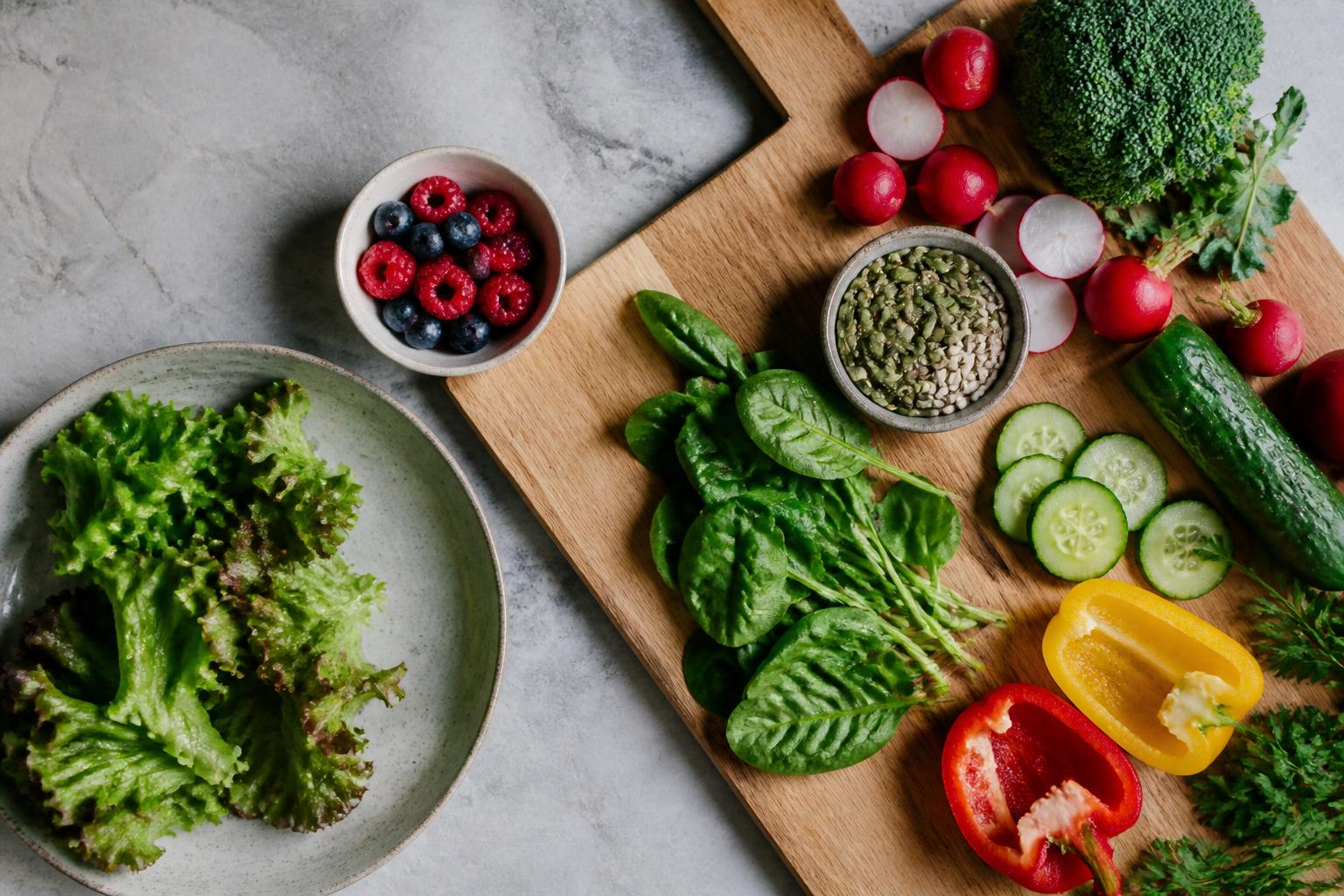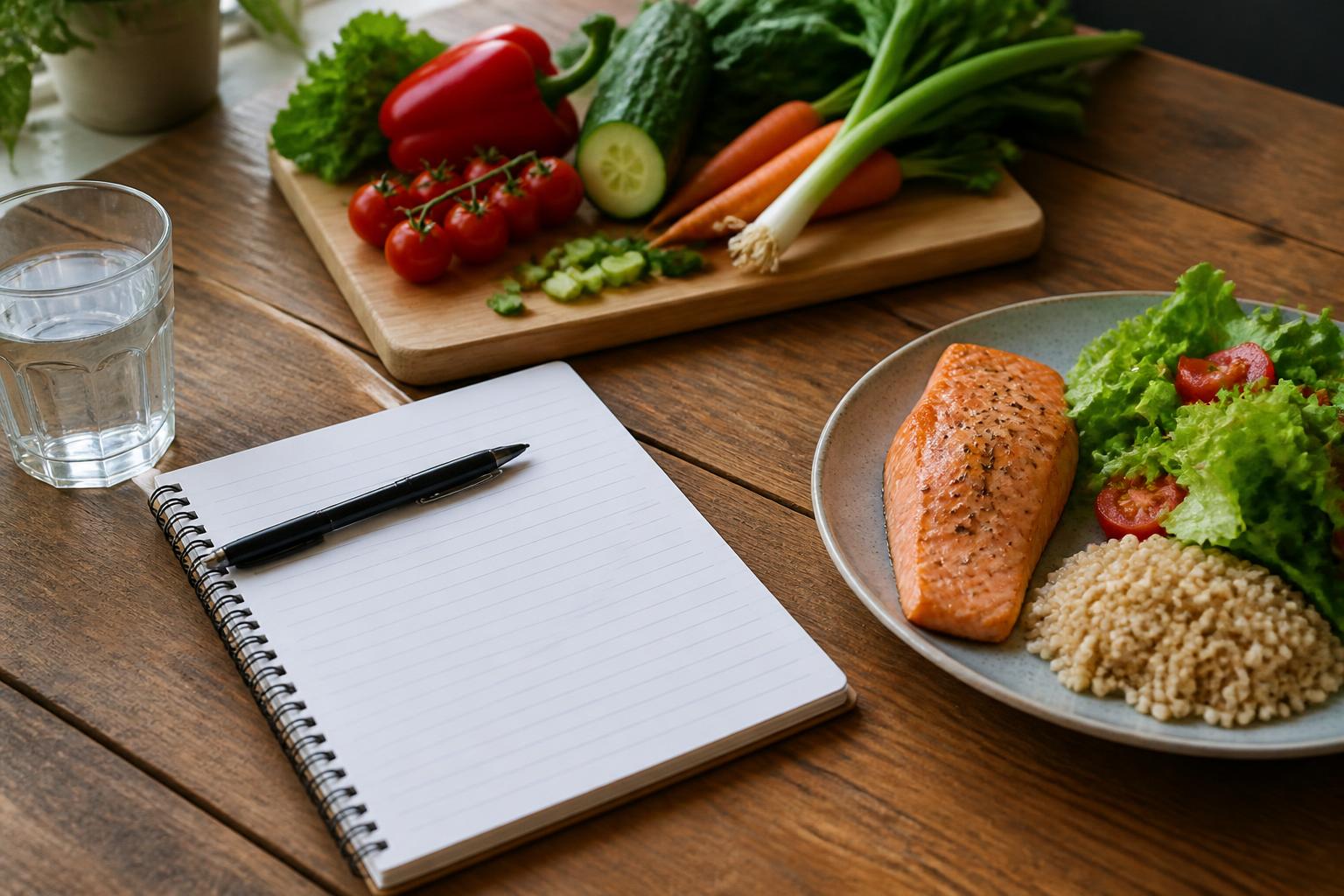
A healthy eating activity is a practical exercise that helps us make better food choices in real situations, not just agree with good advice in theory. The most useful ones are simple enough to repeat during an ordinary shop, while unpacking the cupboard, or when deciding what to eat on a busy Tuesday. They work because they train a decision we actually have to make, such as choosing between two cereals, building a more balanced lunch, or spotting when a snack is filling only because it is large, not because it contains much fibre or protein.
For adults, the point is not to turn every meal into homework. It is to make a few common decisions easier and more consistent. If an activity leaves us better able to compare labels, plan one evening meal, or notice where salt and sugar are creeping in, it is doing its job. If it stays vague, moralising, or too complicated to repeat, it usually will not stick.
What counts as a healthy eating activity for adults
For adults, a healthy eating activity is a short, repeatable task that improves how we choose, combine, or judge food in everyday life. It is active rather than passive. Reading general guidance can be useful, but that is not the activity itself. Likewise, a lecture on balanced diets, a long nutrition course, or children’s food games may all have value, but they are different things.
A practical activity usually has three parts.
First, it uses real food or real packaging. We might compare two soups, check the fibre in breakfast options, or map out three evening meals from what is already at home.
Second, it focuses on one decision at a time. That matters because most people do not struggle with the idea of healthy eating in the abstract. The difficulty is choosing between products that look similar, deciding whether a snack will actually keep us going, or building a meal when time is short.
Third, it gives us something we can repeat next week without needing ideal conditions. If an exercise only works with specialist ingredients, lots of spare time, or a perfect meal-prep routine, it is less likely to become part of normal life.
This is also where it helps to separate adult food-choice activities from topics covered elsewhere. We are not talking here about nursery-style play, sensory food games for babies, or broad support for very selective eating. Those are separate subjects with their own methods and aims. Our focus is the adult reader who wants clearer, steadier food decisions in ordinary UK routines.
Start with activities that train one decision at a time
The best place to start is small. When people try to overhaul breakfast, lunch, dinner, snacks, shopping habits, meal prep and label reading all at once, the process becomes too vague to hold. A better healthy eating activity trains a single decision until it becomes quicker and more natural.
Take label comparison. If we practise comparing two similar products by looking at per 100g values, fibre, salt, and ingredients, we build a skill that transfers across categories. The same is true for a plate-building exercise. Once we get used to adding a clear source of protein, some fibre-rich carbohydrate, and fruit or vegetables to one meal, that structure becomes easier to repeat elsewhere.
This one-decision approach works because food choices are cumulative. We rarely need one dramatic act of dietary virtue. We need dozens of ordinary decisions that are slightly better informed than they were before. If each activity improves one of those decisions, the overall pattern starts to shift without requiring perfection.
It also reduces the all-or-nothing mindset. A person who cannot yet plan a whole week can still plan one evening meal. Someone who finds supermarket claims confusing can still compare two yoghurts side by side. Progress is easier to notice when the task is narrow enough to measure.
If you want a broader framework for why these day to day choices matter, our piece on what healthy eating really helps with day to day sets that out without turning it into a moral test.
Five healthy eating activities you can use in ordinary UK weeks
Below are five activities that fit normal UK shopping and eating patterns. None requires specialist products, calorie counting, or a full meal-prep system.
1. The two-label comparison drill
Pick one category you buy often, such as breakfast cereal, baked beans, yoghurt, soup, sliced bread, or granola bars. Compare two products that seem broadly similar.
Look at:
- the per 100g or per 100ml values first
- fibre
- salt
- sugars
- ingredient order
Using per 100g matters because portion sizes on packs are set by the manufacturer and may differ sharply. In the UK, nutrition labelling rules are retained from earlier EU rules but now sit within UK law, so the layout will often look familiar across products sold in Britain. For comparison, per 100g is usually the cleanest starting point.
The aim is not to find a perfect item. It is to practise noticing meaningful differences between products that compete for the same job in the cupboard.
2. The snack audit
Gather the snacks you genuinely eat in a week, not the ones you think you ought to eat. Put them on the table and sort them into three rough groups:
- snacks that fill us up for a while
- snacks that are mostly convenient but not very satisfying
- snacks that we eat mainly because they are there
Then check which of them offer something useful, such as fibre, protein, fruit, nuts, oats, or a reasonable portion that does not encourage mindless eating. This is often where we notice that a snack is not a problem because it is a snack, but because it leaves us hungry again very quickly.
The practical outcome might be as simple as keeping one or two more filling options visible and moving the least useful ones out of immediate reach.
3. The plate-building exercise
Choose one meal you eat often, perhaps lunch at home or a quick weekday dinner. Build the plate in three steps:
- one main protein source, such as beans, lentils, eggs, fish, chicken, tofu, yoghurt, or cheese in a sensible amount
- one carbohydrate source, ideally one that contributes fibre, such as potatoes with skins, wholemeal bread, oats, brown rice, or pulses
- one or two portions of vegetables or fruit
This is not a rigid template and does not mean every plate must look identical. It is simply a way to check whether the meal is carrying enough substance to be satisfying and reasonably balanced.
4. The cupboard check
Once a week, check what is already at home before shopping. Look for three things:
- a fibre base, such as oats, wholegrain cereal, wholemeal pasta, pulses, or higher-fibre bread
- easy proteins, such as tinned fish, eggs, yoghurt, beans, lentils, or frozen options
- vegetables and fruit, fresh, frozen, tinned, or dried where appropriate
This activity is underrated because many poor food decisions happen when the cupboard offers no clear meal path. A cupboard check turns healthy eating into a logistics task rather than a test of willpower.
5. The simple meal map
Write down three evening meals for the next few days. Not seven, just three. Each should answer:
- what is the main protein?
- what is the main source of carbohydrate?
- where are the vegetables or fruit?
- what do we already have, and what needs buying?
That small map often does more for weekday eating than a long ideal plan that never gets used. If you want a format that keeps this manageable, our guide to a simple healthy eating planner for busy UK weeks is built around ordinary schedules, not perfect ones.
How to use food labels as an activity rather than a lecture
Food labels are most useful when we treat them as a repeatable exercise, not a sermon. Many adults have heard for years that they should read labels, but the advice often stops there. The useful part is knowing what to do with the information.
A good label-reading activity starts with one product category. Bread is a good example because small differences matter and many households buy it often.
Take two loaves and compare:
Per 100g first
This gives a standard basis for comparison. Portion information can still be useful, especially if a pack gives values per slice or per serving, but per 100g is less open to distortion. A cereal with a very small stated portion can look gentler than it really is if we only read the serving line.
Fibre
For many people, fibre is one of the quickest ways to improve everyday food choices. In bread, cereal, crackers and snacks, it often separates products that are more filling from those that are mostly refined starch. We do not need to chase a magic number in every item, but comparing fibre between similar products is a worthwhile habit.
Salt
Salt is especially worth checking in foods that do not taste obviously salty, such as bread, breakfast cereals, sauces and soups. This is where labels can correct assumptions. A product marketed as wholesome can still carry more salt than expected.
Portion size
After comparing per 100g, look at the suggested portion and ask whether it matches real life. If a packet of crisps is listed as two portions but we always eat the whole bag, the practical portion is the whole bag. The same logic applies to large yoghurts, cereal bowls and ready meals.
Ingredient order
Ingredients are listed in descending order by weight at the time of manufacture. That does not tell us everything, but it does tell us what forms the bulk of the product. In a granola bar, for example, we can see whether oats lead the list or whether syrups and sugars appear early. In soup, we can see whether vegetables are genuinely central or just present in small amounts.
This exercise works best when we do it repeatedly in the same categories. One week we might compare soups, the next yoghurts, then breads or cereal bars. Over time, the process becomes faster. We start recognising which products are more filling, which are saltier than expected, and which use health language that the numbers do not really support.
If you like using structured tools, our article on how to use a healthy eating questionnaire well can help you pair these observations with a broader view of your eating pattern.
How to tell whether an activity is actually helping
A healthy eating activity is only useful if it changes what happens in real life. The signs are usually practical rather than dramatic.
One sign is that shopping decisions become easier. We stop staring at the shelf for ages because we know what we are checking first. We may not buy the same thing every time, but we can narrow the choice more quickly.
Another sign is that meals become more balanced without much mental effort. We notice when lunch lacks protein, when a dinner has no real vegetable component, or when a snack is unlikely to keep us going. That does not mean every meal becomes ideal. It means guesswork starts to reduce.
A third sign is greater consistency across the week. Instead of eating reasonably well only on organised days, we find that ordinary busy days are less chaotic. The cupboard holds ingredients that can become actual meals. Snacks are a bit more deliberate. Convenience foods, if we use them, fit more sensibly into the week.
There are also softer signs of progress. We may feel less swayed by front-of-pack language, less likely to assume that expensive means healthier, and more aware of portion reality. Those are useful gains even if they do not show up as a dramatic before-and-after story.
It is also worth being honest about limits. One activity will not fix everything. Better label reading does not automatically solve emotional eating, budget pressure, shift work, family preferences, or medical dietary needs. Nor should we expect perfect certainty from packaging alone. A label can help us compare products, but it cannot tell us in isolation whether our overall diet is suitable.
Progress can also be uneven. A person may get much better at choosing breakfast options and still struggle with evening snacking. That does not mean the activity failed. It means the next useful step may be a different activity aimed at a different decision.
If you want to review your overall routine after trying a few of these exercises, it can help to look at patterns rather than isolated moments. Are we planning at least a couple of meals ahead? Are we choosing more filling snacks? Are we relying less on vague ideas like “eat better” and more on concrete habits we can repeat?
That is the real test. A worthwhile healthy eating activity does not just teach us something once. It makes the next food decision a little clearer, then the one after that, until the better choice feels less like effort and more like the normal way we do things.

Questions about this article or a correction to suggest? Get in touch. Read more about our editorial approach.