A healthy eating planner should make your week easier, not stricter. At its best, it is simply a way to decide what you are likely to eat, when you will buy it, and what you will keep in reserve for the moments when time or energy disappears. That matters far more than writing out ideal meals you will never cook.
For most busy UK adults, the useful version is practical rather than perfect. It helps you build meals around familiar foods, keep portions reasonably balanced, avoid buying the same ingredients twice, and reduce the late evening question of what is for dinner. If you want a broader look at routines that work in ordinary households, our guide to healthy eating plans that fit ordinary UK routines is a good companion.
What a healthy eating planner should actually do
A healthy eating planner is not a diet sheet. It is a working plan for meals, snacks and shopping that fits your real week.
That means it should do five things well.
First, it should reflect your actual diary. If Tuesday ends with a long commute and a child’s club pick-up, that is not the night for a recipe with six pans and 45 minutes of chopping. If Friday lunch is always bought near work, your planner should say so.
Second, it should cover the whole eating day, not just dinner. Many people plan evening meals and then get caught out by breakfast, lunch and snacks. A better planner includes simple defaults such as porridge on office days, soup and wholemeal bread for one lunch, and yoghurt with fruit for an afternoon snack.
Third, it should help with shopping. There is no point planning three meals that all need different fresh herbs, half a tub of yoghurt each, and separate sauces that will sit in the fridge until they need throwing away. A useful plan reuses ingredients across the week.
Fourth, it should leave room for change. Plans fail when they treat every meal as fixed. Real life includes delayed trains, forgotten packed lunches, children refusing what they asked for, and days when appetite is lower or higher than usual.
Fifth, it should reduce decision fatigue. If your planner leaves you making fresh choices at every meal, it is not doing enough. The aim is not to remove enjoyment, but to cut the number of food decisions you have to make when you are busy.
In practice, that can be as simple as a one-page note with seven evening meals, three or four lunch options on rotation, a list of staple breakfasts, and a few fallback foods in the freezer or cupboard.
How to build a week around UK healthy eating guidance
In the UK, the simplest structure is the Eatwell approach. That means basing meals mainly on vegetables, fruit, beans, pulses, wholegrains and other starchy carbohydrates, with moderate amounts of dairy or alternatives, beans, fish, eggs, meat and other proteins, plus small amounts of oils and spreads.
That sounds broad, but it becomes clearer when you build ordinary meals.
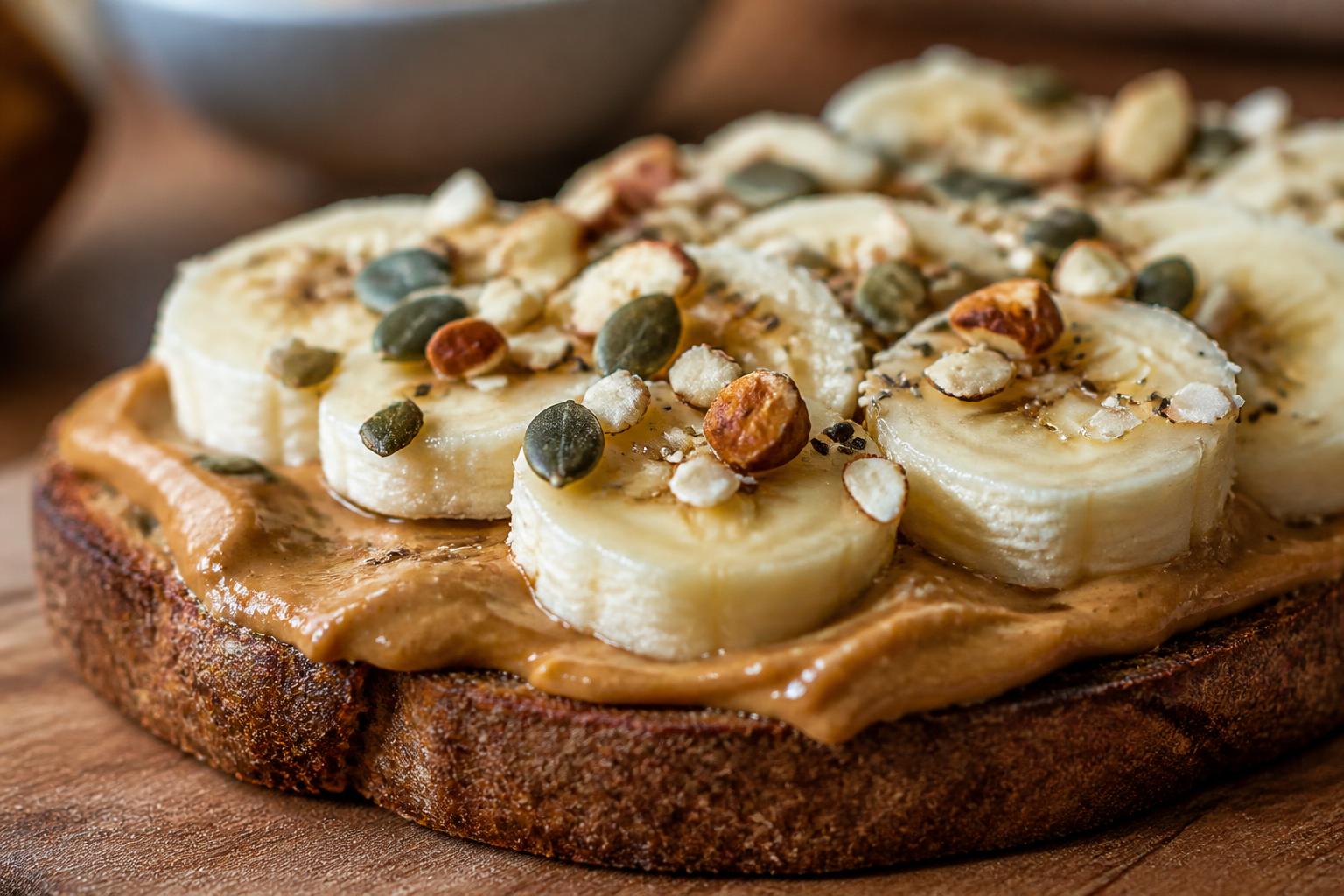
For breakfast, think in combinations rather than categories. Porridge oats with milk or a fortified plant alternative, topped with banana and seeds, gives you a starchy base, some protein, and fruit. Wholemeal toast with peanut butter and sliced pear also works. If you prefer cereal, check the label and choose one that is higher in fibre and not heavily loaded with sugar.
For lunch, aim for a meal that is built rather than assembled from beige convenience food. A jacket potato with beans and salad, a wholemeal wrap with chicken or hummus plus chopped veg, or lentil soup with bread and fruit all fit well. Sandwiches are absolutely fine if they include some protein, some salad or veg, and bread that keeps you fuller for longer.
For dinner, a simple rule helps. Start with vegetables or pulses, add a starchy carbohydrate, then choose your protein. That could mean:
- chilli with kidney beans, minced beef or a meat-free mince, served with rice
- baked salmon, potatoes and peas
- chickpea curry with brown rice
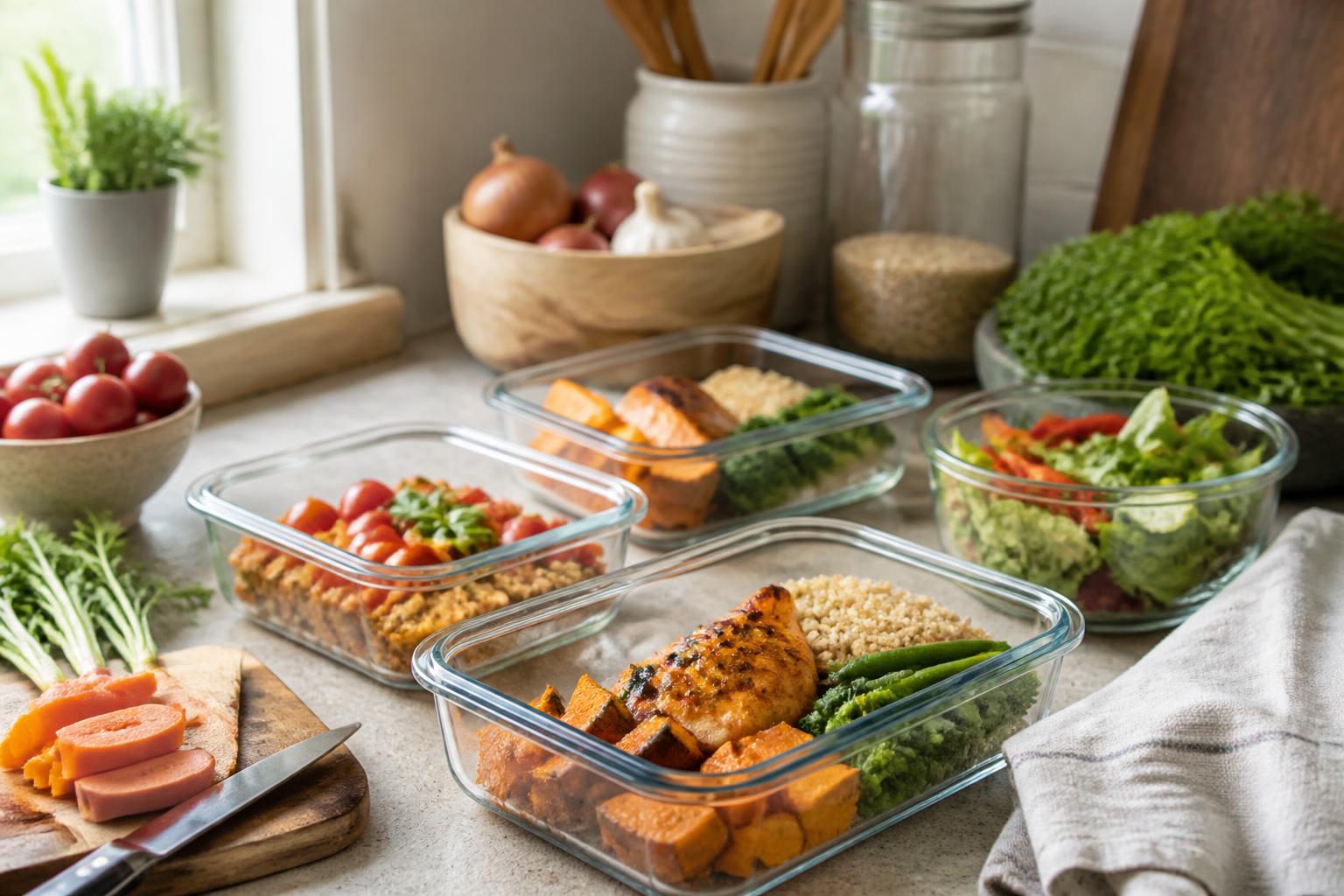
- chicken traybake with carrots, onions and sweet potato
- pasta with tomato sauce, lentils and extra vegetables
Snacks do not need to be treated as a problem to solve. They just need a bit of structure. Fruit, yoghurt, oatcakes, a small handful of nuts, chopped veg with hummus, or toast can all make sense depending on hunger and timing.
Portion balance matters more than chasing perfect ratios. The Eatwell Guide is a pattern for the overall diet, not a requirement for every plate to look identical. One meal may be more vegetable-heavy, another more centred on carbohydrates after exercise, another lighter because you are eating again soon. Across the week, you are looking for a consistent pattern.
In UK guidance, oily fish is usually recommended regularly, but many people eat it less often. If you do include fish, think about what you realistically enjoy and will buy. Tinned sardines, mackerel or salmon can be easier to keep on hand than fresh fillets.
For dairy and alternatives, it is worth checking whether plant-based drinks and yoghurts are fortified with calcium and, where relevant, iodine and vitamin B12. In the UK, fortification varies by product, so the front of pack and nutrition panel matter.
If you want a clearer picture of how public guidance shapes these everyday choices, see our piece on how UK healthy eating campaigns shape everyday food choices.
How to plan meals when time, budget or energy is limited
Most weeks are limited by at least one of those things, and often all three. A realistic planner should account for that from the start.
The easiest method is to divide meals by effort level.
Choose two low-effort meals, two standard meals, one leftovers meal, one freezer meal, and one flexible slot. That gives you structure without overcommitting.
Low-effort meals might include eggs on toast with tomatoes, wholewheat pasta with pesto and peas, or a supermarket rotisserie chicken with microwaveable grains and bagged salad. Standard meals are the ones you can cook without much thought, such as a curry, bolognese, traybake or stir-fry. A leftovers meal should be deliberate, not accidental. Cook enough chilli on Monday for Wednesday lunch, or enough roasted vegetables to turn into Friday wraps.
Freezer use is one of the strongest tools in any healthy eating planner. Frozen vegetables are often just as useful as fresh ones and can be easier to manage in a busy household. Frozen peas, spinach, mixed peppers, berries and edamame all earn their space. So do portions of cooked meals. If you cook soup, curry or pasta sauce, freeze it in containers sized for one or two people.
Budget planning works best when you start with staple ingredients and build outwards. Good-value basics in UK shops often include:
- oats
- potatoes
- rice
- pasta
- tinned tomatoes
- beans and lentils
- eggs
- frozen vegetables
- carrots
- onions
- yoghurt
- wholemeal bread
- peanut butter
These ingredients can become many meals with only small additions. For example, tinned tomatoes, onions and lentils can become soup, pasta sauce, dhal-style dishes or the base of a chilli. Potatoes can be used for jackets, wedges, mash or added to soups and traybakes.
Energy is a separate issue from time. Some people have 30 minutes but no mental room for chopping, timing and clearing up. On those days, reduce the number of steps. Buy pre-chopped vegetables if they genuinely help. Use microwaveable grains if they stop a takeaway becoming the default. Keep one or two ready meals that are sensible rather than pretending you will cook from scratch every night. A planner that ignores fatigue is not a good planner.
If your challenge is remembering what you already have, a simple list on the fridge or in your phone helps. Write down freezer portions, open jars that need using, and fresh food with a short life. That small habit often saves more money than chasing special offers.
How to use labels and packaging without overcomplicating it
Food labels can help, but only if you use them for quick comparison rather than trying to decode every packet in the aisle.
In the UK, many packaged foods show front-of-pack traffic light labelling for fat, saturates, sugars and salt, usually with values per 100g or 100ml and sometimes per portion. These colours are useful when you are comparing similar products. For example, one tomato soup against another, or one breakfast cereal against another. They are less helpful when comparing foods that are meant to be eaten in very different amounts.
The per 100g figure is usually the fairest basis for comparison between similar items. Portion information can also be helpful, but check whether the stated portion is realistic. A cereal serving on the box may be smaller than what people actually pour.
Ingredients lists tell you what a product is mostly made from, because ingredients are listed in descending order by weight. If wholegrain oats are first, that tells you something useful. If sugar appears near the top in a product marketed as wholesome, that also tells you something useful.
Claims need a calm reading. “High protein”, “source of fibre”, “no added sugar” and “natural” do not automatically make a product a strong everyday choice. A high-protein bar may still be high in saturated fat. “No added sugar” does not mean sugar-free. “Natural” is not a nutrition standard. Use the claim as a prompt to check the label, not as the answer.
For plant-based alternatives, labels matter for a different reason. You may be checking protein content, calcium fortification, added sugars, or whether the product is mainly water with a small amount of the named ingredient.
There are also differences between UK and EU labelling practice in some areas. Since the UK left the EU, some packaging rules and accepted markings have diverged, and products sold in Great Britain may not always match those sold in the EU market. For everyday shopping, the practical point is simple, rely on the nutrition panel, ingredients list, allergen information and storage instructions on the pack you are actually buying, rather than assuming a product is labelled the same everywhere.
If you prefer a more structured way to compare foods, our guide on how to use a healthy eating table for everyday meals can help you turn label reading into a quick routine.
What to put on your planner before you shop
A weekly plan works best when it turns directly into a shopping list. Before you shop, write down six things.
-
Your meals by day or by occasion.
This can be dinner by day, or breakfast, lunch and dinner if your week needs more structure. Keep it brief. “Tue dinner - salmon, potatoes, broccoli” is enough. -
The ingredients you already have.
Check the fridge, freezer and cupboard first. Note what needs using soon. A planner should start with what is in the house, not with a blank page. -
Your snack plan.
This is often the missing piece. Decide what snacks are for this week and where they are meant to fit. For example, fruit for mid-morning, yoghurt for work afternoons, toast after an evening walk, nuts kept in the car or bag for emergencies. If snacks are not planned at all, they are more likely to become random add-ons. -
Packed lunches or work food.
If you need food away from home, note exactly which days and what format works. Leftovers in a container, sandwiches, soup in a flask, or supermarket lunch components all count. The best option is the one you will actually carry and eat. -
Backup meals.
Write down two or three meals that can be made from freezer or cupboard ingredients with almost no effort. Pasta with tomato sauce and peas, beans on toast, frozen stir-fry mix with noodles, or soup with bread are all useful examples. -
Waste points.
Identify foods that often get thrown away in your household. Salad leaves, soft fruit, herbs, half loaves, avocados, milk, whatever it is. Then plan around that pattern. Buy less, choose frozen, or assign those ingredients to specific meals early in the week.
Once that is done, group your shopping list by area of the shop. Fruit and veg, fridge, freezer, cupboard, bread. It sounds basic, but it reduces forgotten items and duplicate buying.
It also helps to note one or two “use first” foods at the top of the planner. If mushrooms, spinach and yoghurt need using by Wednesday, make sure the plan reflects that.
When a healthy eating planner needs flexibility
A planner is there to support you, not to judge you. If it cannot bend, it will break.
Eating out is the easiest example. If you know you are having lunch out on Saturday, put it on the planner. Do not pretend you will make soup at home and then feel as though the week has gone wrong. One restaurant meal does not cancel the rest of your eating pattern. Often the sensible approach is simply to keep the surrounding meals straightforward and avoid shopping for food you already know you will not eat.
Shift work needs a different kind of flexibility. Traditional breakfast, lunch and dinner slots may not fit at all. Plan by eating occasion instead. Meal 1 after waking, packed meal for mid-shift, snack for the journey home, easy meal before sleep. The structure matters more than the clock time.
Family households also need room for preference without becoming a short-order kitchen. It is often easier to plan one shared base meal with adjustable parts. For example, a taco bowl where people choose rice, beans, chicken, grated cheese and chopped veg in their own mix. Or pasta with a tomato sauce base, with extra olives, tuna or roasted vegetables added separately.
Appetite changes too. Some days you want a full meal, some days something lighter. A good planner allows for scaling up or down. That might mean keeping bread, eggs, soup, fruit and yoghurt available so a lighter day does not turn into no proper meal at all.
The most important point is not to treat one unplanned meal as failure. If lunch was a meal deal because meetings overran, the answer is not to abandon the week. It is to return to the next planned meal. That is how useful routines work.
If you are planning around children with selective eating, our article on healthy eating that works for fussy eaters may also help, especially if family meals are where your planner tends to unravel.
A healthy eating planner is successful when it makes ordinary weeks more manageable. It should help you eat reasonably well, shop with less waste, and keep food decisions simple enough to stick. That is usually not about stricter rules. It is about clearer defaults, better backups, and a plan that matches the life you are actually living.

Questions about this article or a correction to suggest? Get in touch. Read more about our editorial approach.