
A healthy eating plan is not a strict menu, a detox, or a week of eating “perfectly”. For most UK adults, it is a practical pattern of meals, snacks and drinks that you can keep up through workdays, school runs, late finishes, supermarket shops and weekends. The aim is balance across the day and across the week, not a single ideal meal.
In ordinary life, good plans are built from familiar foods. Porridge, eggs, wholemeal toast, soup, sandwiches, pasta, potatoes, yoghurt, fruit, beans, fish, chicken, frozen vegetables and tinned tomatoes all have a place. What matters is how often they appear, how they fit together, and whether the plan gives you enough energy, fibre, protein, vitamins and minerals without relying too heavily on foods high in salt, free sugars and saturated fat.
What a healthy eating plan actually means
When we talk about healthy eating plans, we mean an overall way of eating rather than a short-term set of rules. A useful plan is one you can repeat with small changes, not one that depends on unusual products or constant willpower.
In UK terms, a balanced plan broadly follows the principles behind the Eatwell Guide. That means basing meals mainly on vegetables, fruit, potatoes, bread, rice, pasta and other starchy carbohydrates, with higher fibre versions where possible. It also means including beans, pulses, fish, eggs, meat or other proteins, having some dairy or fortified alternatives, using unsaturated oils in small amounts, and keeping an eye on foods and drinks higher in fat, salt and sugar.
Consistency matters more than extremes. If breakfast is rushed one day or dinner is a takeaway on Friday, that does not undo the rest of the week. A sound plan allows for variation. It leaves room for birthdays, pub meals, office biscuits and family favourites without turning them into a moral test.
It also helps to think in patterns rather than labels. “Low carb”, “clean eating” and similar terms can oversimplify what people actually need. Most adults do better with regular meals, enough fibre, sensible portions, and a mix of foods from the main groups. If you are trying to improve your routine without changing everything at once, our guide to starting with small everyday changes is a useful next step.
How to build a balanced day of eating
A balanced day does not need to be complicated. It helps to picture each meal as a combination of a fibre-rich carbohydrate, a source of protein, and some fruit or vegetables. Then add drinks and snacks according to appetite, routine and activity.
Breakfast can be simple. Good examples include porridge made with milk or a fortified plant alternative, topped with fruit and seeds. Wholemeal toast with eggs and grilled tomatoes works well. So does plain yoghurt with oats, fruit and a handful of nuts. If mornings are busy, keep practical options ready. Overnight oats, boiled eggs, wholegrain cereal with lower sugar content, or a banana with peanut butter on toast are realistic choices. We have more examples in our piece on practical protein-rich breakfast ideas.
Lunch often goes off track because it is squeezed between meetings or bought in a hurry. A better routine is to build lunch around a few reliable formats. Soup plus wholemeal bread, a sandwich with salad and a protein filling, a grain bowl with rice or couscous, or leftovers from the night before can all fit well. Aim to include some vegetables and a filling protein source so you are less likely to spend the afternoon grazing on snacks.
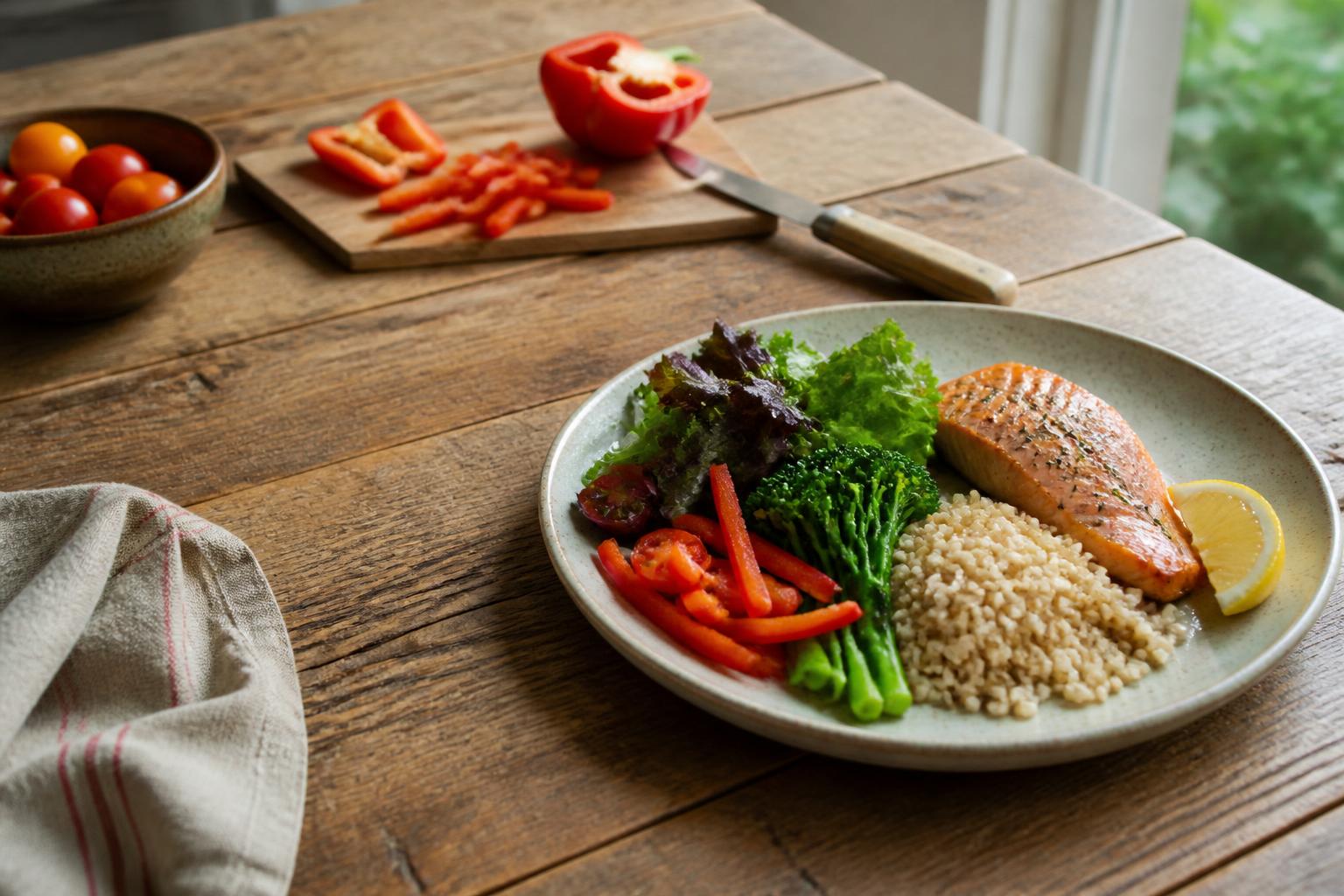
Dinner is usually the easiest meal for getting balance right because there is more time to assemble a proper plate. A useful guide is to make about a third to a half of the meal vegetables or salad, include a portion of potatoes, rice, pasta or another carbohydrate, and add a source of protein such as beans, lentils, fish, eggs, tofu, chicken or lean mince. Examples include chilli with kidney beans and rice, baked salmon with potatoes and broccoli, vegetable pasta with lentils, or a chicken stir fry with plenty of veg and noodles.
Snacks are optional, not compulsory. Some people do well on three meals, others need a mid-morning or afternoon option. The most useful snacks are those that actually tide you over, such as fruit with yoghurt, oatcakes with hummus, a small handful of nuts, or toast with peanut butter. If you regularly reach for crisps, pastries or chocolate because lunch was too small, the answer may be to improve lunch rather than to keep negotiating with snacks.
Drinks count too. Water, lower fat milk, tea and coffee without too much sugar can all fit into a healthy day. Fruit juice and smoothies can contribute vitamins, but in the UK the advice is to limit them to a combined total of 150ml a day because of free sugars. Fizzy drinks, energy drinks and sweetened coffees can add a surprising amount of sugar and calories without doing much for fullness.
Which foods matter most in everyday plans?
The foods that shape day-to-day eating are not usually the dramatic ones. They are the staples you buy every week and the things you reach for when you are tired.
Starchy carbohydrates matter because they often form the base of meals. Potatoes, bread, pasta, rice, oats, couscous and breakfast cereals can all fit well. The key is to choose higher fibre versions often enough to make a difference. Wholemeal bread, brown rice, wholewheat pasta, porridge oats and high fibre cereals can help with fullness and digestive health. In the UK, fibre intake is commonly lower than recommended, so this is one of the most useful upgrades many households can make.
Fruit and vegetables are central, not decorative. Fresh, frozen, tinned and dried versions all count, though dried fruit is best kept to mealtimes because of its effect on teeth. Tinned fruit in juice rather than syrup is usually the better everyday option. Beans and pulses can count towards your 5 A Day, but only once however much you eat. Frozen peas, spinach, mixed veg and berries are particularly useful because they reduce waste and are easy to keep on hand.
Protein foods help with fullness, muscle maintenance and overall balance. Beans, chickpeas and lentils are affordable staples and can stretch meat further in dishes like bolognese, curry and chilli. Fish is worth including, with oily fish such as salmon, sardines or mackerel providing different fats from white fish. Eggs are versatile and generally inexpensive. Poultry, lean mince, tofu, tempeh and unsalted nuts also fit well. Processed meats such as bacon, sausages and ham are best treated as occasional rather than default choices.
Dairy foods and alternatives provide calcium and, depending on the product, protein and iodine. Milk, yoghurt and cheese can all be part of a balanced plan. If you use plant alternatives, check that they are fortified, especially with calcium. In the UK, unsweetened fortified soya drinks and yoghurts are often closest nutritionally to dairy, particularly for protein, though other fortified alternatives can also be useful.
Fats and oils matter, but the type matters more than simply trying to avoid them. Small amounts of unsaturated oils such as rapeseed, olive or sunflower oil are generally better everyday choices than relying heavily on butter, ghee, cream or coconut oil. That does not mean banning those foods, only using them with some awareness of frequency and quantity.
Finally, drinks shape a plan more than people sometimes realise. Water should do most of the work. Tea and coffee are fine for many adults, but sugary add-ins can quickly change the picture. Alcohol also contributes energy and can influence food choices later in the day, so it is worth including that honestly when you look at your routine.
How labels can help you compare options
Food labels are most useful when you compare similar products, not when you use them to judge a whole diet in one glance. A yoghurt should be compared with another yoghurt, a cereal with another cereal, and a ready meal with another ready meal.
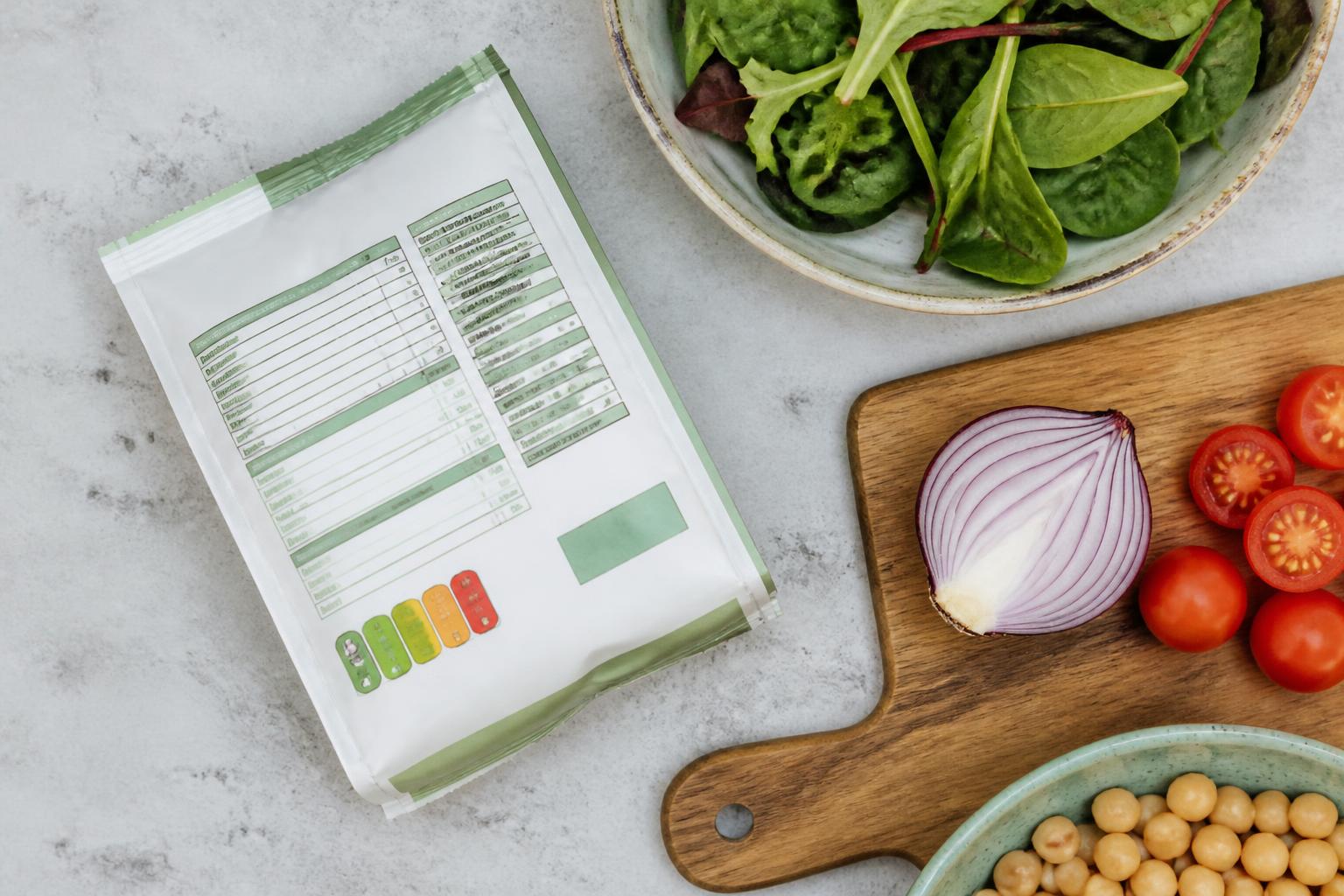
On many packaged foods in the UK, front-of-pack traffic light labelling gives a quick view of fat, saturated fat, sugars and salt, plus energy. Green means lower, amber means medium, and red means higher, per 100g or 100ml. This is a practical way to compare options on the shelf. If two soups are otherwise similar, the one with fewer reds or more greens may be the better everyday choice.
The nutrition panel on the back gives the same nutrients in more detail. The per 100g column is the best tool for comparing products because portion sizes set by manufacturers can vary. A cereal that looks lower in sugar per portion may simply be using a smaller serving size. Per portion figures are still useful, but only once you know what a realistic portion looks like for you.
Ingredients lists also help. Ingredients are listed in descending order by weight at the time of manufacture. If sugar appears near the top in a breakfast cereal or yoghurt marketed as a wholesome choice, that tells you something. The same applies to salt in sauces and soups, or cream and butter in products that look light from the front of the pack.
For oils and spreads, labels can help you compare saturated fat. For breads and cereals, fibre is often worth checking. For ready meals, salt can be the deciding factor. None of this requires perfection, only a habit of making like-for-like comparisons. If you want a fuller breakdown, our guide to using food labels for everyday comparisons goes through the details in plain English.
A UK-specific point is that front-of-pack traffic light labels are widely used here, but they are not the standard system across the EU generally. If you buy imported products, the information may be presented differently, so the back-of-pack panel becomes even more important.
How to make healthy eating plans affordable and realistic
Affordable eating starts with routine, not with expensive “health” products. Many of the most useful foods are ordinary cupboard, fridge and freezer staples. Oats, potatoes, rice, pasta, tinned tomatoes, beans, lentils, eggs, frozen vegetables, milk, yoghurt and seasonal fruit can take you a long way.
Batch cooking helps because it reduces both cost and decision fatigue. Cooking a larger pan of chilli, curry, soup or pasta sauce means you can use it for another dinner, a packed lunch, or a freezer meal for a busy evening. This is often more realistic than trying to cook from scratch every night.
Frozen and tinned options are not second best. Frozen vegetables and fruit are picked and packed for storage, and they are often just as practical nutritionally as fresh. Tinned beans, chickpeas, tomatoes and fish make balanced meals much easier to assemble. Choose versions in water, juice or tomato sauce where appropriate, and compare salt levels if there is a choice.
Packed lunches can save money and improve consistency. Leftovers are usually the easiest answer. If that does not appeal, keep a few standard combinations in rotation, such as wholemeal wraps with chicken or hummus, pasta salad with beans, yoghurt and fruit, or soup in a flask with bread. The best packed lunch is not the most impressive one, it is the one you will actually prepare.
Shift patterns need flexibility. If you work nights or early starts, the labels of breakfast, lunch and dinner matter less than the structure. You still need regular eating opportunities, enough protein and fibre, and sensible options ready when shops are shut or vending machines are the only alternative. That might mean a substantial meal before a shift, a packed main meal halfway through, and easy snacks such as fruit, yoghurt, nuts or sandwiches.
Families often need plans that can bend. One person may want a larger portion, another may need something plainer, and children may accept foods more readily when components are served separately. Base meals help here. A tray of roasted vegetables, a pot of rice, a protein option and a simple sauce can become several different plates without cooking entirely separate dinners.
It also helps to stop treating every meal as a fresh test of discipline. Repeating a manageable set of breakfasts, lunches and dinners is often what makes healthy eating plans work in real households. If you need more examples built around familiar UK shopping and cooking habits, our collection of healthy meal ideas for ordinary UK days may help.
When a general plan may not be enough
General editorial advice can help most adults build better routines, but it has limits. A standard healthy eating plan is not a substitute for personal medical advice.
If you have diabetes, coeliac disease, inflammatory bowel disease, kidney disease, an eating disorder, food allergies, or a diagnosed deficiency, your dietary needs may be more specific. The same applies if you are pregnant, breastfeeding, underweight, recovering from illness, or managing symptoms such as ongoing digestive problems, fatigue or unexplained weight change.
In those situations, NHS guidance should come first, and a GP may refer you to a registered dietitian if needed. In the UK, “dietitian” is a protected title. That matters. Anyone can call themselves a nutritionist in many contexts, but a registered dietitian is regulated and trained to give clinical dietary advice.
Children, older adults and people with very high activity levels can also need adjustments that go beyond general healthy eating articles. For example, energy requirements, calcium needs, iron intake and meal timing may need closer attention than a broad plan can cover.
For everyone else, the main point is simpler than the diet industry often suggests. A healthy way of eating is usually built from ordinary foods, repeated sensibly, with enough flexibility to survive ordinary life. If your meals are broadly balanced, your shopping list is built around staples, and you can keep the routine going next month as well as this week, you are much closer to a useful plan than any quick fix will get you.

Questions about this article or a correction to suggest? Get in touch. Read more about our editorial approach.