
A healthy, protein-rich breakfast does not need specialist powders, expensive pots, or a long prep list. In practice, it means building a morning meal around a food that gives a useful amount of protein, then making sure the rest of the plate or bowl still works for appetite, fibre, and overall energy. That might be eggs on wholemeal toast with tomatoes, yoghurt with oats and fruit, or beans on toast with a side of mushrooms.
The most useful healthy protein breakfast ideas are the ones you can repeat on an ordinary Tuesday. They rely on foods you already recognise from a UK supermarket, they fit into real schedules, and they do not treat protein as the only thing that matters. A breakfast can be high in protein and still be short on fibre, high in added sugar, or simply not filling enough. The aim is balance, not a claim on the front of the packet.
What makes a breakfast both healthy and high in protein?
A breakfast counts as high in protein in practical terms when protein is one of its main building blocks, not just an afterthought. A scattering of seeds over jam toast adds something, but it does not turn the meal into a protein-rich breakfast. By contrast, a bowl based on Greek-style yoghurt, milk, oats and nuts clearly does.
Protein matters in the morning because it helps make breakfast more satisfying and gives structure to the meal. But a healthy breakfast is not judged on protein alone. We look for a combination of:
- a clear protein source
- some fibre, often from oats, wholegrain bread, fruit, beans, seeds or vegetables
- enough energy to carry the morning, without relying mainly on sugar
- fats that make the meal satisfying, such as nuts, seeds, eggs, yoghurt or oily fish
- foods that add micronutrients, especially fruit and vegetables where practical
That balance matters because many foods marketed as high protein are not automatically strong breakfasts. A bar or flavoured dairy pot may provide protein, but if it is low in fibre and easy to eat in three minutes without really satisfying you, it may not work as well as a simpler meal made from ordinary ingredients.
Portion size also matters. A very small breakfast can look balanced on paper and still leave you hungry by 10am. Equally, not everyone wants a large breakfast. For some people, a smaller protein-based option such as a boiled egg, a pot of plain yoghurt and a banana is more realistic than a full cooked meal. Healthy eating works better when it fits appetite.
For readers who are also trying to improve fibre intake, breakfast is one of the easiest places to do it. Oats, wholegrain cereals, wholemeal toast, beans, fruit and seeds all help. We cover label reading for this in more detail in our guide on using food labels to add more fibre at breakfast and lunch.
Which everyday UK foods can build a protein breakfast?
The most useful protein breakfast staples are the ones that keep well, cost sensibly, and can be used in more than one format. These are the everyday foods we come back to.
Eggs
Eggs are one of the simplest breakfast proteins. They are quick, familiar, and work hot or cold. Scrambled, boiled, poached, or made into an omelette, they pair easily with toast, spinach, mushrooms, tomatoes, or leftover vegetables. They bring protein and fat, which helps with fullness.
Greek-style yoghurt and natural yoghurt
Plain yoghurt is one of the easiest cold breakfast bases. Greek-style and strained yoghurts tend to be higher in protein than standard yoghurt, but label checking matters because products vary. Plain versions also avoid the added sugars that can push up sweetened breakfast pots. Add fruit, oats, seeds, or chopped nuts and you have a practical meal rather than a snack.
Milk and fortified plant drinks
Cow’s milk adds protein to porridge, overnight oats, smoothies, and cereal. Soya drink is usually the closest plant-based alternative for protein, while almond, oat, rice and coconut drinks are often lower. In the UK, many plant drinks are fortified with calcium and vitamins, but not all are. That is worth checking if they are used regularly.
Oats
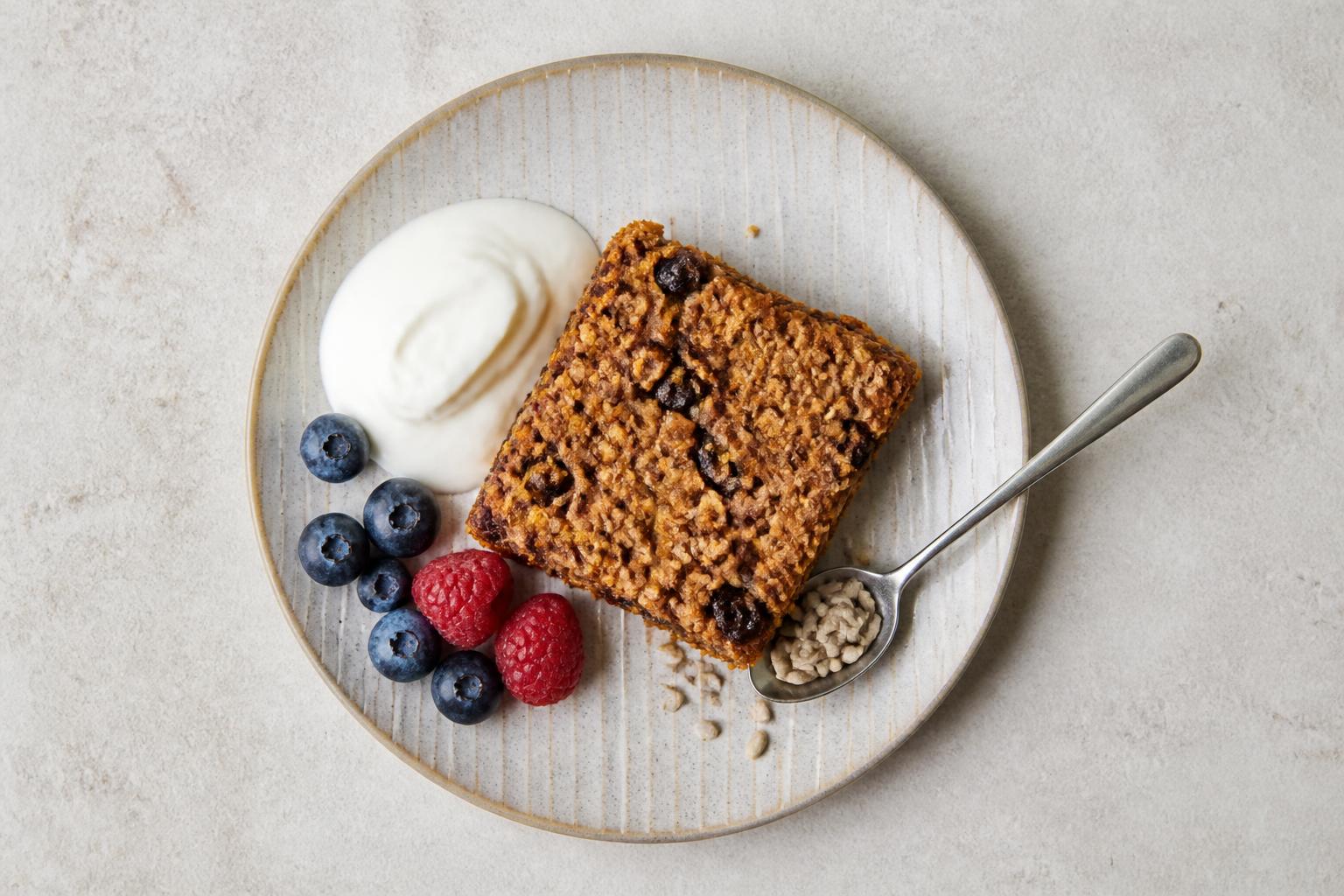
Oats are not a high-protein food on their own, but they contribute some protein and a useful amount of fibre. More importantly, they make a protein breakfast more substantial. Porridge with milk and seeds, overnight oats with yoghurt, or baked oats with eggs all work because oats help create a filling meal.
Beans
Baked beans, cannellini beans, black beans and chickpeas all have a place at breakfast. They bring protein and fibre together, which is useful for fullness. Baked beans on wholemeal toast remain one of the most practical UK options. If you want to compare varieties, our guide to which beans give you the most protein sets out what to look for.
Tofu
Firm tofu is one of the most useful vegan breakfast proteins. It can be crumbled into a tofu scramble with turmeric, mushrooms, spinach and tomatoes, or used cold in a savoury wrap if you prefer make-ahead lunches and breakfasts to overlap. It is plain by itself, which is why seasoning matters.
Nuts and nut butters
Peanuts, almonds, walnuts and peanut butter can all add protein, though they are usually better seen as part of the protein picture rather than the only source. They also add fat and make breakfast more satisfying. Peanut butter on wholemeal toast with banana works well, but it is more balanced still if paired with milk or yoghurt.
Seeds
Pumpkin, chia, flax and sunflower seeds add some protein, plus fibre and fats. They are useful toppers for porridge and yoghurt, and they help turn a basic breakfast into one that keeps you full for longer. Chia also thickens overnight oats and yoghurt pots.
Cheese and cottage cheese
Cottage cheese is especially useful for a quick savoury breakfast. It can go on toast, into a wrap, or alongside tomatoes and fruit. Hard cheese adds protein too, but usually in smaller amounts unless used generously, so it often works best with eggs or beans rather than as the only protein source.
Tinned fish
Tinned salmon, sardines and mackerel are less common at breakfast in the UK than eggs or yoghurt, but they are practical, affordable and rich in protein. On toast with tomatoes, cucumber, or a little soft cheese, they make a strong savoury option. They are particularly useful if you prefer a non-egg breakfast.
Healthy protein breakfast ideas for busy mornings
The best breakfast ideas are the ones you can repeat without much thought. Variety helps, but so does having three or four default options that suit weekdays.
1. Porridge with milk, nuts and fruit
Make porridge with milk rather than water if you want more protein. Stir in peanut butter or top with chopped nuts and seeds. Add berries, banana, or stewed apple for fruit. This is warm, cheap and easy to adjust.
2. Overnight oats with yoghurt
Mix oats, plain yoghurt, milk and chia seeds in a container the night before. In the morning, add fruit. This is one of the most practical healthy protein breakfast ideas because it is portable and needs no cooking.
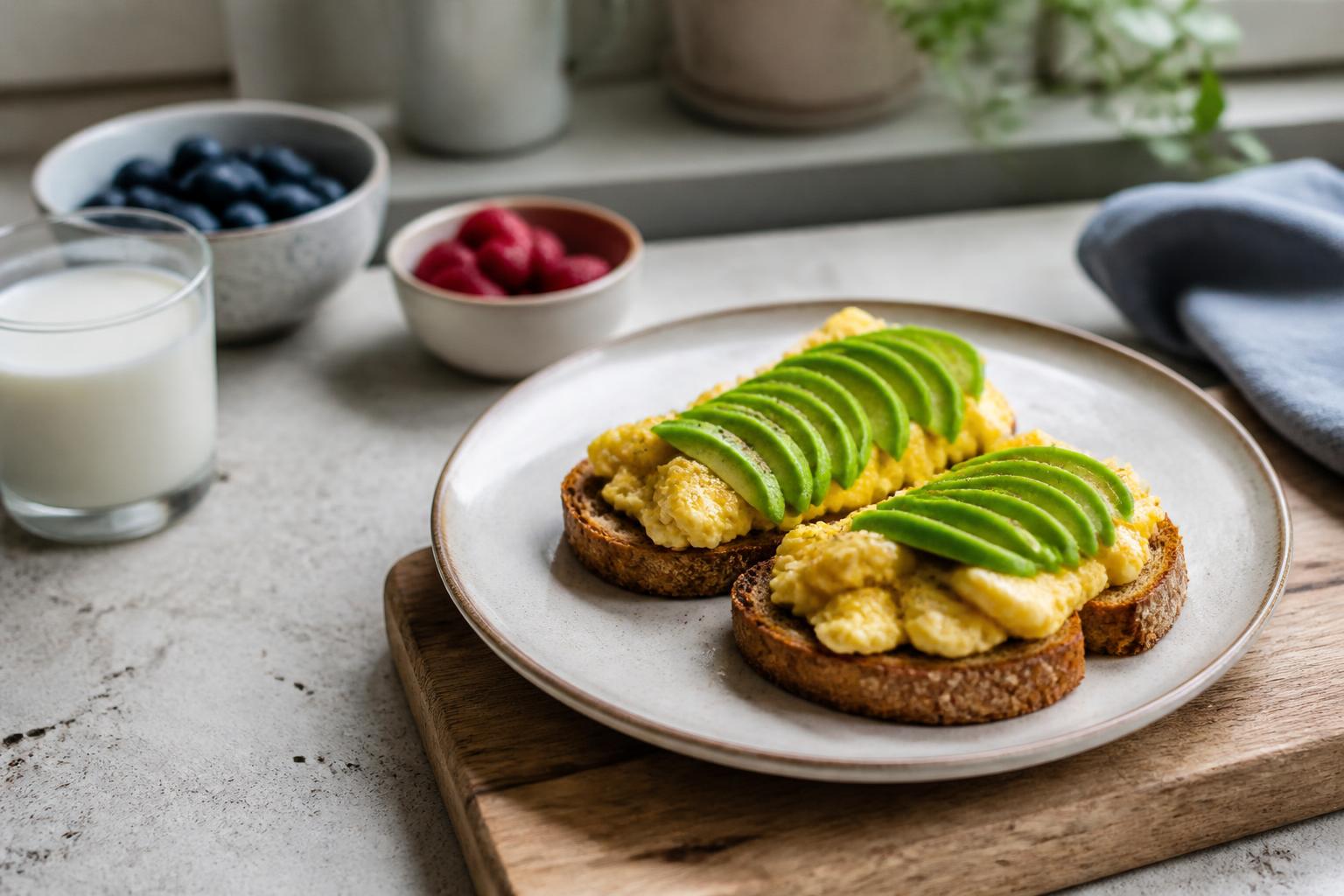
3. Eggs on wholemeal toast with tomatoes
Scrambled or poached eggs on toast stay popular because they work. Add grilled tomatoes, spinach, or mushrooms and you have a balanced breakfast with protein, fibre and vegetables without much effort.
4. Greek-style yoghurt bowl
Use plain yoghurt as the base, then add oats or low sugar granola, fruit, seeds and a few nuts. This is faster than cooking and easier to portion than many packaged breakfast pots.
5. Beans on toast with extras
Baked beans on wholemeal toast are often underestimated. They provide protein and fibre in one go. Add mushrooms, wilted spinach, or an egg if you want a larger meal.
6. Tofu scramble
Crumble firm tofu into a pan with a little oil, turmeric, black pepper and any vegetables you have, such as peppers, mushrooms or spinach. Serve on toast or in a wrap. It reheats well, so it can be cooked in advance.
7. Cottage cheese on toast with fruit or tomatoes
For a very quick breakfast, spread cottage cheese on toast and add sliced tomatoes and black pepper, or pair it with fruit on the side. This suits smaller appetites because it is light but still protein-based.
8. Peanut butter, banana and milk
If you need something very fast, wholemeal toast with peanut butter and banana plus a glass of milk is simple and repeatable. It is less protein-heavy than eggs or yoghurt, but still more balanced than toast alone.
9. Breakfast wrap
Fill a wholemeal wrap with scrambled eggs, beans, or tofu and some spinach. Wraps travel well and can be eaten on the go more easily than toast.
10. Boiled eggs with fruit and toast
Boil a batch of eggs in advance and keep them chilled. In the morning, pair two eggs with wholemeal toast and an apple or satsuma. This is useful when you need breakfast with almost no prep.
11. Smoothie with a proper base
A smoothie becomes more substantial when it includes milk or soya drink, yoghurt, oats and nut butter, rather than just fruit. It works well for people who struggle with solid food early in the day, but it still needs enough body to count as breakfast.
12. Savoury leftovers
There is no rule that breakfast has to look like breakfast. Lentils, leftover roasted vegetables, beans, or a piece of salmon can all be part of a morning meal if that is what fits your routine. We often find that practical eating improves when people stop separating breakfast foods too rigidly from the rest of the day. Our piece on healthy breakfast foods for practical mornings explores this approach further.
How do you judge protein claims on breakfast foods?
Front-of-pack claims can be useful, but they are only a starting point. In the UK, a food can only claim to be a “source of protein” or “high protein” if it meets specific conditions based on how much of the product’s energy comes from protein. That tells you the claim is regulated, but it does not tell you the whole product is a healthy breakfast.
When comparing breakfast foods, we suggest checking four things:
1. Protein per serving and per 100g
A product may look high in protein because the serving size is large, or because the pot is much bigger than a standard yoghurt. Looking at both figures helps you compare like with like.
2. Sugar content
Flavoured yoghurts, breakfast cereals and bars can carry protein claims while also being high in sugar. Compare plain and flavoured versions. Sometimes the simpler product is the better buy.
3. Fibre
A breakfast with decent protein but almost no fibre may not keep you full for long. Oats, wholegrains, fruit, nuts, seeds and beans all help here.
4. Ingredients and overall format
Ask what the product actually is. Is it basically yoghurt, oats and fruit, or is it a highly processed bar with a long ingredient list and a protein claim doing most of the marketing work? Processing is not automatically a problem, but the product still needs to function as food, not just branding.
Be careful with cereals labelled high protein. Some are genuinely useful, especially if they also provide fibre and are not heavily sweetened. Others are little better than standard sweet cereals with added protein ingredients. The same goes for puddings, mousses and drinks sold as breakfast items.
Rules can differ slightly in wording and enforcement between the UK and the EU generally, because nutrition and health claims are now regulated under retained UK law rather than EU law directly, but the practical advice for shoppers is much the same. Read beyond the claim.
How can different eaters adapt a protein breakfast?
A good breakfast pattern should bend around the eater, not the other way round. Protein can be added in simple ways without turning breakfast into a project.
For vegetarians
Eggs, Greek-style yoghurt, milk, cottage cheese and cheese all make this straightforward. A vegetarian breakfast can be as simple as eggs on toast, overnight oats with yoghurt, or a yoghurt bowl with seeds and fruit.
For vegans
Focus on tofu, soya yoghurt, soya drink, peanut butter, nuts, seeds and beans. Oats made with fortified soya drink, topped with nut butter and seeds, are an easy starting point. Tofu scramble and bean-based breakfasts also work well. If you rely on plant drinks and yoghurts, check fortification, especially calcium and iodine where relevant.
For smaller appetites
A large cooked breakfast is not necessary. Smaller protein-based options often work better, such as:
- a boiled egg and a slice of toast
- plain yoghurt with berries
- a smoothie made with milk or soya drink, yoghurt and oats
- cottage cheese with fruit
The key is to make the small meal count. If appetite is limited, the breakfast needs enough substance to be worth eating.
For people eating on the go
Portability matters more than perfection. Good options include overnight oats, a breakfast wrap, a yoghurt pot assembled at home, boiled eggs with fruit, or a smoothie with a proper protein base. Toast is less practical once you leave the house. A lidded container often solves more breakfast problems than a new recipe.
For households feeding more than one age group
Shared staples make mornings easier. Eggs, oats, yoghurt, fruit, beans and wholemeal bread can be used in different ways for adults, teenagers and children without cooking separate meals. For broader family routines, our guides to healthy breakfasts that actually work for teenagers and school-morning options can help join things up.
The most sustainable breakfast habit is usually the least dramatic one. Keep a few reliable protein staples in the fridge or cupboard, pair them with fibre and produce where you can, and repeat the combinations that genuinely suit your mornings. Healthy protein breakfast ideas are useful when they make breakfast easier, not when they make it feel like another task.

Questions about this article or a correction to suggest? Get in touch. Read more about our editorial approach.