A healthy breakfast does not need to be elaborate, expensive or built around a strict set of rules. In practice, the most useful breakfasts are the ones that fit ordinary mornings and give you a sensible mix of energy, fibre and staying power. That usually means combining a carbohydrate source such as oats or wholegrain toast with some protein, some fat, and where possible a portion of fruit or another fibre-rich food.
The best healthy breakfast foods are often the familiar ones already found in UK kitchens, including porridge oats, plain yoghurt, eggs, fruit, nuts, seeds, wholegrain cereals and wholemeal bread. The difference is less about finding a perfect food and more about choosing versions with better fibre content, less added sugar where possible, and portions that suit the rest of your day.
What makes a breakfast healthy?
A healthy breakfast is not defined by whether it is hot or cold, savoury or sweet, early or late. It is better judged by balance. A breakfast that supports you through the morning will usually include three things.
First, it provides energy from carbohydrate. This might come from oats, wholegrain cereal, toast, fruit or yoghurt with some granola. Second, it includes some protein, which may help with fullness and make a breakfast feel more substantial. Eggs, Greek-style yoghurt, milk, kefir, nuts and seeds can all contribute. Third, it contains some fibre, which many adults in the UK would benefit from eating more of. Wholegrains, fruit, nuts, seeds and higher-fibre cereals all help here.
Fat also has a place. Nuts, seeds, peanut butter and dairy foods can make breakfast more satisfying. The point is not to strip breakfast down to the lowest possible fat content. It is to choose foods that are useful nutritionally and practical to eat regularly.
This is why a healthy breakfast can look quite different from one person to another. For one person it may be porridge with milk, banana and pumpkin seeds. For another it may be eggs on wholemeal toast with tomatoes. For someone who is not hungry early on, it may be a later breakfast of plain yoghurt with berries and chopped walnuts. There is no single model that suits everyone.
It also helps to view breakfast in the context of the whole day. If your lunch and evening meal are low in vegetables and wholegrains, breakfast can be a simple place to add fibre and fruit. If you already eat plenty of fibre later in the day, breakfast does not need to carry the entire burden. Healthy breakfast foods matter, but so does the wider pattern of eating.
Which breakfast foods are worth keeping in regular rotation?
If you want breakfasts to stay practical, it helps to rely on a small set of foods that can be used in different combinations. These are the categories worth keeping in regular rotation.
Oats
Oats are one of the most dependable breakfast staples. They are versatile, inexpensive and easy to prepare. Porridge can be made on the hob, in the microwave or soaked overnight. Oats also work in overnight oats, baked oats or as part of a homemade muesli.
They are especially useful because they combine convenience with fibre. To make them more balanced, add milk or yoghurt for protein, then fruit, nuts or seeds for texture and extra staying power.
Wholegrain and higher-fibre cereals
Breakfast cereals vary enormously. Some are little more than refined grains with sugar added, while others offer a genuinely useful amount of fibre. We tend to look for cereals based on wholegrains such as wheat, oats or bran, with a short ingredient list and moderate sugar content.
Shredded wheat, plain oat-based cereals, bran-rich cereals and unsweetened muesli can all be sensible choices. They become a more complete breakfast when served with milk or yoghurt and fruit.
Eggs
Eggs are one of the easiest ways to add protein to breakfast. Boiled eggs can be made in advance, scrambled eggs take only a few minutes, and an omelette can use up leftover vegetables from the fridge. Eggs pair well with wholemeal toast, mushrooms, tomatoes or baked beans.
They are particularly useful for people who prefer a savoury breakfast or who find cereal-based breakfasts less filling.
Yoghurt and fermented dairy
Plain yoghurt, Greek-style yoghurt and kefir can all be useful breakfast foods. They are quick, require no cooking, and work well with fruit, oats, nuts and seeds. The main distinction is often between plain and flavoured versions. Flavoured yoghurts can be convenient, but many contain more sugar than readers expect.
Plain yoghurt gives you more control. You can sweeten it lightly with fruit if you want to, rather than starting with a heavily sweetened pot.
Fruit
Fruit is often the easiest way to make breakfast more balanced without making it more complicated. Bananas, berries, apples, pears, oranges and kiwi fruit all work well. Fresh, frozen and tinned fruit all have a place, although with tinned fruit it is worth checking whether it is in juice or syrup.
Fruit adds fibre and can make simple breakfasts more appealing. Sliced banana on porridge, berries with yoghurt, or an apple alongside peanut butter on toast are all realistic weekday options.
Nuts and seeds
Nuts and seeds are not usually the main event at breakfast, but they are useful supporting ingredients. A tablespoon of chia seeds, flaxseed, pumpkin seeds or chopped almonds can add texture and make a breakfast more satisfying. Nut butters can do the same on toast or stirred into oats.
They are easy to store, need no preparation and can lift otherwise plain breakfasts with very little effort.
Wholemeal toast and other wholegrain breads
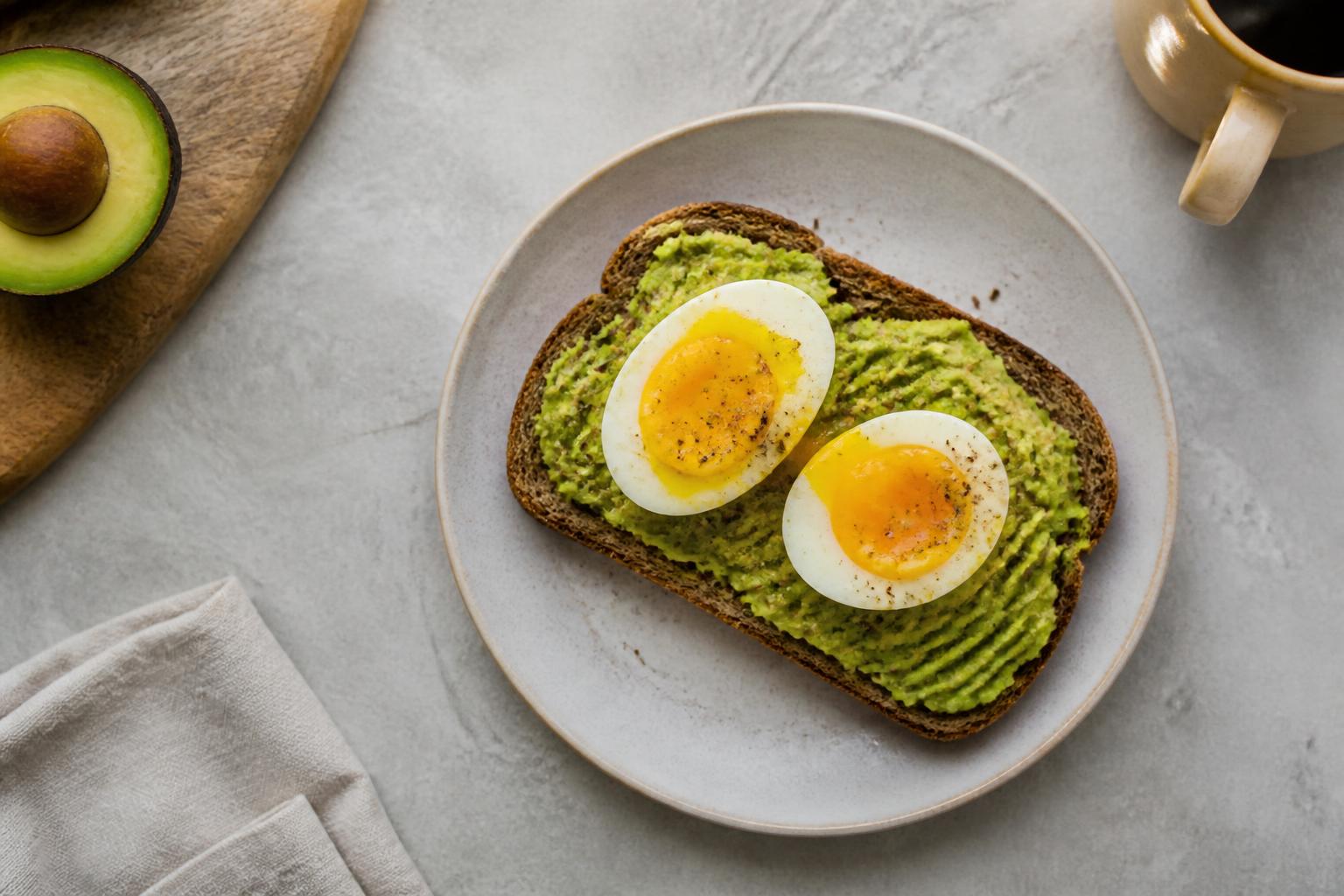
Toast is still one of the most practical weekday breakfasts in the UK. The key is what kind of bread you choose and what you put on it. Wholemeal or other wholegrain loaves will usually offer more fibre than white bread. Toppings such as eggs, peanut butter, cottage cheese, hummus or mashed avocado can turn toast into a more rounded meal.
Toast on its own with a thin scrape of jam may not keep everyone full for long, but toast as a base for protein and fibre can work very well.
If you are trying to build more fibre into the morning, our guide on how to use food labels to add more fibre at breakfast and lunch goes into more detail on what to compare.
How to read labels on cereals, yoghurts and breakfast drinks
UK nutrition labels give you enough information to make useful comparisons, but only if you know where to look. For cereals, yoghurts and breakfast drinks, we focus on four things, fibre, sugar, salt and the ingredient list.
Start with the per 100g or per 100ml column
Front-of-pack portions can be helpful, but they are not always consistent between brands. The per 100g or per 100ml figures make like-for-like comparison easier. If you are deciding between two cereals, this is the best place to start.
For cereal, look at fibre first
Many cereals are marketed as healthy despite offering very little fibre. A cereal with a higher fibre figure per 100g is often a better everyday choice than one made mostly from refined flour or puffed rice with sugar added. Wholegrain ingredients near the top of the list are also a useful sign.
Sugar matters too, but context helps. A plain muesli with dried fruit may show more sugar than a very plain cereal, yet still be a reasonable option because some of that sugar comes from fruit rather than large amounts of added syrup or sugar. The ingredient list helps you judge this.
Salt is worth checking as well. Some breakfast cereals contain more salt than people assume, especially certain flakes, clusters and granolas.
For yoghurt, compare plain with flavoured
With yoghurt, the biggest difference is often between plain and sweetened versions. Check the total sugars per 100g, then read the ingredients. If sugar, glucose syrup, fruit puree concentrate or sweeteners are doing much of the work, that tells you something about the product style.
This does not mean flavoured yoghurt must be avoided. It simply means it is worth comparing options rather than assuming all yoghurts are similar. A plain Greek-style yoghurt with fruit added at home is often one of the simplest routes to a balanced breakfast.
For breakfast drinks, be cautious about marketing
Breakfast drinks, including ready-to-drink shakes and some chilled dairy drinks, are often sold on convenience. Some are useful in specific situations, but they vary widely. Check the sugar content per 100ml, the ingredient list, and whether the drink offers meaningful protein or fibre. A product described as containing oats, fruit or vitamins is not automatically a strong breakfast choice.
In the UK, labels must provide nutrition information in a standard format. If a product also uses traffic light colours on the front, these can help as a quick guide to fat, saturates, sugars and salt. They are voluntary, not mandatory, but common. Rules can differ from the wider EU approach because UK front-of-pack traffic light labelling is a distinct system, even where the underlying nutrition declaration follows broadly familiar principles.
When reading labels, it is usually better to compare products within the same category than across different foods. A yoghurt drink is not directly comparable with porridge oats, but two yoghurt drinks are comparable with each other.
Healthy breakfast ideas for busy weekdays
The most useful healthy breakfast foods are the ones you will actually eat on a Tuesday when time is short. These combinations are quick, ordinary and easy to repeat.
Porridge with fruit and seeds
Make porridge with milk or a fortified unsweetened plant drink, then top with sliced banana, frozen berries or chopped apple and a spoon of seeds. This takes only a few minutes and can be adapted to whatever is in the kitchen.
Overnight oats
Mix oats with milk or yoghurt the night before, then add fruit, cinnamon and chopped nuts. In the morning it is ready to eat or take out with you. This works well for people who prefer a cold breakfast or have little time before leaving home.
Plain yoghurt bowl
Use plain yoghurt or Greek-style yoghurt as a base, then add fruit and a small handful of nuts or a sprinkle of seeds. If you want more texture, add a spoonful of oats or a higher-fibre cereal.
Eggs on wholemeal toast
Scrambled, poached or boiled eggs with wholemeal toast remain one of the most practical savoury breakfasts. Add tomatoes, mushrooms or spinach if you have time, but it still works as a simple two-item breakfast.
Peanut butter toast with fruit
Wholemeal toast with peanut butter and a banana on the side is quick, familiar and more balanced than toast with a sugary spread alone. It is especially useful on mornings when you need breakfast in under five minutes.
Higher-fibre cereal with milk and fruit
A straightforward bowl of cereal can absolutely be a healthy breakfast if the cereal is chosen well. Keep a higher-fibre option in the cupboard, then add milk and fruit. This is one of the easiest breakfasts to keep consistent.
Make-ahead egg muffins or boiled eggs
If weekday mornings are very rushed, cook ahead. Boil several eggs at once or make simple egg muffins with chopped vegetables. Pair them with toast or fruit for a breakfast that is fast without feeling makeshift.
Toast with cottage cheese or hummus
For a savoury change, wholemeal toast with cottage cheese, hummus or mashed beans can work well. Add cucumber, tomatoes or leftover roasted vegetables if available.
If you are trying to improve breakfast as part of your wider eating pattern, our pieces on heart-healthy foods that work in everyday meals and everyday foods that help support a healthy gut may help you join breakfast up with the rest of the week.
When skipping breakfast may or may not matter
Breakfast is not compulsory. Some people wake up hungry and feel better eating within an hour or two of getting up. Others are not hungry until later and prefer a mid-morning meal. Both patterns can fit into a healthy diet.
What matters is whether skipping breakfast works for you in practice. If you regularly miss breakfast and then feel distracted, irritable or excessively hungry by mid-morning, eating something earlier may help. If skipping leads to grabbing pastries, sweets or whatever is nearest later on, then a more planned breakfast may be useful.
Breakfast can also support routine. For people with long commutes, physically active jobs, morning exercise, certain medication schedules, or a tendency to forget to eat until late afternoon, a regular breakfast may make the day easier to manage.
On the other hand, if you genuinely do not want food early on and you eat adequately later in the day, skipping breakfast is not automatically a problem. There is no need to force down a meal simply because breakfast is often described as essential.
The more practical question is this, does your current pattern help you feel reasonably steady through the morning, and does it support the rest of your eating habits? If the answer is yes, it may be fine. If not, breakfast is one of the easiest places to make a small, useful change.
Healthy breakfast foods are not a special category of products reserved for ideal mornings. They are ordinary foods used in sensible combinations, with enough fibre, protein and substance to make the first part of the day easier. For most people, that means keeping a few reliable staples at home, learning how to compare labels, and building breakfasts that are simple enough to repeat without much thought.

Questions about this article or a correction to suggest? Get in touch. Read more about our editorial approach.