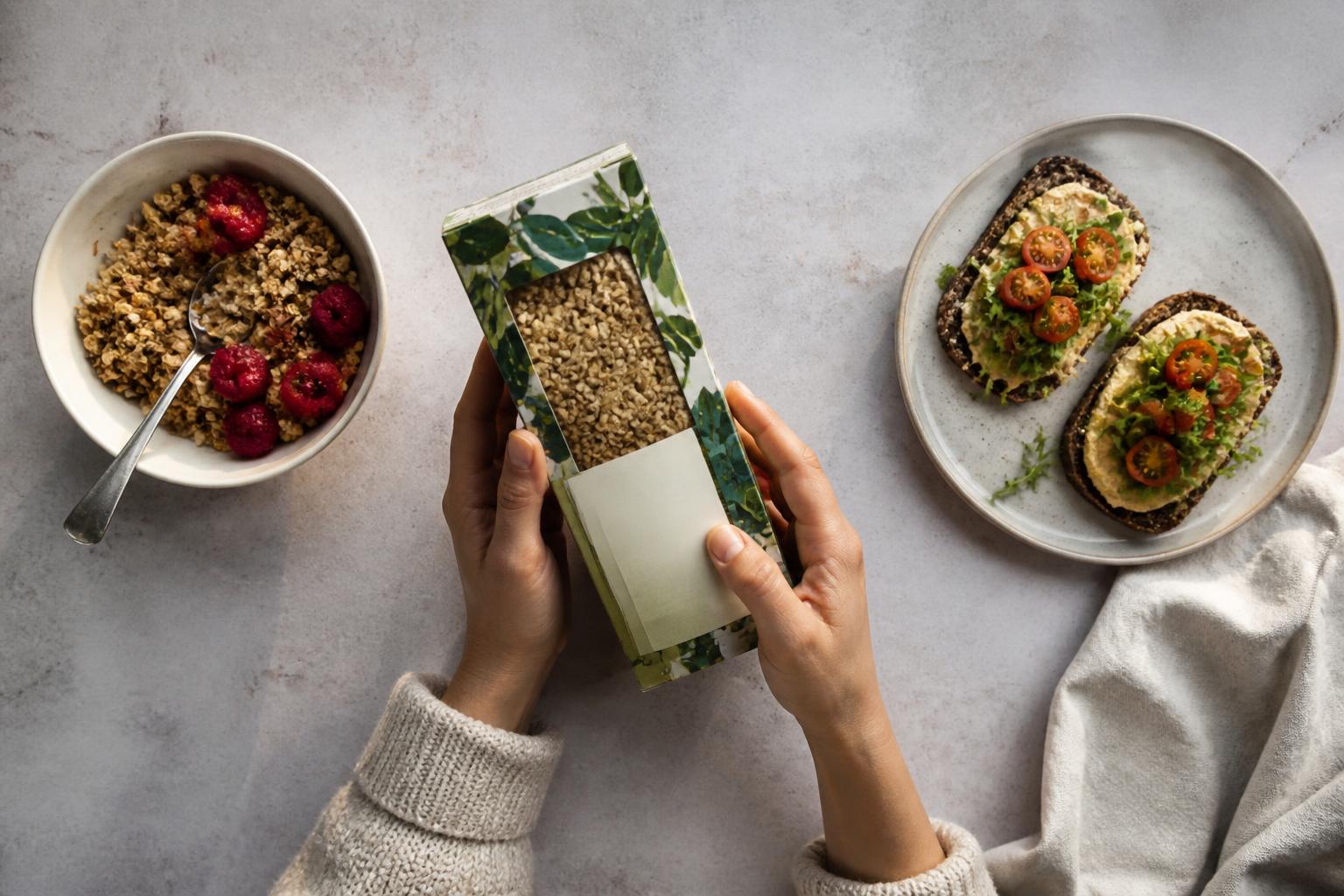
If you want more fibre at breakfast and lunch, the most reliable place to start is the nutrition panel already on the packet. In the UK, fibre is usually listed on the back-of-pack table, often alongside energy, fat, saturates, carbohydrate, sugars, protein and salt. Once you know how to read that line properly, you can compare cereals, breads, wraps, soups, pulses and cupboard staples in a way that makes day-to-day choices easier.
The key is not to chase a single “high fibre” claim on the front of the pack. It is better to compare the fibre figure on the same basis, usually per 100g, then check whether the portion you would actually eat is realistic. That is the practical side of understanding fibre on food labels, and it is often enough to help you build a more filling breakfast and lunch from ordinary foods you already buy.
What the fibre line on a UK label actually tells you
On most UK packaged foods, fibre appears in the back-of-pack nutrition declaration. It may be shown as “fibre” or “fibre/g”, usually in a table that gives values per 100g or per 100ml, and sometimes also per portion. For solid foods such as cereal, bread, crackers, wraps, pasta or rice, the per 100g figure is the most useful starting point.
That matters because per 100g lets you compare like with like. If one cereal gives its fibre per 45g serving and another gives it per 30g serving, the portion figures are not directly comparable. The same problem comes up with soups, snack pots and lunch items sold in different pack sizes. One product can look better simply because the suggested serving is smaller.
In the UK, the legal nutrition declaration is based on standard values per 100g or per 100ml. That is the anchor point. Per portion figures can still be helpful, but only after you have checked the standard amount. If you want a fuller guide to this, our piece on comparing food labels properly by using per 100g and per portion together sets out the method in more detail.
Front-of-pack claims can add context, but they are not the whole story. A food labelled “source of fibre” or “high fibre” may still be less useful to you than another similar food with a stronger per 100g fibre value, a more practical portion size, or a simpler ingredient list. Claims are regulated, but they are still only one part of the picture.
It is also worth knowing what labels cannot do. The fibre line tells you how much fibre is in the food, but it does not tell you whether that food fits the rest of the meal. A wrap with a better fibre figure than another wrap can still become a low-fibre lunch if the filling is mostly cheese and sauce with very little salad, beans or vegetables. Labels help most when you use them across the whole plate, not on one item in isolation.
How much fibre adults in the UK are advised to have
Current NHS guidance is that adults should aim for 30g of fibre a day. Many adults in the UK eat less than that, which is one reason breakfast and lunch are useful places to make practical changes. These are meals people often repeat, so small improvements can add up without turning every meal into a project.
That does not mean you need to jump straight from a low-fibre routine to a very high-fibre day. In practice, gradual increases are usually easier. If you currently have white toast for breakfast and a low-fibre lunch most days, changing both meals at once can feel like too much, especially if your usual choices are based on speed, habit or what is already in the cupboard.
A steadier approach works better for most people. You might start by changing one breakfast item, then one lunch staple, then adding fruit, pulses or vegetables where they fit naturally. This also gives your digestion time to adjust. A sudden increase in fibre can feel uncomfortable for some people, especially if fluid intake does not keep pace.
Drinking enough matters here. Fibre works best as part of an overall eating pattern that includes regular fluids, so if you are adding oats, wholegrains, beans and lentils more often, it makes sense to keep an eye on what you are drinking through the day as well.
If you are trying to make breakfast and lunch feel more balanced overall, not just higher in fibre, our guide to healthy eating ideas that work on ordinary UK days is a useful next step.
A simple way to build a higher-fibre breakfast from cupboard basics
A practical breakfast template is to combine one grain food, one fruit, and then an optional extra such as seeds or nuts if you already use them. You do not need brand-specific numbers to do this. The packet in your own kitchen already gives you the figures you need.
Start with the grain base. This might be porridge oats, shredded wheat, a wholegrain wheat biscuit cereal, muesli, bran-rich cereal, or another wholegrain breakfast cereal. Check the fibre per 100g first. If you are comparing two cereals, use that number before looking at the serving suggestion.
Then look at the ingredient list. If wholegrain oats, whole wheat or another wholegrain ingredient appears near the start, that usually tells you more than a front-of-pack slogan. For breakfast cereals in particular, ingredient order and fibre per 100g are a good pair of checks.
From there, add ordinary cupboard or fruit bowl foods. Useful combinations include:
- Porridge oats with chopped apple or pear
- Wholegrain cereal with sliced banana
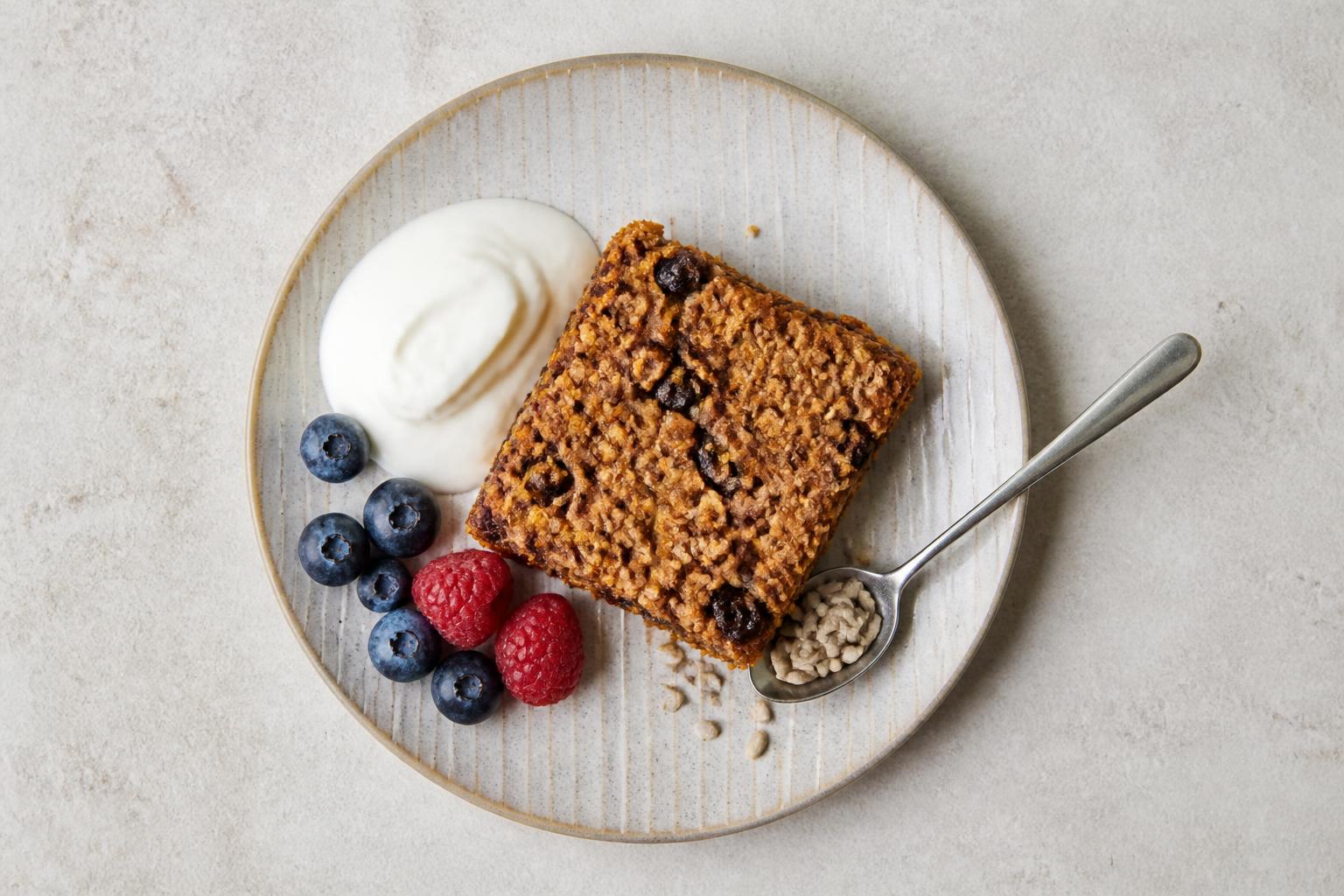
- Wheat biscuits with berries, fresh or frozen
- Muesli with dried fruit, if that suits your usual breakfast
- Oats with ground flaxseed or chia seeds, if you already keep them in
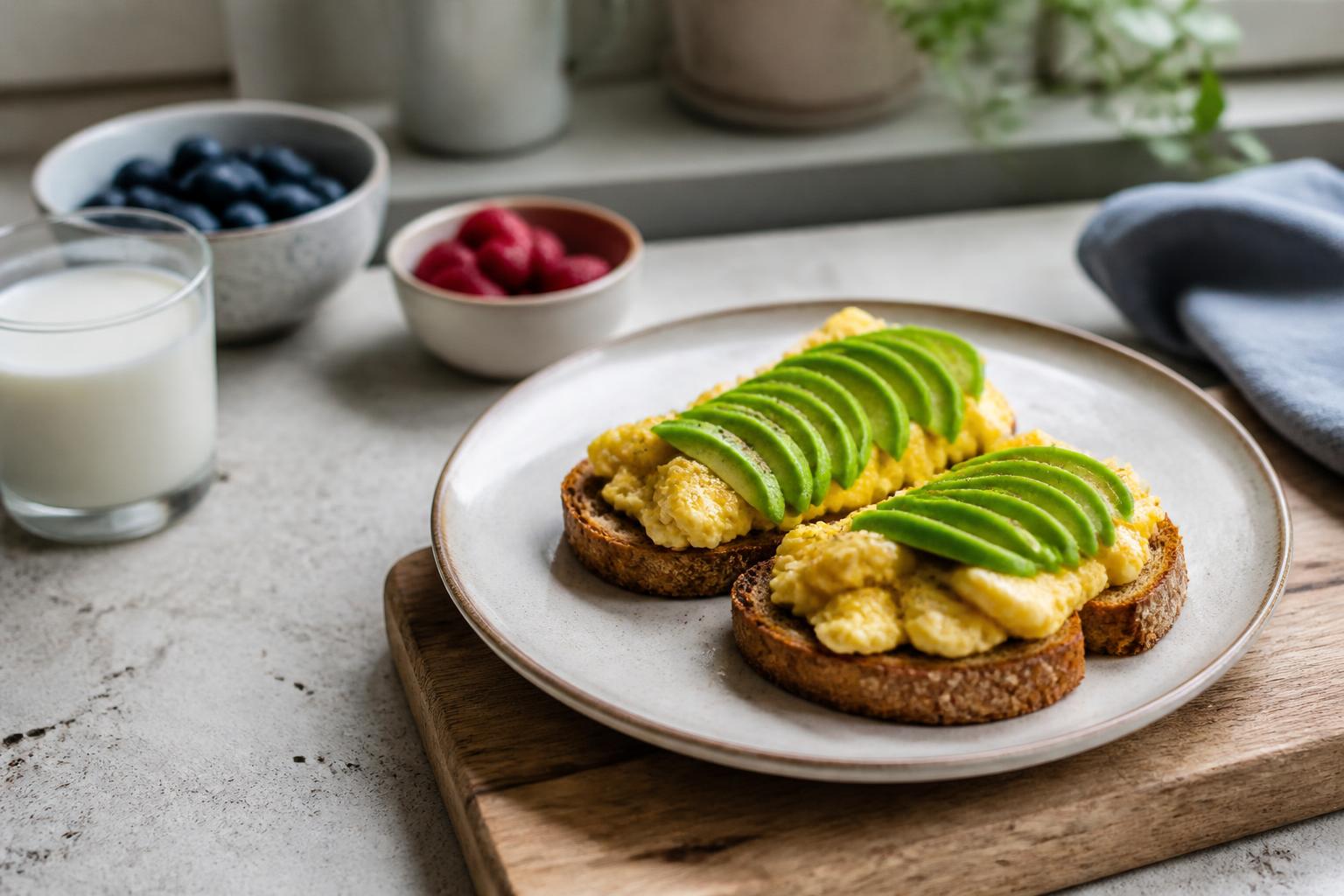
You do not need to copy anyone else’s bowl exactly. The point is to use your own packet values. If one cereal in your cupboard has clearly more fibre per 100g than another, that is the easier base to use more often. If your breakfast is toast-based, compare the bread in the same way. A loaf with a better fibre figure per 100g, plus a topping such as peanut butter and sliced banana or beans on toast, can shift the meal without changing its basic shape.
Portion size still matters. If a cereal has a strong fibre figure per 100g but you only eat a very small amount, the breakfast may contribute less fibre than you expect. Equally, a modestly higher-fibre cereal eaten in a realistic bowl with fruit may do more for the meal overall than a product chosen only for a bold claim on the front.
For readers who want to improve the morning routine more generally, we have a guide to a healthier start to the morning.
Easy lunch combinations using beans, lentils and wholegrains
Lunch is often where fibre can rise quite quickly, because beans, lentils, wholegrains and vegetables fit naturally into soups, salads, sandwiches, wraps and leftovers. Again, there is no need to invent numbers. Use the labels on the foods you buy and compare similar products directly.
A simple method is to choose one staple, one pulse food, and one or two vegetable elements.
For the staple, this could be:
- Wholemeal or seeded bread
- A wrap with a better fibre figure than your usual one
- Brown rice or another wholegrain rice product
- Wholewheat pasta
- A grain pouch or leftover cooked grains from dinner
For the pulse element, this could be:
- Tinned beans such as kidney beans, black beans, cannellini beans or chickpeas
- Lentils, tinned or dried and cooked
- Bean-based soup
- A lentil salad pot, if you compare labels carefully
Then add vegetables in the form that suits the meal:
- Salad leaves, tomatoes, cucumber, peppers
- Leftover roasted vegetables
- Frozen vegetables added to soup, rice or pasta
- Grated carrot or sliced red cabbage in wraps and sandwiches
Flexible lunch ideas include wholemeal toast topped with beans and tomatoes, a wrap with hummus, chickpeas and salad, lentil soup with wholegrain bread, brown rice with mixed beans and vegetables, or wholewheat pasta mixed with lentils and leftover roasted veg.
If you buy convenience lunch items, the same rules apply. Compare soups per 100g, not just per pot. Compare wraps against wraps, not wraps against sliced bread. Compare pasta pots with realistic serving sizes in mind. A “lighter” snack-style lunch can look tidy on the label but still offer very little fibre if the main components are refined starches with only token vegetables.
This is where the ingredient list helps. In a bean soup, lentils or beans should appear clearly in the ingredients, not as a minor extra. In a bread product, wholemeal flour or wholegrain ingredients should be prominent if the fibre figure is genuinely stronger. In a rice pouch, brown or wholegrain rice should be obvious from both the name and the ingredient list.
How to compare two similar foods without being misled by portions
When two foods look similar, compare them in three steps.
First, check fibre per 100g. This is your standard measure. It cuts through the problem of one product using a small suggested serving and another using a larger one. For cereals, breads, wraps, soups and snack-style lunches, this is usually the fairest starting point.
Second, look at the ingredient order. Ingredients are listed by weight, so the first few items tell you a lot. For bread, cereal and wraps, wholegrain ingredients appearing early in the list usually support a better fibre profile. For soups and lunch pots, beans, lentils and vegetables should be substantial ingredients if the product is meant to contribute meaningfully.
Third, sense-check the serving size. Ask yourself what you would actually eat. If a cereal’s fibre looks impressive only because the label assumes a portion you would never stick to, that matters. If a soup has a decent fibre figure per 100g but the pot is very small and you usually need bread, fruit or another side to make lunch, count the meal as a whole.
This approach is especially useful when products are marketed in slightly confusing ways. A seeded loaf is not automatically higher in fibre than another bread. A granola is not automatically a better fibre choice than porridge oats. A vegetable soup is not automatically rich in fibre just because vegetables appear on the front of the pack. The back-of-pack panel and ingredient list tell the real story.
If you also want to weigh up value while shopping, our guide to spotting the better buy on your healthy food shop works well alongside label comparisons.
Practical ways to increase fibre without overcomplicating meals
The easiest changes are usually the ones that keep the meal recognisable. Swap one staple rather than rebuilding everything. Add one fibre-containing food rather than trying to tick every box at once.
At breakfast, that might mean changing from a lower-fibre cereal to oats or another wholegrain cereal, then adding fruit a few days a week. At lunch, it might mean using wholemeal bread instead of white, adding beans to soup, or choosing lentils and vegetables as part of a leftovers-based meal.
It also helps to think across the day rather than trying to make one meal do all the work. Breakfast does not need to provide a dramatic amount of fibre if lunch and dinner also include wholegrains, pulses, fruit and vegetables. Equally, a lower-fibre breakfast is less of an issue if lunch is built around lentils, wholegrain bread and salad. Fibre adds up from several ordinary choices.
Keep changes gradual if your current intake is low. A steady increase is often more practical than a sudden jump, and keeping fluids up alongside that increase is sensible. There is no need to force foods you do not enjoy. If you dislike one pulse, another may suit you better. If you do not want seeds in breakfast, fruit and wholegrains may be enough to start with.
Finally, remember that a label cannot tell you everything about a food’s place in a meal. The fibre line is useful, but it does not replace common sense about variety, balance and what you will genuinely eat. A food with a stronger fibre figure is not automatically the better meal if the rest of the plate is narrow or unsatisfying. In the same way, a food with only a moderate fibre figure can still fit well when combined with beans, vegetables, fruit or wholegrains elsewhere in the day.
For many people, the most workable approach is simple. Read the fibre line on the foods already in your cupboard. Compare similar products per 100g. Check ingredients. Build breakfast and lunch from a few repeatable combinations. That is the practical value of understanding fibre on food labels, and it is enough to make everyday meals more useful without overcomplicating them.

Questions about this article or a correction to suggest? Get in touch. Read more about our editorial approach.