A better buy is not always the pack with the lowest shelf price, and it is not always the one with the lowest price per 100g either. For a sensible, affordable healthy food shop, we need to compare packs in a way that reflects what we will actually eat, how long it will keep, and how much of the food is genuinely usable.
That is where unit pricing helps. In UK shops, the price per 100g, per kg, per 100ml or per litre gives us a standard way to compare different sizes. But it is only one part of the decision. If a larger bag goes stale, if half a jar ends up in the bin, or if much of the stated weight is liquid, shell or peel, the apparent bargain may not be the better buy at all.
What unit pricing can and cannot tell you
Unit pricing tells us the cost of a product in a standard unit, usually per 100g or per kg for food sold by weight. It exists so we can compare different pack sizes without doing all the arithmetic in our heads while standing in the aisle.
If one bag of oats is 500g for £1.10 and another is 1kg for £1.90, the shelf price alone is not enough. The 500g bag works out at 22p per 100g. The 1kg bag works out at 19p per 100g. On a straight like for like comparison, the larger pack is cheaper for the amount of food we get.
That matters when building a healthy food shopping list because many staple foods come in several sizes, and the largest visible saving is often hidden in the smaller number on the shelf edge label. Beans, lentils, oats, rice, nuts, seeds, frozen vegetables and yoghurt are all categories where unit pricing can quickly show whether we are paying more simply for a smaller pack.
In the UK, unit pricing rules are set out under price marking law, and the Competition and Markets Authority has issued guidance to help retailers present unit prices clearly. The broad aim is simple, shoppers should be able to compare products easily. A retailer may show price per 100g or per kg depending on the product and how it is usually sold, but the unit should make comparison straightforward within the category.
That said, unit pricing cannot tell us everything.
It does not tell us whether two products are nutritionally equivalent. A sweetened granola and plain porridge oats may sit near each other and both show a price per 100g, but that does not make them interchangeable. It also does not tell us whether a product contains a lot of water, brine or syrup that we may not eat. Nor does it account for spoilage, portion size, or whether we even like the food enough to finish it.
So for a Healthy Food Shopping List, unit pricing is a starting point, not a verdict. We use it first to narrow down the better-value options, then we check whether the comparison is genuinely fair. If you want to get more confident about how standardised food labels work alongside price labels, our guide to compare food labels properly is a useful next step.
How to compare pack sizes without being misled
A simple method works well in most shops.
First, check the total pack weight. Second, check the unit price shown on the shelf label. Third, make sure the products are genuinely comparable. Fourth, sense-check how much you will use before quality drops.
Here is a fictional example using almonds.
Small pack, 200g for £2.40
Multipack, 4 x 50g for £2.60
Big bag, 750g for £7.50
Now convert them to the same basis.
200g for £2.40 = £1.20 per 100g
4 x 50g = 200g total for £2.60 = £1.30 per 100g
750g for £7.50 = £1.00 per 100g
On unit price alone, the big bag is the cheapest, then the single 200g pack, then the multipack.
That result often surprises people because multipacks can feel like a deal. Sometimes they are convenient rather than cheap. Individually wrapped portions may help with packed lunches or portion control, but convenience packaging often raises the cost per 100g.
Now take a fictional cereal example.
375g box for £1.80
750g box for £3.20
Two 375g boxes on offer for £3.50
The calculations are:
375g box = 48p per 100g
750g box = about 43p per 100g
Two 375g boxes, 750g total = about 47p per 100g
The larger box is still the better buy. A multibuy offer is not automatically the cheapest route to the same amount of food.
CMA guidance matters here because retailers should present unit prices clearly enough for shoppers to compare products without being misled by pack design, promotional stickers or awkward arithmetic. But shelf labels are still only as helpful as the comparison itself. If one soup is concentrated and another is ready to eat, or one yoghurt is plain and another includes a fruit layer and topping, the lowest unit price does not necessarily answer the real buying question.
A practical rule is this. Compare like with like first.
Plain Greek yoghurt with plain Greek yoghurt. Frozen berries with frozen berries. Unsalted mixed nuts with unsalted mixed nuts. If the products differ materially in ingredients, preparation or edible content, unit price is useful but incomplete.
It also helps to ignore visual cues such as “family size”, “value pack” or “snack pack”. Those phrases are marketing, not maths. We rely on the weight and the unit price.
When the cheapest pack creates more waste
The cheapest pack per 100g only saves money if we use it. That is the point where household habits matter more than shelf arithmetic.
Consider spinach. A large bag may have the lowest unit price, but fresh leaves can spoil quickly. If we know we only use a handful in sandwiches and the rest often goes slimy in the fridge drawer, the lower unit price is not better value in practice. A smaller bag, or frozen spinach used as needed, may cost more per 100g and still be the wiser buy.
The same applies to foods that go stale after opening. Big bags of nuts, seeds, crackers and wholegrain cereals can be good value if we store them well and use them steadily. If they sit open for weeks and lose freshness, the saving disappears.
A realistic value check comes down to four questions.
How much do we actually use in a week?
How long will it keep unopened and once opened?
Can we store it properly?
Will everyone in the household eat it?
Take hummus as a fictional example.
200g tub for £1.20
500g tub for £2.40
The larger tub is cheaper per 100g. But if we buy it for one person who only has it occasionally, and half remains after the use-by window once opened, then the smaller tub may be cheaper in real terms because less is wasted.
Portion size also matters. A large tub of yoghurt may be excellent value for a household that eats it every morning. It may be poor value for someone who buys it with good intentions and then forgets about it.
For dried staples, waste risk is lower, but not zero. We still need to think about cupboard space, pest risk, freshness and whether we will cook it. A 5kg bag of brown rice can be a good buy if we cook it regularly. It is not a bargain if it lingers for a year while we keep reaching for something else.
This is especially relevant for a Healthy Food Shopping List because “healthy” foods are often bought aspirationally. We mean to eat more pulses, more seeds, more wholegrains, more fresh produce. Better value starts with honest buying. It is usually cheaper to buy a smaller amount that we will definitely use than a larger amount that fits the image of a disciplined weekly shop but ends up wasted.
Planning meals helps here. If we know how ingredients will be used across several days, bigger packs become easier to justify. Our guides to healthy eating ideas that work on ordinary UK days and healthy meals you can cook without overthinking it can help turn that plan into actual meals rather than good intentions.
Why drained and edible weight sometimes matter more
Some foods are sold with liquid, shells, skins or other inedible parts included in the pack weight. In those cases, total pack weight can distort the comparison.
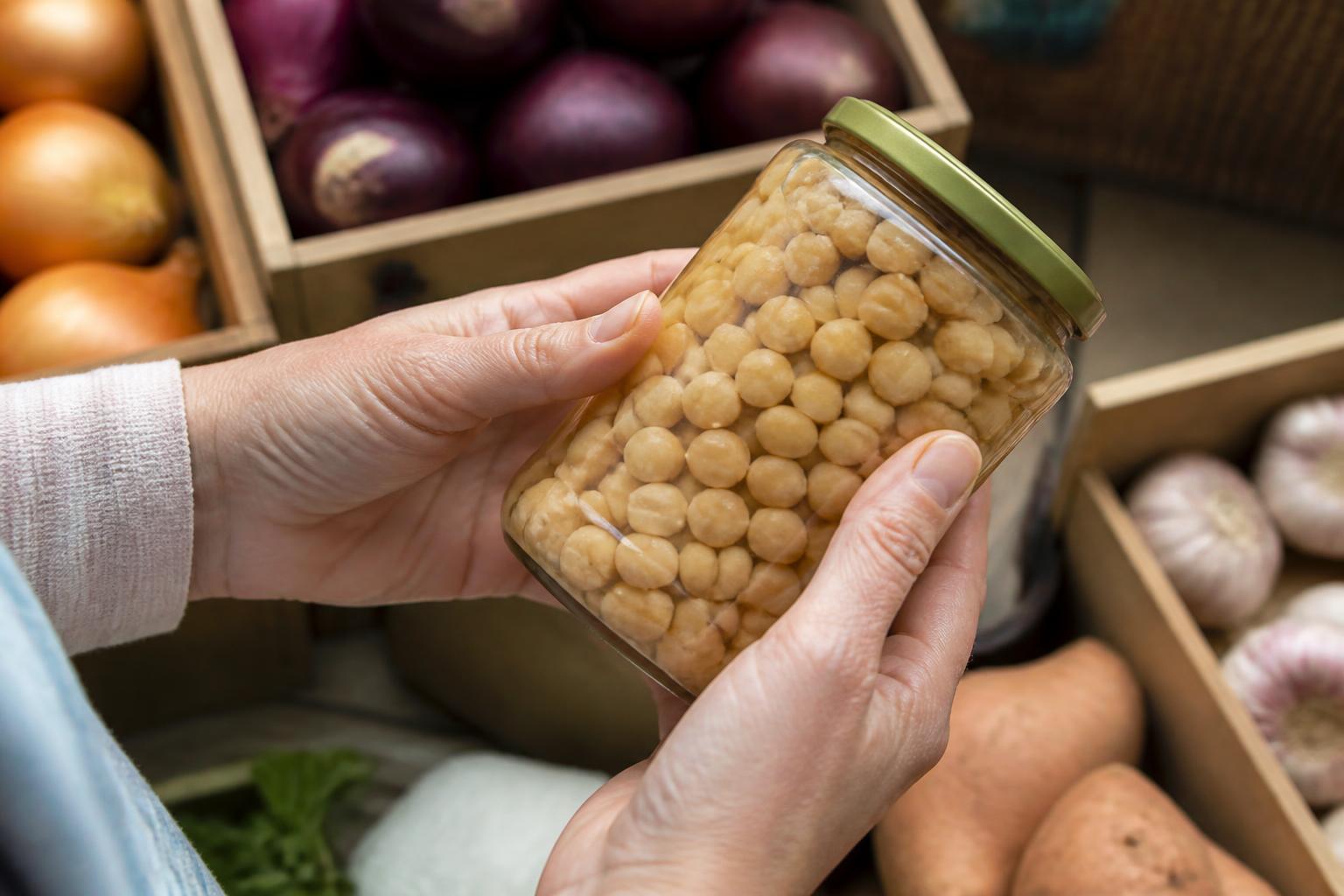
The clearest examples are foods in liquid. Tinned beans, chickpeas, sweetcorn, tuna and fruit may all include water, brine, oil or syrup. If one tin appears cheaper per 100g based on total contents, but a significant share of that weight is liquid that we drain away, the comparison may not reflect what we actually eat.
For example, imagine two fictional tins of chickpeas.
Tin A, 400g total, drained weight 240g, price 70p
Tin B, 400g total, drained weight 265g, price 78p
By total weight, Tin A looks cheaper at 17.5p per 100g and Tin B at 19.5p per 100g. But by drained weight, Tin A is about 29p per 100g and Tin B is about 29.4p per 100g. Suddenly they are almost the same.
In some cases the result flips the other way. A slightly more expensive tin may provide more actual beans or fish once drained, making it the better buy.
The same principle applies to fish packed in spring water or oil, and to fruit in juice or syrup. Where the label gives a drained weight, that figure is often more useful than total weight for value comparison.
Then there is edible weight. Whole prawns with shells, bananas with skins, avocados with stones and skins, and bone-in cuts all include parts we do not eat. A lower price per kg may not be better value than a higher price per kg on the ready-to-eat version.
For fresh produce, retailers often price the whole item as sold, which is normal and lawful. But when comparing options for value, especially across formats, we should think about usable food.
A fictional example with pineapple makes the point.
Whole pineapple, 1kg for £1.80
Prepared pineapple chunks, 300g for £1.20
At first glance, the whole pineapple looks much cheaper. But the skin and core are not edible, and the edible yield may be far below 1kg. That does not mean the prepared pack is automatically better value, only that the comparison needs a reality check.
UK unit pricing does not always solve this for us because shelf labels usually follow the product as sold, not the edible portion after home preparation. That is one reason unit price is a starting point rather than the final answer.
Where a rule differs between the UK and the EU generally, the practical point for shoppers is that retailers may not present unit prices in exactly the same way in every market or category. For UK readers shopping here, the relevant comparison is the unit pricing shown under UK retail practice and CMA guidance. If you are reading packaging from imported products or comparing habits picked up abroad, be aware that the display basis may not match what you see in a UK supermarket.
A practical checklist for healthier budget shopping
When we want better value without drifting into false economy, a short checklist helps. We use this approach before putting a product into the trolley.
Check the unit price.
Look at the price per 100g, per kg, per 100ml or per litre, not just the headline shelf price.
Compare like with like.
Make sure the products are genuinely similar in ingredients, format and use.
Check the usable amount.
If the product comes in liquid, shells, skins or other inedible parts, look for drained weight or think about edible yield.
Be cautious with multipacks.
They may be convenient, but they are not automatically cheaper per 100g.
Ask whether we will finish it.
A larger pack is only better value if we will use it before it spoils or goes stale.
Match the pack to the household.
Buy for real appetite, storage space and routine, not for idealised meal plans.
Use promotions carefully.
Multibuys only save money if they reduce the cost of food we already intended to buy and use.
Think beyond one item.
A cheaper ingredient that works across several meals is often better value than a bargain snack bought on impulse.
If you are planning the wider shop as well as comparing individual packs, our guide to /eating-healthily-on-a-budget covers the broader decisions that make healthy eating more affordable week to week.
The better buy on your healthy food shop is usually the one that balances three things at once, fair unit price, fair comparison and realistic use at home. When we keep all three in view, we spend less on waste, make better sense of shelf labels, and build a healthier basket that actually works in everyday life.

Questions about this article or a correction to suggest? Get in touch. Read more about our editorial approach.