Eating on a budget involves more than finding the cheapest ingredient. The useful choice is food you can afford, store, prepare and enjoy before it goes to waste. Time, transport, cooking facilities and energy costs all affect what that looks like.
A realistic plan leaves room for convenience. You do not need a perfectly organised freezer, a long batch-cooking session or a different recipe every evening to make your food budget work harder.
Check the kitchen before the shopping list
Look through the fridge, freezer and cupboards. Write down a few ingredients that need using, then build meals around them. Half a bag of pasta and a tin of beans already give you a starting point.
Check dates and storage instructions while you look. Put food that needs using soon where you can see it. Keeping a short list on the fridge can be simpler than remembering everything in several cupboards.
Avoid planning a recipe around one leftover ingredient if it means buying five expensive extras. Sometimes the useful solution is a plain lunch or a smaller side dish.
Plan meal shapes, then choose ingredients
Instead of committing to a complicated seven-day menu, pick a few flexible formats:
- Pasta with vegetables and beans, lentils, fish or another protein food.
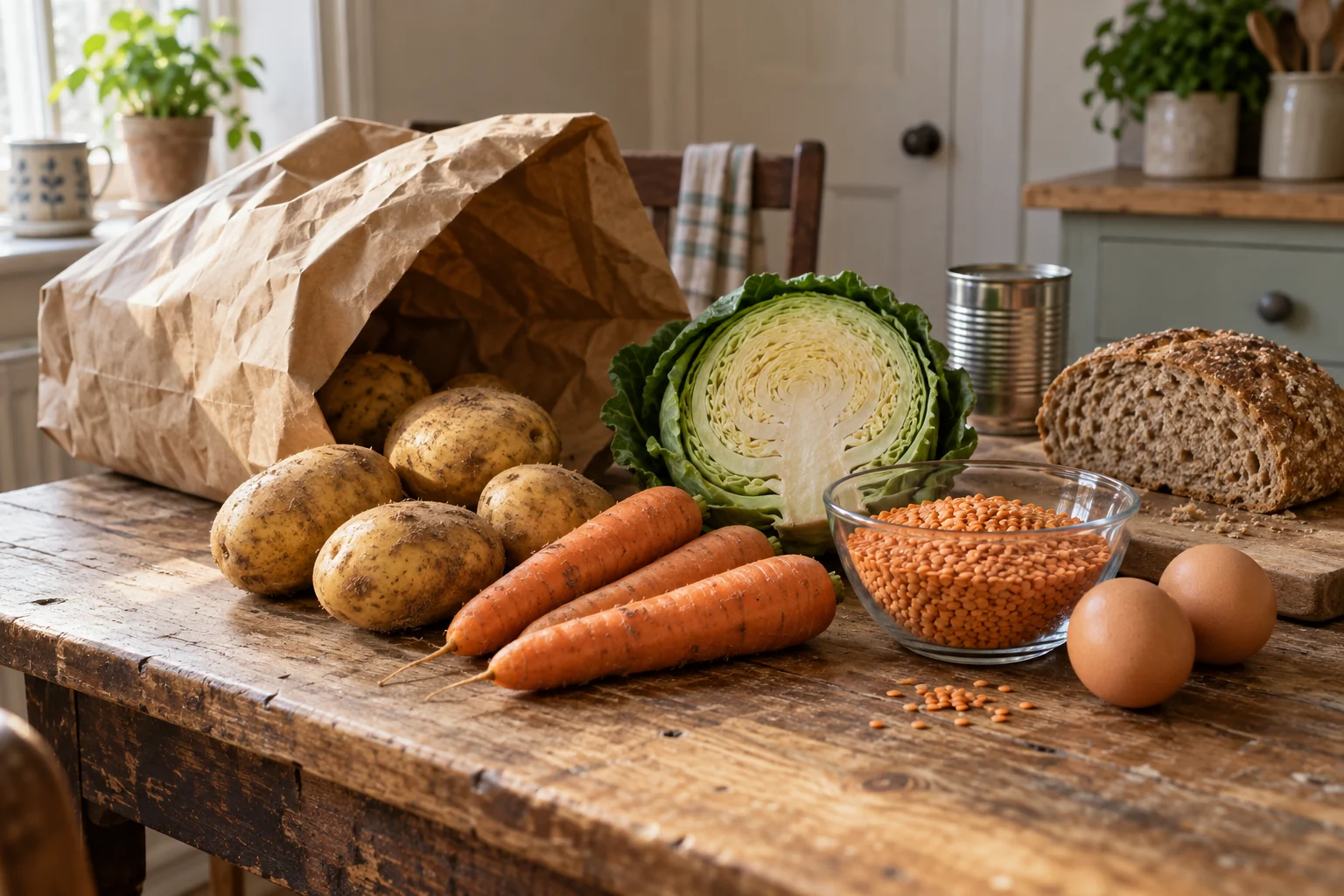
- A jacket potato with a filling and vegetables alongside.
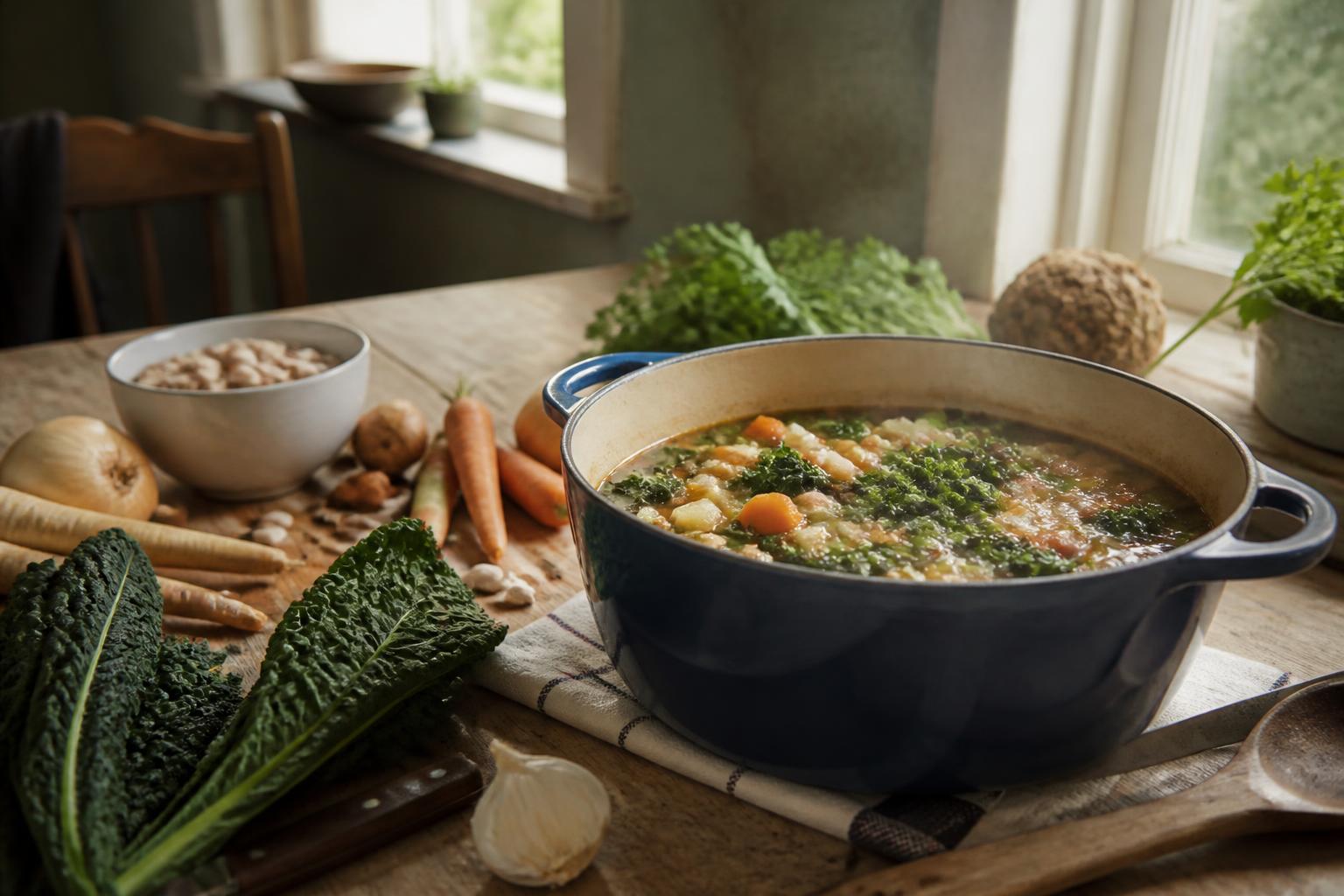
- Soup with bread and something extra if you want a larger meal.
- Rice or another grain with a mixed vegetable dish.
- Eggs, beans or tofu on toast.
- A quick sandwich or wrap with fresh vegetables.
These are starting points, not a fixed shopping prescription. Choose foods that suit your diet and the equipment you have. A microwave-friendly meal can be more practical than a dish needing an oven and several pans.
Leave a spare slot for leftovers or a change of plans. Buying exactly seven fresh evening meals can create pressure when one evening unexpectedly changes.
Give cupboard and freezer foods a fair comparison
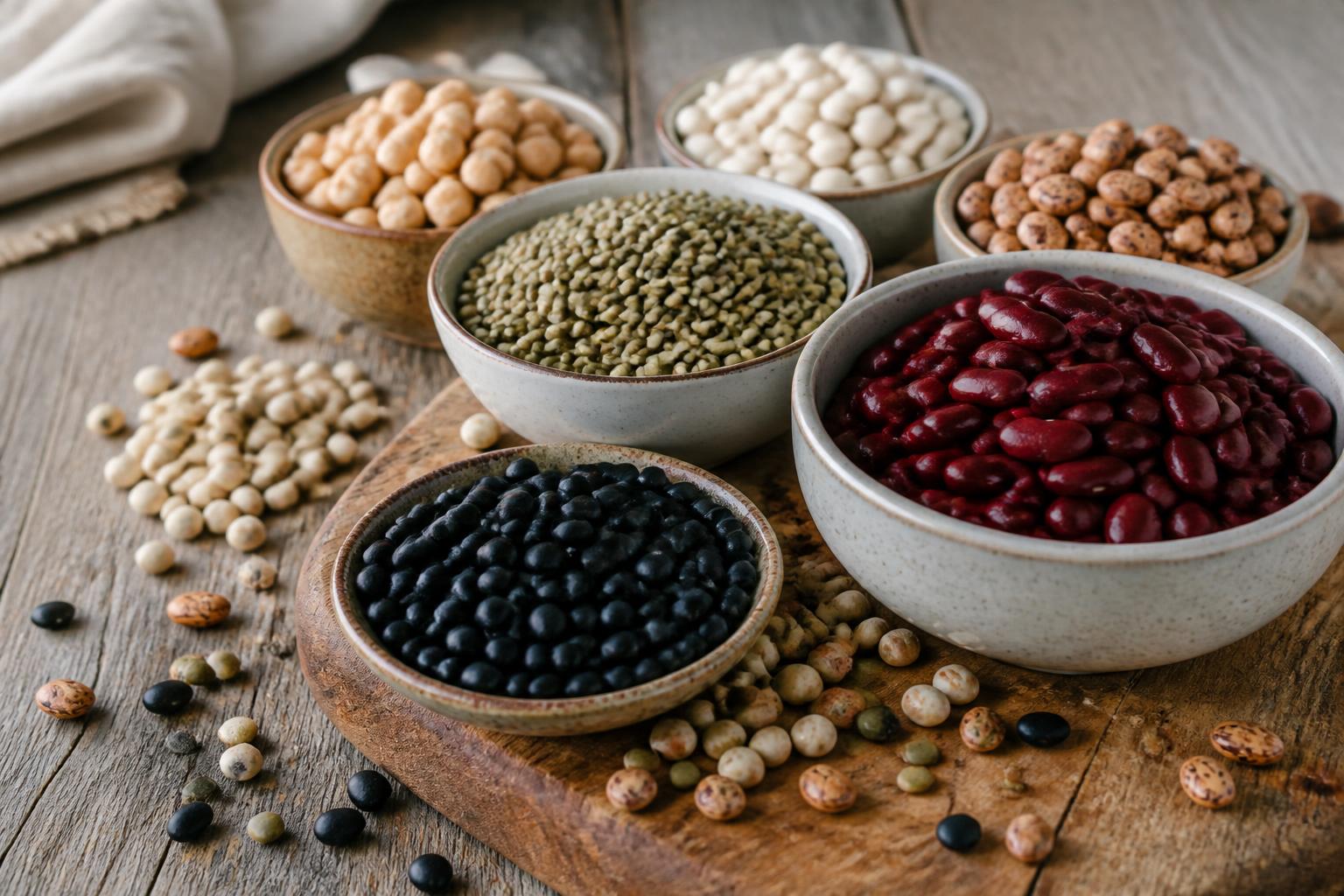
NHS trust guidance on eating on a budget highlights frozen vegetables, canned pulses and supermarket own brands as useful options to consider.
Compare them with the foods you would actually use. A large bag is only good value if you have room to store it and will finish it. If you have no freezer space, a tin may be the more practical purchase even when another format has a lower price per kilogram.
Frozen peas can be added in small amounts, while a tin of chickpeas can form the basis of a quick lunch. Follow cooking directions: frozen food is not automatically ready to eat without preparation.
Compare price and portion sensibly
Shelf-edge unit prices can help you compare pack sizes. Check that you are comparing the same basis, such as price per kilogram, and take account of drained weight where relevant.
Then ask what you will get from the pack. Would you use the whole bunch of herbs? Does the meal kit require ingredients you still need to buy? Is the cheaper product acceptable to everyone eating it?
Try an own-brand version of a staple you regularly purchase. One small comparison is more manageable than replacing every familiar food at once. Keep what works, and do not feel obliged to finish buying something your household consistently dislikes.
Make leftovers a plan
When a meal leaves spare food, decide promptly whether it is for the fridge or freezer. The Food Standards Agency's cooking guidance says to cool and refrigerate leftovers within two hours, use them within 48 hours or freeze them, and reheat only once until steaming hot throughout.
Some foods have specific instructions, so check those too. Label containers with their contents and date. A mystery tub is easy to forget.
You can prepare an extra portion without turning the whole weekend into meal preparation. Cooking for tomorrow's lunch alongside tonight's dinner may be enough.
Build one genuinely useful backup meal
Keep ingredients for a meal you can make when plans fall apart. For one household that might be beans on toast; for another it might be a tin of soup, bread and cheese, or a frozen dish with extra vegetables.
A backup meal should require little decision-making. Choose something you already like and can prepare safely with the energy you have that day. It is useful precisely because it is uncomplicated.
Protect variety without chasing perfection
The NHS balanced eating guide includes a range of food groups and recognises fresh, frozen and canned produce. A budget plan can work within that broad pattern.
If a plan costs more than you can spend, revise the plan rather than blaming yourself. Household circumstances differ, and no shopping trick removes every financial pressure. Start with one change that reduces waste or makes a reliable meal easier. That is a practical improvement you can build on.

Questions about this article or a correction to suggest? Get in touch. Read more about our editorial approach.