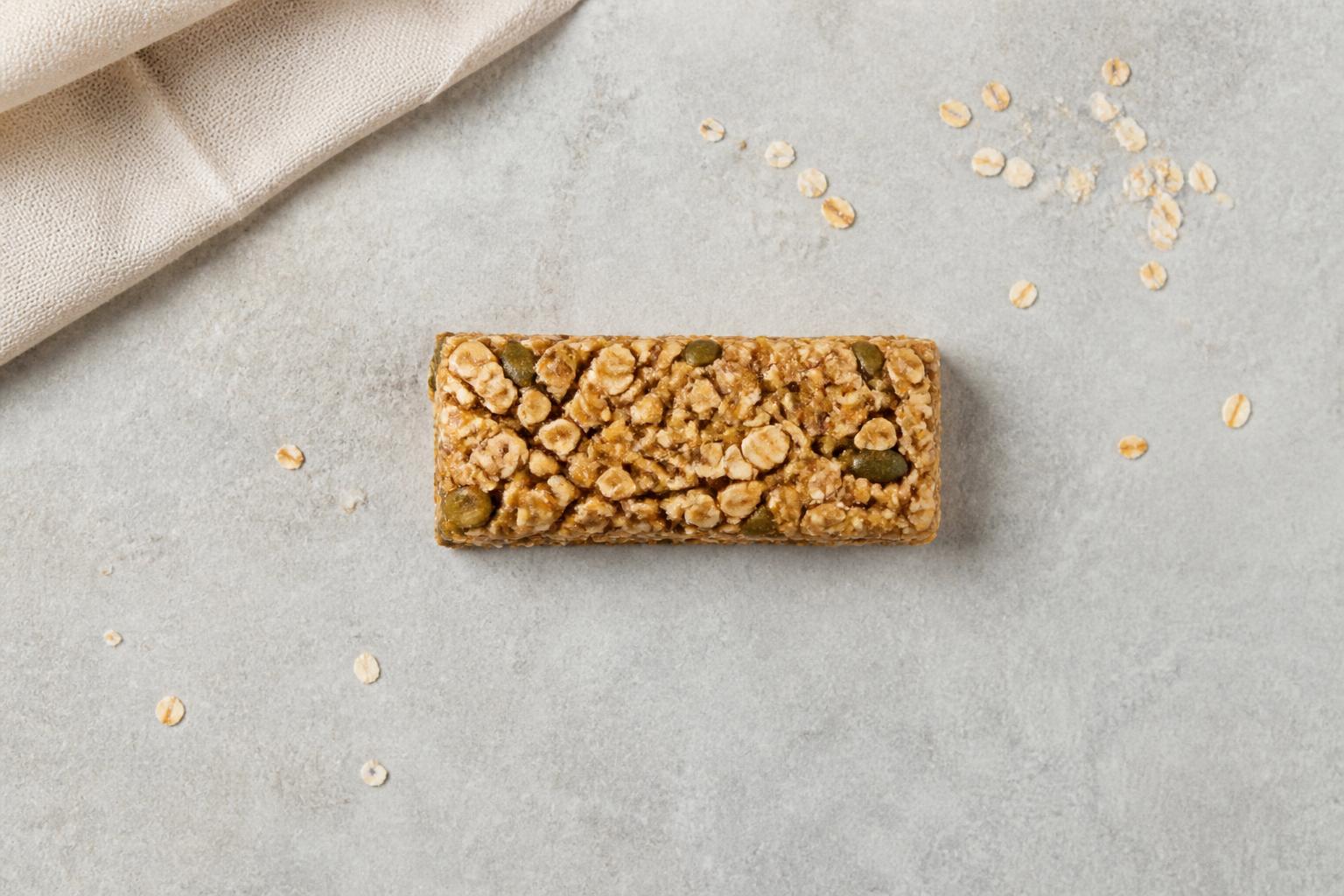
Choosing healthier oat breakfast bars comes down to a few practical checks. Look first at the ingredients, because that tells you whether oats are genuinely the main component or whether the bar is really a sweet cereal snack held together with syrups. Then check the nutrition panel for sugar, fibre, protein and salt, both per 100g and per bar, so you know what you are actually eating in one portion.
A good oat bar can be a useful breakfast option when you are short on time, travelling, or need something easy to keep at your desk or in a bag. It is not automatically a complete breakfast, and not every bar with oats on the front is a healthier choice. The sensible approach is to treat the pack as a source of evidence rather than relying on front-of-pack wording alone.
What makes an oat breakfast bar a sensible everyday choice?
Oat breakfast bars are popular for obvious reasons. They are portable, tidy, easy to portion, and usually require no preparation. For many people that makes them more realistic than a sit-down breakfast every single morning. If the alternative is skipping breakfast altogether or grabbing something with little fibre and very little staying power, an oat bar can be a better option.
The main strength of oats is that they usually bring wholegrain carbohydrate and fibre, which can help make a bar more filling than a standard biscuit or confectionery-style cereal bar. Oats also have a fairly neutral flavour, so manufacturers often combine them with nuts, seeds, dried fruit or spices rather than relying entirely on chocolate coatings and sugary fillings.
That said, the format has limits. A breakfast bar is compact, and that usually means portion size is compact too. Many bars are designed as a convenient snack first and a breakfast second. Even bars sold in the breakfast aisle can be quite small, with modest amounts of fibre and protein, and more sweetness than you might expect. A bar made with oats is not necessarily nutritionally balanced simply because it contains oats.
A sensible everyday choice is one that does a few things reasonably well. It should contain oats as a main ingredient, provide enough substance to be worth eating in place of other breakfast foods, and avoid pushing sugar and salt higher than they need to be. It should also fit your actual routine. If you know you need a quick breakfast between the school run and the train, practicality matters. If you are looking for something to keep you full until lunch, composition matters even more.
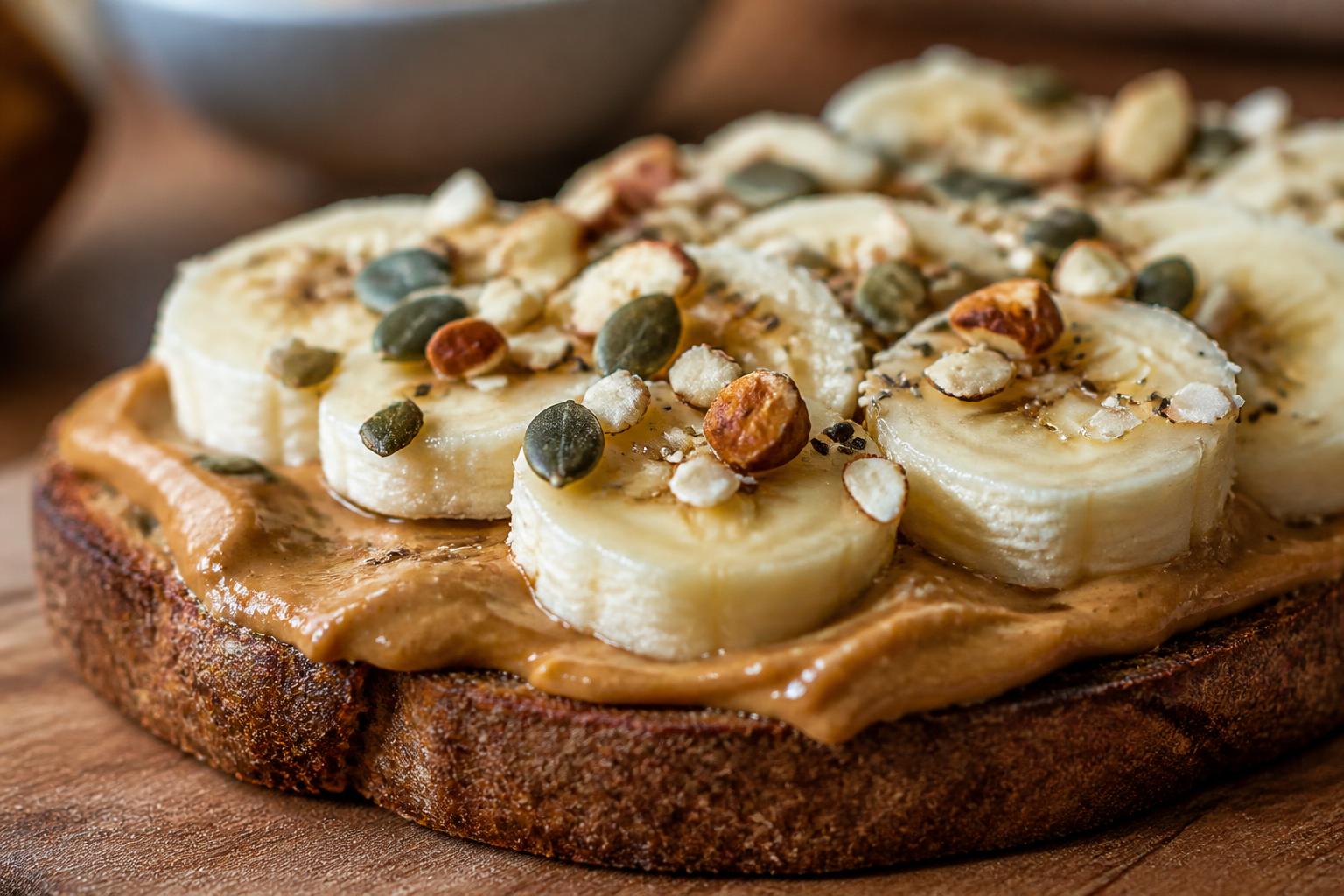
For some people, the best use of an oat bar is as part of breakfast rather than the whole of it. Pairing one with plain yoghurt, milk, kefir or a piece of fruit can turn a light option into something more balanced. We cover similar trade-offs in our guide to healthy breakfasts you can eat on the move, because convenience is only useful if it still leaves you properly fed.
Start with the ingredients list
In the UK, ingredients are listed in descending order by weight at the time the product is made. That gives you a straightforward way to judge what the bar is mostly made from. If oats are first on the list, or very near the top, that is usually a good sign. If the first ingredients are glucose syrup, sugar, invert sugar syrup or another sweetener, the bar is telling you what it really is.
“Oats” may appear in several forms, such as rolled oats, wholegrain oats, oat flakes or oat flour. A mix of oat ingredients is not necessarily a problem, but it is worth checking whether those oat ingredients together make up a substantial part of the bar. Some packs state the percentage of oats on the front or in the ingredients list. If they do, that can help you compare products more quickly.
Then look at the sweetening ingredients. Added sugars can appear under several names, including sugar, brown sugar, demerara sugar, honey, glucose syrup, fructose syrup, rice syrup, invert sugar syrup, date syrup and fruit juice concentrates. A bar can still look wholesome while relying heavily on syrups to bind oats together. Dried fruit also contributes sugars, though it comes with a different nutritional profile from refined sugar because it may bring some fibre and micronutrients too.
Fats are worth checking in context. Nuts and seeds often add unsaturated fats, texture and a bit of protein, which can improve the overall profile of the bar. Nut butters can do something similar. Palm oil, coconut oil and butter are not automatic deal-breakers, but if they appear high up the list, especially in a sweet bar, the product may be moving closer to a biscuit than a practical breakfast.
Dried fruit, nuts and seeds can all be useful ingredients. Raisins, dates and apricots can add flavour and chewiness. Almonds, peanuts, pumpkin seeds, sunflower seeds, chia seeds and flaxseed can increase fibre and make a bar feel more substantial. The point is not to avoid these ingredients, but to notice whether they are there in meaningful amounts or just used decoratively.
If you are comparing products, it also helps to spot ingredients that suggest a more confectionery-style bar, such as chocolate drizzle, yoghurt-flavoured coatings, caramel layers or sweet fillings. Again, these are not forbidden foods. They simply change what the product is. If you are choosing between bars for everyday breakfast use, the simpler ingredient list often makes comparison easier.
For readers who like oat-based breakfasts but want a less processed format, our round-up of 8 baked oatmeal breakfasts that stay practical and filling is useful context. It shows how the same base ingredient can appear in products with very different levels of sweetness and fullness.
How to read the nutrition panel without overcomplicating it
The nutrition panel can look more technical than it really is. In the UK, most prepacked foods give values per 100g, and many also give values per portion or per bar. Both matter.
Per 100g is the best way to compare one bar with another, because it puts them on the same scale. Per bar tells you what you will actually eat if you have one serving. A product can look modest per bar simply because the bar is small. Equally, a large bar can deliver much more sugar, salt or energy than you realise if you only glance at the front.
Energy, shown in kilojoules and kilocalories, tells you how much the bar contributes overall. That does not tell you whether it is filling. A bar can be relatively energy-dense without being satisfying if it is small and sweet. For breakfast, the practical question is whether the energy comes with enough fibre, protein and volume to keep you going.
Fat is not something to fear in itself. In oat bars, fat often comes from nuts, seeds or added oils. What matters more is the type and amount. Saturates are the figure to watch alongside total fat. A bar with some fat from nuts may still be a sensible choice, while a bar high in saturates from coatings or added fats may be less appealing as an everyday option.
Sugars are one of the most useful lines on the panel, but they need context. In UK nutrition labelling, the sugars figure includes sugars naturally present in ingredients such as dried fruit as well as added sugars. That means a fruit-heavy bar may show a fairly high sugars figure even if no table sugar has been added. This is why the ingredients list and the nutrition panel need to be read together. The panel tells you how much sugar is there. The ingredients list helps explain where it comes from.
Fibre is particularly important in breakfast bars. If a bar is based on oats but offers very little fibre, that is usually a sign that it may not be especially filling. Higher fibre bars often have a better chance of keeping hunger at bay, especially when combined with nuts, seeds or fruit.
Protein can also help with fullness. Oats contribute a little, but not usually enough on their own to make a bar high in protein. If a bar contains nuts, seeds, soya crispies, milk protein or added protein ingredients, the protein figure may be higher. That can be useful, but it does not automatically make the bar healthier overall. Some high-protein bars are still quite sweet or heavily processed.
Salt is easy to overlook in sweet products, but it is still worth checking. Some bars use salt for flavour balance, and levels can vary more than you might expect. For an occasional snack that may not matter much. For an everyday breakfast product, it is worth comparing.
If you want a simple approach, compare bars in this order. First, check whether oats are a leading ingredient. Second, compare sugars, fibre and salt per 100g. Third, look at the figures per bar to see what one portion actually contributes. That is usually enough to separate a genuinely useful breakfast bar from one that mainly trades on healthy-sounding packaging.
Which label claims matter and which can mislead?
Front-of-pack claims can be helpful, but only if you know what they mean. In the UK, many claims are governed by retained nutrition and health claims rules, which are broadly similar to the EU framework, though the UK now operates its own regime after Brexit. In practice, the wording consumers see is often very similar. The key point is that a claim usually tells you one specific thing, not the whole nutritional picture.
“High fibre” has a regulated meaning. A food can only be described as high in fibre if it contains at least 6g of fibre per 100g. “Source of fibre” has a lower threshold, at least 3g per 100g. That makes these claims more useful than vague wellness language, because they refer to a defined amount. Even so, a high-fibre bar can still be high in sugar or small in portion size, so the claim is only one piece of the puzzle.
“Wholegrain” sounds reassuring, but it is less tightly standardised in everyday use than many shoppers assume. A bar made with wholegrain oats may well be a better choice than one based mostly on refined cereal ingredients, but the word does not tell you how much wholegrain is present unless the pack gives a percentage. A wholegrain claim also says nothing on its own about sugar, salt or fibre levels.
“No added sugar” is one of the claims that most often causes confusion. In UK and EU-style labelling rules, it means no sugars have been added as ingredients, and the product should not contain ingredients used specifically for their sweetening properties. But it does not mean sugar-free. A bar made with lots of dates or raisins may still contain a substantial amount of sugars naturally present in those fruits. For some people that is still a preferable option, but it is not the same as a low-sugar product.
Protein claims are also regulated. “Source of protein” and “high protein” have specific thresholds based on the proportion of energy provided by protein. These claims can be useful if you know that a more protein-rich breakfast suits you. But they can distract from the rest of the product. A protein bar with oats is not automatically a better breakfast choice than a simpler oat bar with decent fibre and moderate sugar. If fullness is your priority, it is worth looking at our guide to high-protein breakfasts that keep you full for longer, because protein is only one part of staying power.
Be cautious with softer phrases such as “natural”, “wholesome”, “fuel”, “energy” or “made with real fruit”. These may be true in a limited sense, but they are not the same as regulated nutrition claims. They should prompt you to turn the pack over, not to assume the product has passed some broader health test.
Traffic light labelling can help, where it appears, but it is not mandatory on all products in the same way. Some manufacturers use it, some do not. When it is present, it gives a quick indication of fat, saturates, sugars and salt per portion and as a percentage of reference intake. It is useful for a fast comparison, though it still does not tell you much about fibre or ingredient quality.
When is a breakfast bar enough for breakfast?
Sometimes a breakfast bar is enough on its own. If the bar is reasonably substantial, contains oats as a main ingredient, and offers a useful amount of fibre with some protein or fat from nuts and seeds, it may suit a lighter eater or work well on a less active morning. It can also be enough when breakfast is split across the morning, for example a bar on the commute and something else later.
Often, though, one bar is not quite enough. This is especially true if the bar is small, low in fibre, or mostly made from oats and sweeteners without much else to slow digestion. In those cases, you may find yourself hungry again well before lunch. That is not a failure of willpower. It usually reflects the size and composition of the meal.
A useful question is not “Is this sold as breakfast?” but “Would this keep me satisfied as breakfast?” Think about your own appetite, your schedule and what comes next. If you have a physically active job, a long gap until lunch, or tend to get hungry quickly in the morning, a single bar may be too light. If you usually prefer a smaller breakfast and eat again mid-morning, it may be perfectly adequate.
To make a bar more complete, pair it with something that adds volume, protein or freshness. Plain yoghurt, a pot of skyr, a banana, an apple, a small handful of nuts, or a glass of milk can all help. This matters particularly with bars that are lower in protein. The bar provides convenience, and the extra item provides enough substance to make breakfast feel finished.
Portion size deserves attention here. Some packs contain two bars wrapped together, with nutrition information shown per bar and per pack. Others present a single large bar that is easy to eat in one go. If you are using breakfast bars regularly, it is worth noting whether the stated serving matches what you actually eat. That is one of the easiest ways to misread the product.
For families, it is also worth remembering that breakfast needs differ by age and appetite. A bar that works for one adult on a rushed morning may not be enough for a teenager, and it may be quite different again for younger children. That is one reason we prefer to talk about context rather than “good” and “bad” foods.
The best healthier oat breakfast bars are usually the ones that are honest about what they are. They put oats near the top of the ingredients list, keep sweetness in proportion, offer worthwhile fibre, and give enough substance to earn their place in a morning routine. Once you know how to read the ingredients and the panel, choosing them becomes far easier, and far less dependent on whatever the front of the pack happens to promise.

Questions about this article or a correction to suggest? Get in touch. Read more about our editorial approach.