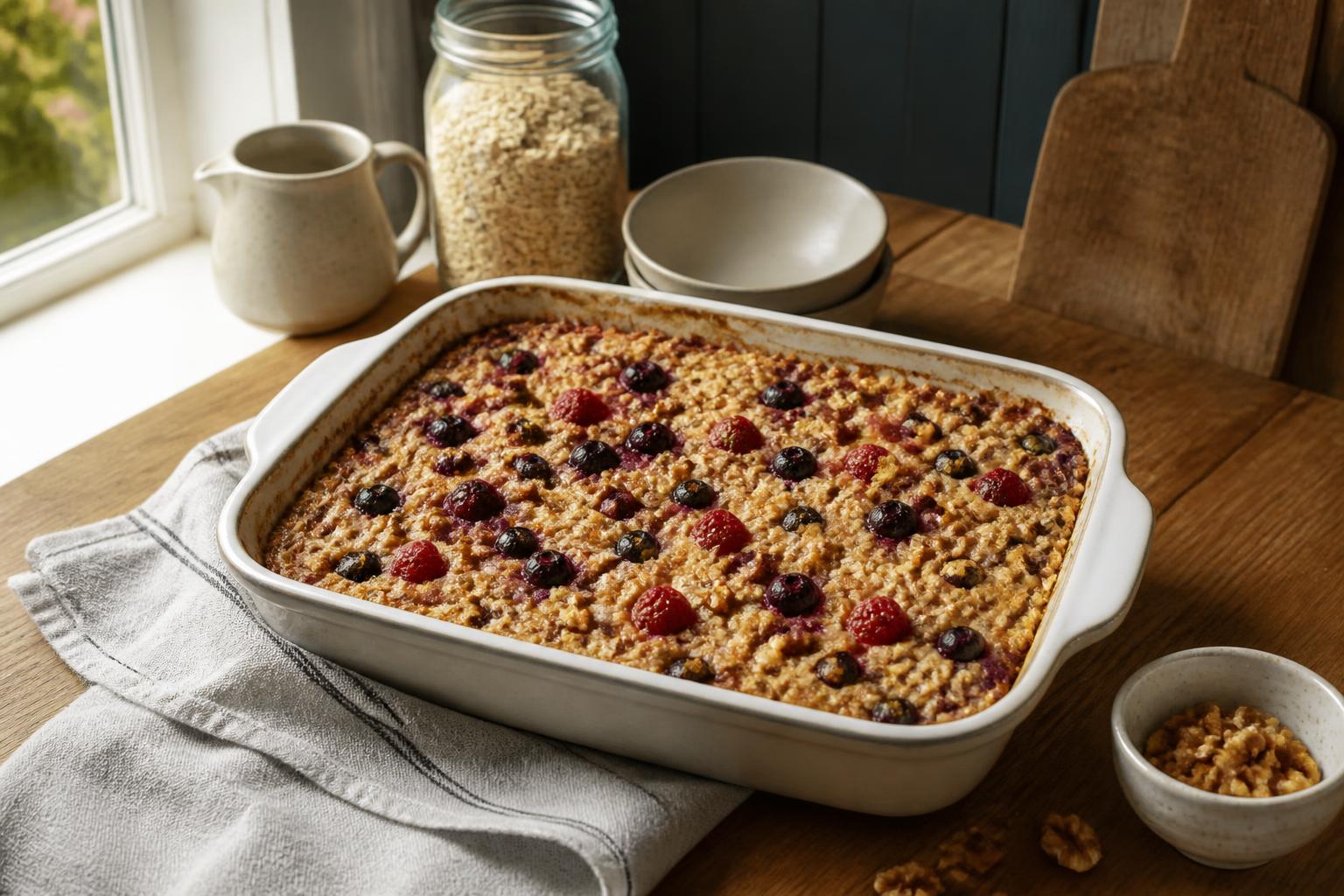
Baked oatmeal is one of the easier ways to make breakfast filling without making it heavy. It uses a cheap cupboard staple, works well with fresh or frozen fruit, and can be portioned ahead for busy mornings. If you want something warmer and more substantial than porridge, but still based on everyday ingredients, it earns its place.
The healthiest versions are usually the simplest. Start with oats, add milk or yoghurt for moisture, use fruit for most of the sweetness, and include enough protein and fat to slow digestion. The result is a traybake style breakfast you can cut into squares, chill for later, or reheat in minutes. Below, we have set out how to build it well, plus eight healthy baked oatmeal recipes for breakfast that stay practical through the week.
What makes baked oatmeal a useful breakfast base
Oats are a reliable breakfast ingredient because they combine fibre, slow release carbohydrate and a texture that adapts well to different formats. Unlike many ready sweetened breakfast products, plain porridge oats start neutral. That gives us much more control over sugar, salt and portion size.
From a nutrition point of view, oats contribute carbohydrate for energy and soluble fibre, including beta-glucan. In the UK, beta-glucan from oats is one of the better known fibres linked with helping to maintain normal blood cholesterol when eaten regularly as part of a balanced diet. That does not turn a tray of baked oats into a health claim on its own, but it does explain why oats are often a stronger base than refined breakfast pastries or sugary cereal.
Baked oatmeal also fits everyday eating because it is flexible. It can be made with dairy milk or fortified plant drinks, with eggs or without, and with fruit, nuts or seeds depending on what is in the house. It is useful for people who do not want to stand over the hob each morning, and for households where different people eat at different times.
In a typical UK diet, baked oatmeal sits somewhere between porridge and a breakfast bar. It is more structured than porridge, so it travels better and can be eaten cold or warm. It is usually less processed and easier to balance than many packaged cereal bars. If you are comparing formats, our guide to a healthier breakfast bar at home covers similar principles around fibre, sweetness and portioning.
The main advantage is practical rather than trendy. A batch made on Sunday can cover several breakfasts, reduce reliance on last minute choices, and make it easier to include fruit, seeds or yoghurt before the day starts.
How to build a healthier baked oatmeal
A good baked oatmeal follows a simple formula. Once that is in place, the flavour combinations are easy to vary.
A practical base for about six portions is:
- 250g porridge oats
- 500 to 600ml milk or fortified unsweetened plant drink
- 2 medium eggs, or a plant based binder such as mashed banana or chia mixture
- 150 to 250g fruit
- 100 to 200g yoghurt, cottage cheese, or another protein rich ingredient if wanted
- 1 to 2 tablespoons nuts, seeds, or nut butter
- cinnamon, vanilla or mixed spice for flavour
That ratio gives a spoonable mixture rather than a pourable batter. If it looks dry before baking, add a splash more liquid. If it looks very loose, let the oats stand for five minutes before deciding.
For the oat base, standard porridge oats give the best balance of structure and softness. Jumbo oats create a chewier texture. Instant oats can turn pasty. If you need a gluten-free option, choose oats labelled gluten-free, since standard oats may be contaminated during processing. That matters in the UK just as it does elsewhere in Europe. If that is relevant in your household, our piece on healthy gluten-free breakfasts that keep mornings simple covers the wider breakfast picture.
For liquid, semi-skimmed milk, whole milk and fortified unsweetened soya drink all work well. Almond drink can be thinner, so the finished bake may be less creamy. Yoghurt adds body and protein, especially Greek style yoghurt or skyr, but if you use a lot of it, loosen the mix with extra milk.
Fruit does two jobs. It adds flavour and it reduces the need for syrups or sugar. Banana, apple, berries, pear and grated carrot all work. Dried fruit can be useful in small amounts, but it is concentrated in sugar and easy to overdo. A handful is usually enough for a whole dish.
Protein rich ingredients help baked oatmeal keep you full for longer. Eggs are the simplest option and improve slicing. Greek yoghurt, skyr, cottage cheese, soya yoghurt and protein rich milk drinks can all help too. If you are trying to push breakfast protein higher, our guide to healthy protein breakfasts that keep mornings practical gives more everyday combinations.
Fats matter as well, but they do not need to dominate. Nuts, seeds, peanut butter or tahini can make a portion more satisfying and improve flavour. The issue is quantity. It is easy to turn a sensible breakfast into a very dense one by adding several spoonfuls of nut butter, coconut oil and toppings all at once.
What to limit is mostly straightforward. Large amounts of honey, maple syrup, chocolate chips, sweetened dried fruit and biscuit style toppings quickly push baked oatmeal towards pudding. A little is fine if the rest of the tray is balanced, but they should be accents, not the base.
8 baked oatmeal recipe ideas to rotate through the week
Below are eight combinations that keep the basic formula intact while changing flavour and texture.
1. Apple, cinnamon and walnut
This is the closest baked oatmeal gets to a familiar British pudding flavour, but it can stay balanced. Use grated or finely chopped apple, cinnamon, a spoonful of chopped walnuts and a little vanilla. The apple softens into the oats and keeps the centre moist.
To keep it healthier, rely on the apple for sweetness and avoid adding both maple syrup and raisins. If you want extra protein, stir in Greek yoghurt or serve with a spoonful on top.
2. Banana and peanut butter
Mash one ripe banana into the wet ingredients, then swirl through 1 to 2 tablespoons of peanut butter. This gives a soft, slightly denser bake with a naturally sweet flavour and a more dessert like aroma, even if you have not added much sugar.
The balance point here is portion control with the peanut butter. Enough to flavour the tray is useful. Half a jar is not. Add chia or pumpkin seeds if you want more texture without much extra sweetness.
3. Blueberry and lemon
Blueberries work especially well in baked oatmeal because they burst during baking and spread flavour through the mixture. Add lemon zest for freshness. This version tends to be softer and more spoonable than apple based recipes.
Use frozen blueberries if that is what you have. There is no need to thaw them first. If the berries are very tart, a teaspoon of honey across the whole dish may be enough. Serve with skyr or plain yoghurt rather than sweetened lemon yoghurt.
4. Carrot cake style oats
Grated carrot, cinnamon, ginger and a few chopped walnuts create a breakfast that feels more interesting than plain porridge without relying on frosting style sweetness. A small handful of raisins can work, but keep it genuinely small.
Texture is the main strength here. The carrot keeps the oats tender, and the spice mix gives flavour without sugar. If you like, add a few tablespoons of cottage cheese to the mixture for extra protein without changing the flavour much.
5. Pear, ginger and pumpkin seed
Pears bake down gently and suit oats well, especially when chopped quite small. Add ground ginger or finely grated fresh ginger, plus pumpkin seeds for crunch. This version is less sweet tasting than banana or apple and suits adults who do not want breakfast to feel like a treat.
Because pear releases water, keep an eye on the liquid. If the fruit is very ripe, use the lower end of the milk range. A thicker yoghurt on the side helps round it out.
6. Cocoa, cherry and almond
If you want a chocolate note without turning breakfast into cake, use unsweetened cocoa powder rather than chocolate spread. Add frozen cherries and a tablespoon of flaked almonds. The result is rich tasting, with a firmer bake if you use less fruit.
This is one of the versions where sugar can creep in. Sweetened dried cherries, chocolate chips and syrup together are unnecessary. Pick one sweet element at most, and keep the cocoa unsweetened.
7. Raspberry and chia
Raspberries break down more than blueberries, so this bake becomes softer and slightly jammy. Chia seeds help absorb moisture and add body. A little vanilla works well here, and so does stirring some yoghurt directly into the mix.
This is a good option if you want a lighter tasting breakfast that still fills you up. It also freezes well in portions, though the fruit will be softer after reheating.
8. Savoury baked oatmeal with spinach and cheddar
Baked oatmeal does not have to be sweet. For a savoury tray, reduce the fruit, use eggs, milk, black pepper, chopped spinach and a modest amount of grated mature cheddar. Spring onion or chives work well too.
This comes out closer to a soft oat slice than a sweet breakfast bake. It is useful if you prefer a less sugary start or want something that feels more like a light lunch. Keep the cheese measured rather than free poured, since salt rises quickly in savoury versions. In the UK, nutrition labels list salt rather than sodium, which makes packaged add-ins easier to compare directly.
How to keep sugar, salt and portions in check
The easiest test is this. If the mixture needs several tablespoons of syrup to taste good, the fruit balance probably needs adjusting. Riper banana, grated apple, berries or a few chopped dates usually do more for flavour than plain sugar does.
Taste matters, but so does how sweetness builds across the whole bowl. A lightly sweetened oat base can become much sweeter once topped with flavoured yoghurt, granola and a drizzle of honey. If the bake already includes fruit and some sweetness, choose plain yoghurt and fresh fruit on top rather than stacking sweet ingredients.
For salt, sweet baked oatmeal usually needs very little. A small pinch in the whole tray is enough if used at all. Savoury versions are where it adds up. Cheese, smoked salmon, bacon style toppings and shop bought nut butters can all contribute. Check the label and think about the finished portion, not just the base recipe.
Portion size depends on what else is on the plate. A square on its own may not be enough for some adults, while a large slab plus nut butter plus yoghurt plus fruit may be more than needed. As a rough guide, cutting a standard loaf tin or medium baking dish into six portions usually gives a practical breakfast serving. If you are especially active, you may want a larger piece or an extra protein side. If you are eating it with yoghurt and fruit, a smaller square may be enough.
A useful question is whether the bake still looks like breakfast. Once it is heavily iced, covered in chocolate, or served with sweet sauces, it has moved away from what makes oats useful in the first place.
Batch cooking, storage and reheating
Baked oatmeal is well suited to batch cooking because it slices cleanly once cools and holds together better after a few hours in the fridge. Bake it until the centre is just set and the edges are lightly coloured. Underbaking makes storage trickier and leaves the middle wet.
Once cooked, let it cool, then refrigerate within two hours. In a covered container, it will generally keep for about three days in the fridge, and often up to four if your fridge is consistently cold and the ingredients were fresh to begin with. If your version contains very juicy fruit, the texture may soften sooner.
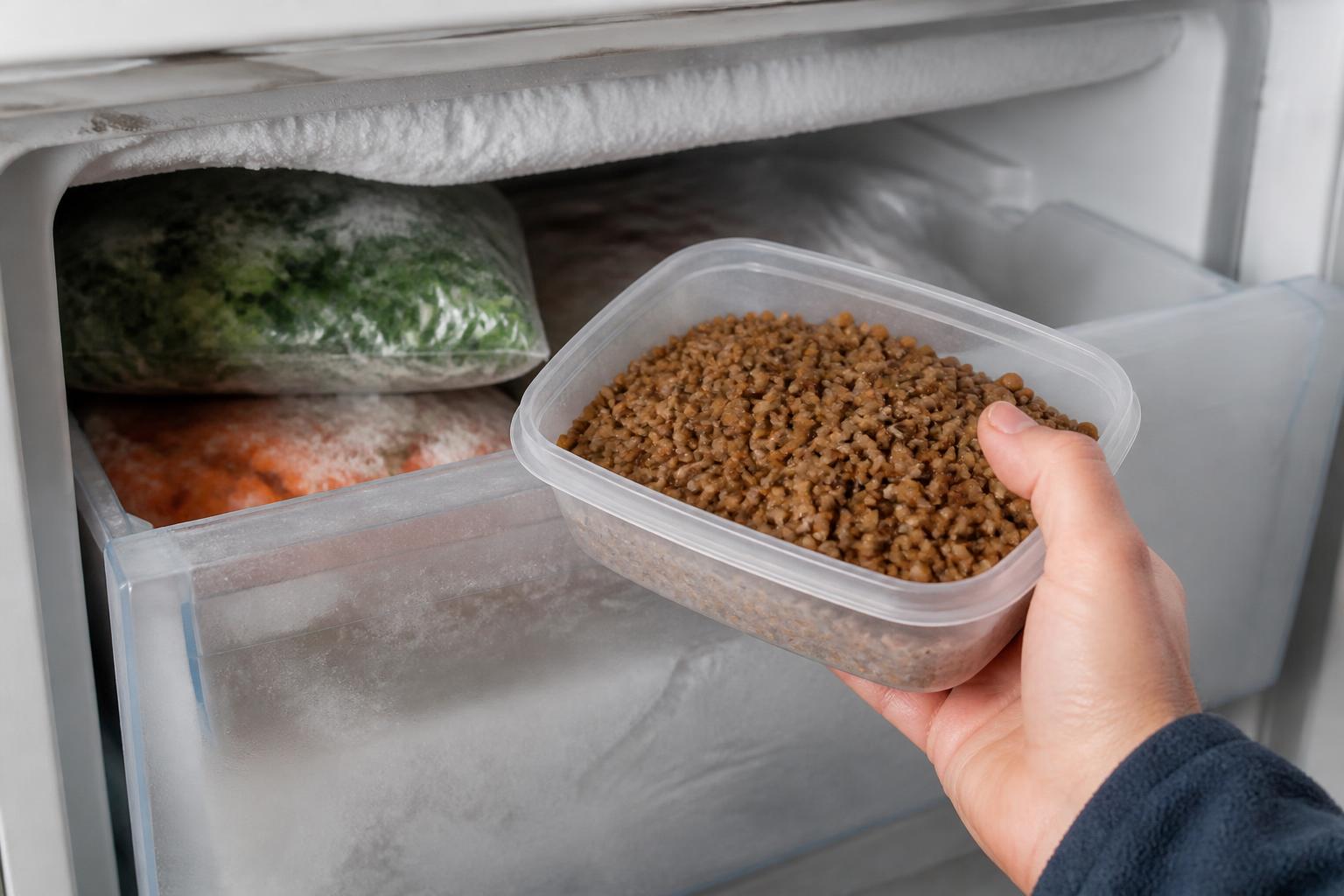
For freezing, cut it into portions first. Wrap or box individual pieces so you can defrost only what you need. Frozen baked oatmeal is usually best used within a couple of months for texture, even though it may remain safe for longer if continuously frozen. Fruit heavy recipes can become softer after thawing, while versions with nuts or seeds may lose some crunch.
Reheating is simple. A microwave gives the quickest result, usually in short bursts until piping hot. Covering the portion loosely helps keep it from drying out. An oven or air fryer reheats more evenly and can restore a firmer top, but it takes longer. If a portion seems dry after chilling, add a spoonful of milk or yoghurt when serving.
Cold baked oatmeal is also perfectly workable if you prefer grab and go breakfasts. In that case, the denser versions, such as banana or apple, usually travel best. Softer berry versions are better eaten from a bowl.
Texture after reheating depends on three things. The type of oats, the amount of fruit, and how wet the mixture was to begin with. Too much liquid gives a pudding like centre. Too little gives a crumbly slice. If you are still finding your preferred balance, make a smaller tray first and note what changes after a night in the fridge.
Baked oatmeal works best when we treat it as a flexible base rather than a fixed recipe. Keep the oats plain, let fruit do most of the sweetening, add some protein and healthy fats, and portion it with the rest of breakfast in mind. That is what makes these healthy baked oatmeal recipes for breakfast practical enough to repeat, not just good on the first day.

Questions about this article or a correction to suggest? Get in touch. Read more about our editorial approach.