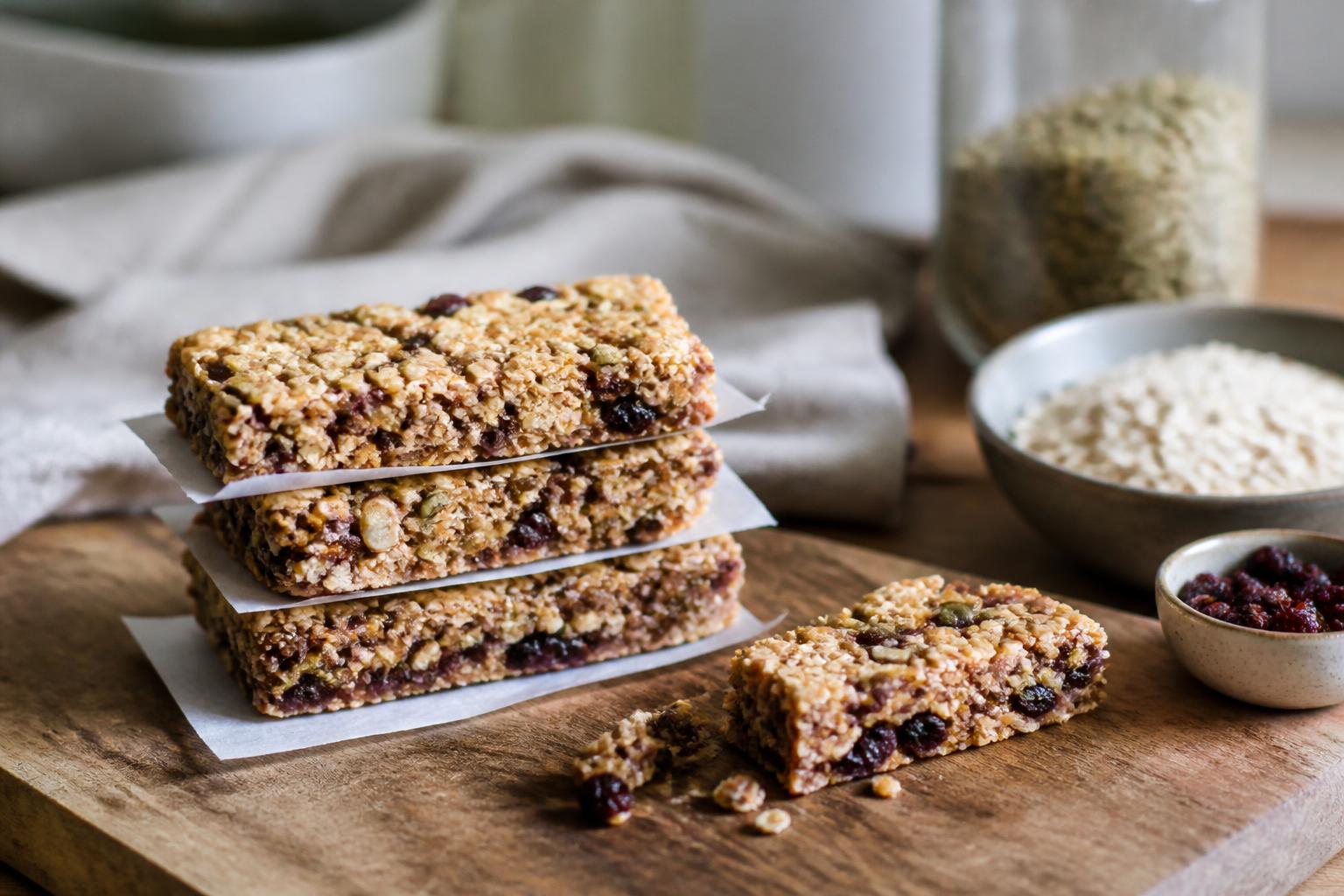
A healthier homemade breakfast bar is usually one that gives you more from the base ingredients and less from the extras that can push it towards confectionery. In practice, that often means oats for fibre, nuts or seeds for texture and fats, some protein from ingredients such as nut butter or yoghurt powder if you use it, and a level of sweetness that supports flavour rather than dominating it. It also means keeping an eye on portion size, because even a well made bar can become heavy going if it is cut too large.
For most UK kitchens, the easiest way to improve a breakfast bar is not to chase a “perfect” recipe. It is to understand what each ingredient is doing, then adjust sugar, fat, moisture and baking time so the bar holds together without becoming sticky or overly sweet. If you are looking for a practical healthy breakfast bar recipe in the UK, that approach is far more useful than following a rigid formula once and hoping for the best.
What makes a breakfast bar a healthier choice?
“Healthier” is relative. A homemade breakfast bar is not automatically light, low sugar or high protein just because it is made at home. What home baking does give us is control over the balance.
A sensible starting point is fibre. Oats are the usual backbone of a breakfast bar, and they do more than bulk it out. They help with structure, bring some slow release carbohydrate, and can make a bar feel more substantial than one built mainly from puffed rice or syrup. If we want to push fibre higher, we can add seeds, use some wholemeal flour if the recipe includes flour, or choose dried fruit carefully rather than relying on refined sweeteners alone. If you want to get better at spotting fibre on packs as well as in recipes, our guide on using food labels to add more fibre at breakfast and lunch is a useful companion.
Sugar is the next issue. Many shop bought bars, including those sold as breakfast bars, get much of their appeal from syrups, sugar, fruit concentrates or chocolate coatings. At home, we can use less. That does not always mean removing sweetness completely. A small amount of honey, maple syrup or date paste can help with binding and flavour, but if the bar relies on syrup for most of its structure, it can quickly become more like a flapjack sweet than a balanced breakfast item.
Fat matters too, but not just in the simplistic sense of “less is better”. Fat affects texture, shelf life and satiety. Nut butters, seeds and a modest amount of oil can make a bar more satisfying and easier to hold together. The question is whether the fat is part of the food’s structure and nutritional value, or whether it is simply there in large quantity to create a rich, dessert-like result. A bar based on oats, peanut butter and seeds is doing a different job from one loaded with butter, syrup and chocolate chips.
Protein can help a breakfast bar feel more complete, but we do not need to force it. Oats, nuts, seeds and milk powder all contribute some protein. If you want a more protein-focused breakfast, there are often better ways to build the meal around the bar, such as serving it with Greek yoghurt or a glass of milk, rather than trying to turn the bar itself into a high protein product. We cover that broader approach in healthy protein breakfasts that keep mornings practical.
Portion size is where many “healthy” bars go off course. A homemade tray can easily be cut into six large slabs because that feels generous. In reality, cutting the same tray into 10 or 12 bars often gives a more workable breakfast portion, especially if the bar is being eaten with fruit or dairy. A breakfast bar can be part of breakfast without being the entire breakfast.
Which ingredients work well in a UK homemade breakfast bar?
The most useful ingredients are the ones many UK households already keep in the cupboard, fridge or fruit bowl. The trick is understanding their role.
Oats are the main base. Standard porridge oats are usually the easiest option because they soften enough to bind but still keep some texture. Jumbo oats give a rougher, chewier bar and may need slightly more binder. Quick oats can work, but they produce a closer, softer texture. If you want a bar that slices neatly and does not shed too many crumbs, a mix of porridge oats and a smaller proportion of quick oats can work well.
Nut butters are one of the most practical binders. Peanut butter is widely available and usually the most economical. Almond butter is milder and often looser. Cashew butter makes a softer, creamier bar. In the UK, it is worth checking labels, because some nut butters are just nuts and salt, while others include palm oil or sugar. Neither is automatically unusable, but the added ingredients affect consistency. A natural peanut butter with separated oil may need a very thorough stir before measuring.
Seeds add crunch, fibre and some fats. Pumpkin seeds, sunflower seeds, chia seeds and linseeds are all useful. Chia and ground linseed also help with binding because they absorb moisture. If you add too much of either without increasing liquid, the mixture can become dry and dense. Sesame seeds work well for flavour, but because they are small and relatively dry, they are better as part of a mix than as a main ingredient.
Dried fruit can provide sweetness and chew. Raisins, sultanas, chopped dates, dried apricots and dried figs all work. Dates are particularly useful because they can be chopped finely or blended into a paste, which helps structure as well as sweetness. The main caution is quantity. A bar with a little dried fruit tastes balanced. A bar packed with dried fruit can end up very sugary, even if no table sugar is added. It is still sugar in practical terms, even if it comes from fruit.
Fresh fruit is trickier. Mashed banana or unsweetened apple purée can replace some syrup or fat, but they also raise moisture, shorten shelf life and can make bars softer. Banana brings flavour that not everyone wants. Apple purée is more neutral, though it can make the texture slightly cakier.
Oils have a place, especially if you are making a baked bar. Rapeseed oil is a practical UK option with a neutral flavour. Coconut oil sets more firmly when cold, which can help no-bake bars, but it also changes the mouthfeel and can make bars seem firmer straight from the fridge than they do at room temperature. Olive oil is usually too assertive unless you want that flavour.
Other useful cupboard ingredients include cinnamon, mixed spice, vanilla extract and a pinch of salt. Salt is particularly helpful because it sharpens flavour and stops a low sugar bar tasting flat. If you use cocoa powder, remember that it dries the mixture and may require a little more liquid or binder.
If your instinct is to make something closer to a flapjack, our guide on how to judge a healthier breakfast flapjack explains where that line starts to blur.
How do you balance sweetness, texture and structure?
Most homemade breakfast bar problems come down to proportion. If bars are crumbly, there is not enough binder or the mix has not been compressed firmly enough. If they are sticky, there is too much syrup, fruit purée or underbaking. If they are overly sweet, the sweet ingredients are doing too much of the structural work.
A good way to think about structure is to divide ingredients into dry, sticky and soft. Dry ingredients include oats, seeds and any flour. Sticky ingredients include honey, maple syrup, date paste and nut butter. Soft ingredients include mashed banana, apple purée and soaked dried fruit. We need enough sticky and soft material to coat and connect the dry ingredients, but not so much that the bars never set properly.
Pressing the mixture into the tin matters more than many recipes admit. Use the back of a spoon, a spatula or the base of a glass to compact it properly, especially into the corners. Loose packing is one of the main reasons bars fall apart after baking.
Tin size matters as well. If the same mixture is spread too thinly in a large tin, it dries out and becomes brittle. If it is packed too thickly into a small tin, the centre can stay soft while the edges overbake. For an average home batch, a standard 20cm square tin is often a sensible starting point, but always judge by depth. Around 2cm is usually manageable for slicing and baking evenly.
For baked bars, moderate baking is usually better than a hot oven. A fierce oven can brown the edges before the middle sets. The bars may seem ready when hot, then crumble as they cool. We prefer to bake until the top looks set and lightly golden rather than deeply browned. They continue to firm up on cooling.
Cooling is not optional. Warm bars are fragile. If you cut them too soon, they may seem like a failed recipe when they actually just needed time to set. Let the tray cool fully, then chill briefly if needed before slicing.
To reduce sweetness without wrecking texture, do not simply remove all syrup and hope for the best. Instead, replace part of it with a less sweet binder such as peanut butter, mashed banana, apple purée or soaked blended dates. You can also increase spices, vanilla and salt slightly so the bar still tastes rounded.
If bars are too dry, add moisture in small increments. A tablespoon or two of milk, dairy free milk, apple purée or extra nut butter can be enough. If they are too wet, add oats, ground seeds or a spoonful of flour. Make changes gradually. Small adjustments are usually enough.
Chocolate, if you use it, is best treated as an accent. A few dark chocolate chips or a thin drizzle can work. A thick chocolate topping shifts the bar towards treat territory very quickly.
How can you adapt a breakfast bar recipe for different needs?
Most breakfast bar recipes can be adjusted without becoming a completely different bake, but each change has consequences.
For a nut-free version, seeds are the obvious replacement. Sunflower seed butter is particularly useful because it behaves much like nut butter in texture. Tahini can work too, though it has a stronger flavour and a looser consistency. If the recipe uses chopped nuts, replace them with pumpkin seeds, sunflower seeds or extra oats. For anyone baking for school lunchboxes, remember that many UK schools are nut-free, and some also discourage sesame. Policies vary, so it is worth checking the individual school’s guidance rather than assuming.
For a higher-fibre version, increase seeds, use more oats and include ingredients such as chia, linseed or bran in moderate amounts. The key word is moderate. Too much bran or ground seed can make bars heavy and dry. We usually find it better to make several small fibre-raising changes rather than one dramatic one. You can also pair the bar with fruit instead of trying to cram everything into the bar itself.
For a lower-added-sugar version, reduce honey, syrup or sugar and rely more on fruit and spices. Chopped dates, raisins or unsweetened apple purée can help, but they still contribute sweetness, so the aim is balance rather than pretending the bar is unsweetened. Choosing unsweetened nut butter and leaving out chocolate coatings also makes a noticeable difference.
For a vegan version, breakfast bars are often straightforward. Use maple syrup instead of honey if you want a liquid sweetener, and choose plant based milk if the recipe needs added liquid. If a recipe uses egg for binding, a flax egg can help. That usually means ground linseed mixed with water and left briefly to thicken. It works best in baked bars rather than crisp, brittle ones.
For a dairy-free version, check any extras such as chocolate chips or yoghurt coatings, and use plant based alternatives where needed. The core oat and seed base is often naturally dairy-free.
For a gluten-free version, the main issue in the UK is oats. Oats themselves do not contain gluten, but standard oats may be contaminated during processing. If the bars need to be suitable for someone avoiding gluten, use oats labelled gluten-free and check every other ingredient in the same way. This is one area where labelling matters more than assumptions.
If you are feeding different age groups, adapt the format rather than making sweeping nutritional claims. Smaller, softer bars may suit children or older adults better. Teenagers may prefer a larger portion paired with yoghurt or fruit. We take that practical view in our pieces on healthy breakfast foods that keep mornings practical.
How should homemade breakfast bars be stored and portioned?
Storage starts with cooling. Bars should be fully cool before they go into a container. If they are packed while still warm, trapped steam creates condensation, and that softens the surface and shortens shelf life.
For bars that are fairly dry and well baked, an airtight container at cool room temperature is often fine for a few days in a typical UK kitchen. If the weather is warm, the kitchen runs hot, or the bars contain fresh fruit purée, a yoghurt topping or a high proportion of soft ingredients, the fridge is safer and often gives a firmer texture.
Layering with baking parchment helps stop bars sticking together, especially if they contain dates or syrup. If you like grab-and-go portions, wrap bars individually once cooled. That also helps with freezing.
Freezing works well for many breakfast bars. Freeze them in a single layer first or separate them with parchment, then store in a freezer bag or box. Defrost at room temperature or overnight in the fridge. Bars with a simple oat and nut base usually freeze better than bars with delicate toppings.
Slicing is easiest with a sharp knife once the tray is completely cool. If the mixture still crumbles, chill it for 20 to 30 minutes first. Decide on portions before you cut. A tray cut into 12 usually gives a more realistic breakfast bar than a tray cut into eight large pieces. If a bar is dense with nuts, seeds and dried fruit, smaller is often better.
Serving size depends on what else is on the plate. A modest bar can be enough alongside fruit and yoghurt. On its own, it may not keep everyone going for long, especially if it is mostly oats and dried fruit without much protein. That is not a flaw, it just means the bar works best as part of breakfast rather than the whole answer.
A homemade breakfast bar is at its most useful when it is practical enough to make again. We would rather have a simple tray made with oats, seed butter and dried fruit that fits ordinary mornings than an elaborate “wellness” recipe that uses expensive powders and sits untouched after one attempt. For most readers searching for a healthy breakfast bar recipe in the UK, that is the version worth keeping.

Questions about this article or a correction to suggest? Get in touch. Read more about our editorial approach.