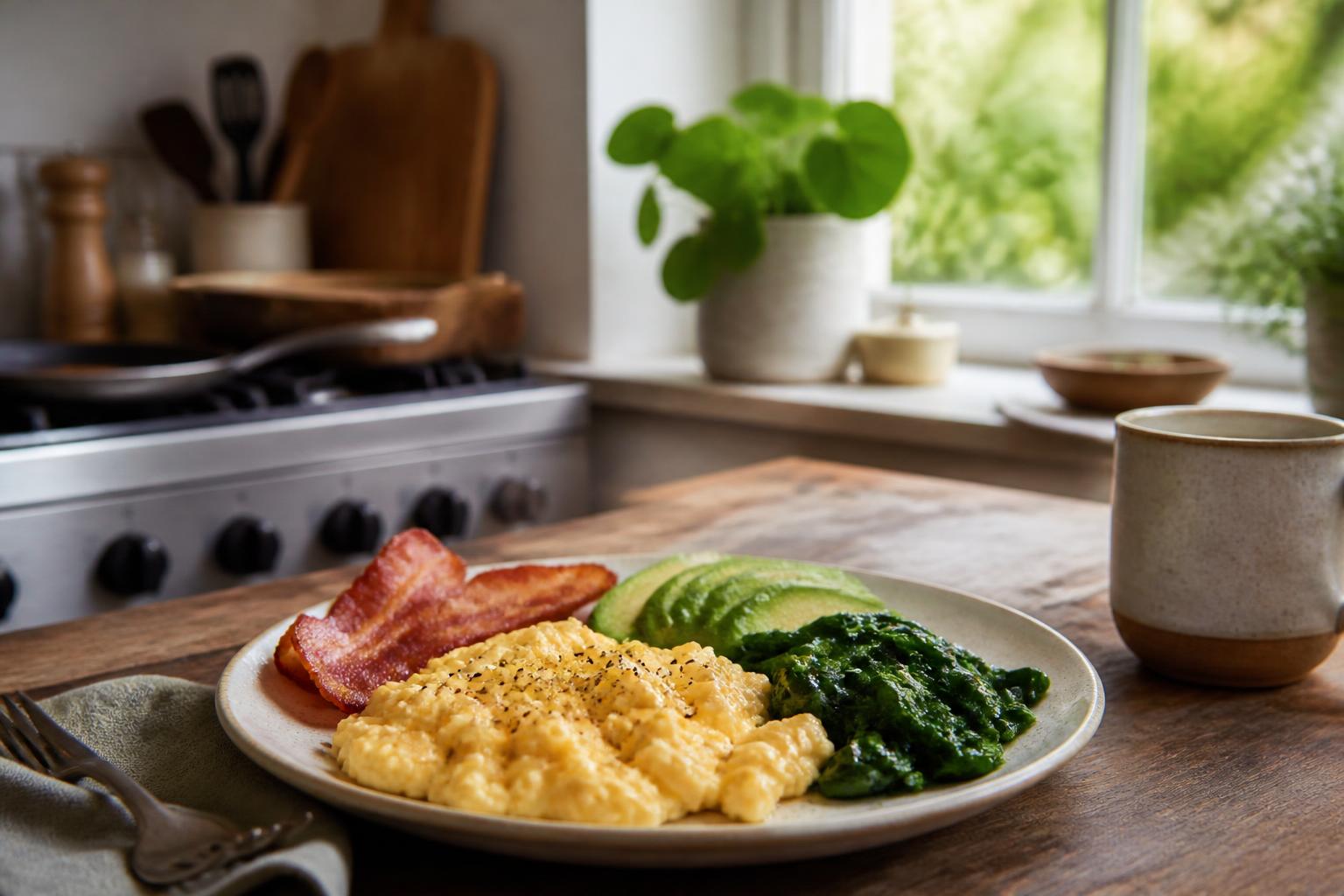

A healthy breakfast you can eat while travelling to work, walking to the station or starting early at your desk does not need to be elaborate. The best options are usually simple combinations that travel well, keep for a few hours, and contain enough protein, fibre and energy to stop you feeling hungry again by 10am. In practice, that often means some mix of oats, yoghurt, eggs, fruit, nuts, seeds or wholegrain bread, packed in a format that is easy to carry and easy to finish.
If you are trying to find an on the go healthy breakfast that actually works in real life, it helps to think less about perfect recipes and more about function. Can you eat it without cutlery, or with only a spoon? Will it stay safe until you get to it? Will it keep you full, rather than pushing you towards pastries and vending machine snacks later? Those questions matter more than whether a breakfast looks virtuous on the packet.
What makes a breakfast work when you are out of the house?
Portability comes first. A breakfast can be nutritionally excellent and still fail if it leaks, squashes, melts or needs a table, a toaster and ten minutes of calm. Food that sits securely in a lidded pot, a wrap, a reusable tub or a piece of foil tends to work best. Thick yoghurt is easier than runny yoghurt. Overnight oats are easier than cereal with milk. Hard boiled eggs are easier than scrambled eggs unless you are eating immediately.
Food safety matters more than people sometimes realise. In the UK, chilled foods such as yoghurt, milk, soft cheese, cooked eggs, smoked salmon and prepared fruit should not spend hours getting warm in a bag. If breakfast includes dairy or other perishable ingredients, an insulated lunch bag with a small ice pack is useful, especially in warm weather or if your morning commute is long. If you are making breakfast the night before, cool it promptly and refrigerate it. If a product says keep refrigerated, take that seriously. Shelf stable options, such as plain oat pots before adding milk, nut butter sachets, whole fruit and unopened UHT milk drinks, give you more flexibility.
Satiety is the next test. A breakfast that disappears quickly but leaves you hungry an hour later is not doing much for you. Most filling breakfasts combine at least two of the following: protein, fibre and some fat. Protein can come from Greek yoghurt, skyr, eggs, cottage cheese, milk, soy yoghurt, tofu or nuts. Fibre often comes from oats, wholegrain bread, bran cereals, fruit, seeds and pulses. Fat can come from nuts, seeds, nut butter, dairy or avocado. You do not need all of them in large amounts, but you usually need more than a single banana or a plain white croissant if you want a breakfast to last.
Convenience matters, but convenience does not have to mean ultra processed or expensive. It can mean preparing two or three breakfasts at once on Sunday evening. It can mean keeping a backup breakfast at work, such as porridge sachets, peanut butter and a box of oatcakes. It can also mean accepting that a supermarket breakfast bought on the day is sometimes the most practical choice, then knowing how to choose one that is reasonably balanced.
Texture and ease of eating are worth considering too. A breakfast that crumbles over your coat, needs sawing through with a knife, or leaves your hands sticky is less likely to become part of your weekday routine. That sounds minor, but it is often what decides whether a plan survives beyond Monday.
How to build a filling breakfast without making it complicated
The simplest approach is to build breakfast from a few repeatable templates rather than strict meal plans. We find this far more useful than rules that depend on exact grams or a long list of “good” and “bad” foods.
One reliable template is protein plus fibre plus fruit. For example, a pot of Greek yoghurt with oats and berries. Or skyr with a banana and a spoonful of seeds. Or a soy yoghurt with chopped apple and a handful of nuts. This works because the protein helps with fullness, the fruit adds volume and fibre, and the oats, seeds or nuts slow things down a little.
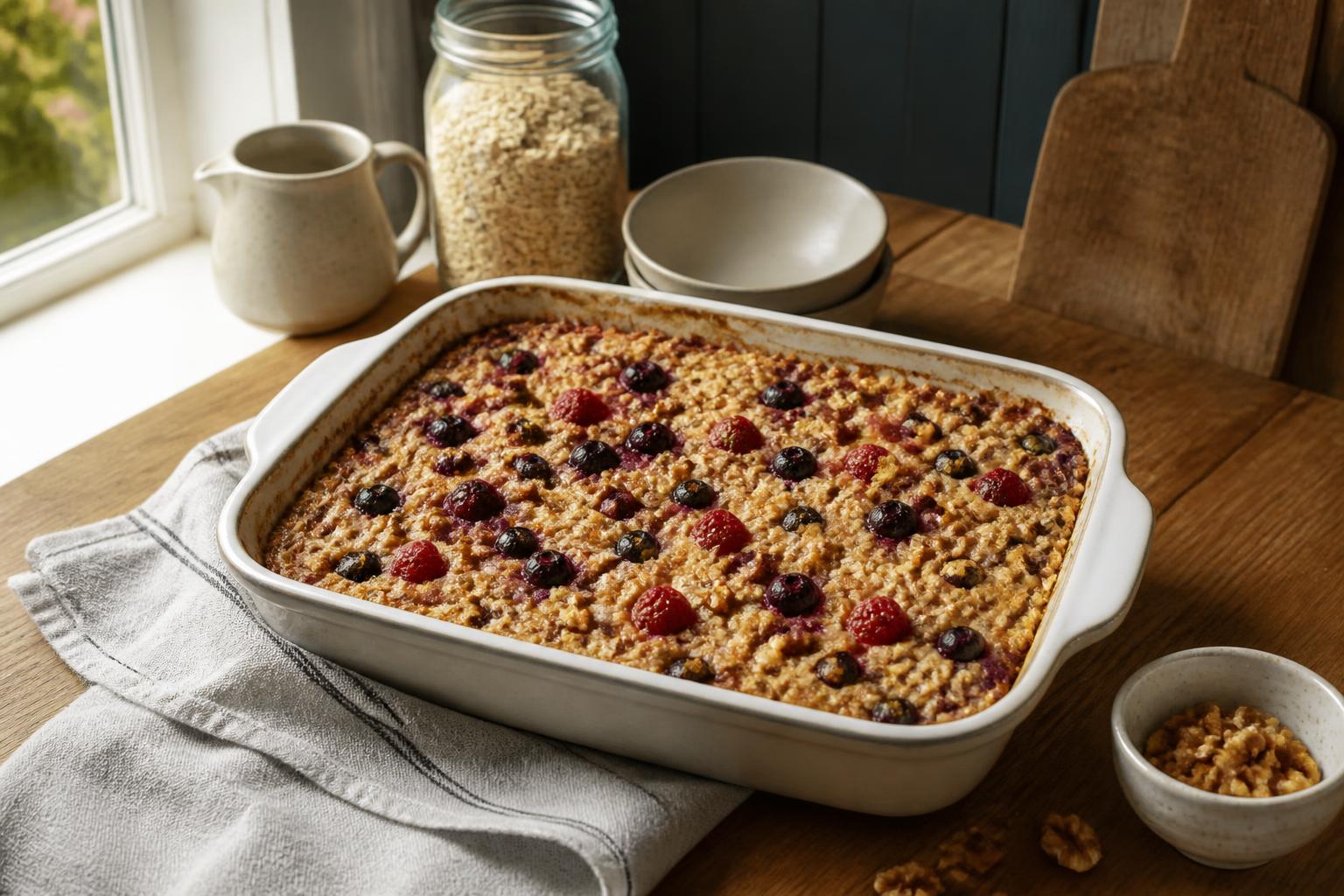
Another template is oats plus milk or yoghurt plus something to chew. Porridge made with milk is more filling than porridge made only with water, and overnight oats become more substantial when you add yoghurt, chia seeds or nut butter. If you want ideas that hold up well in containers, our guide to practical and filling baked oatmeal breakfasts gives several formats that travel better than a bowl of loose porridge.
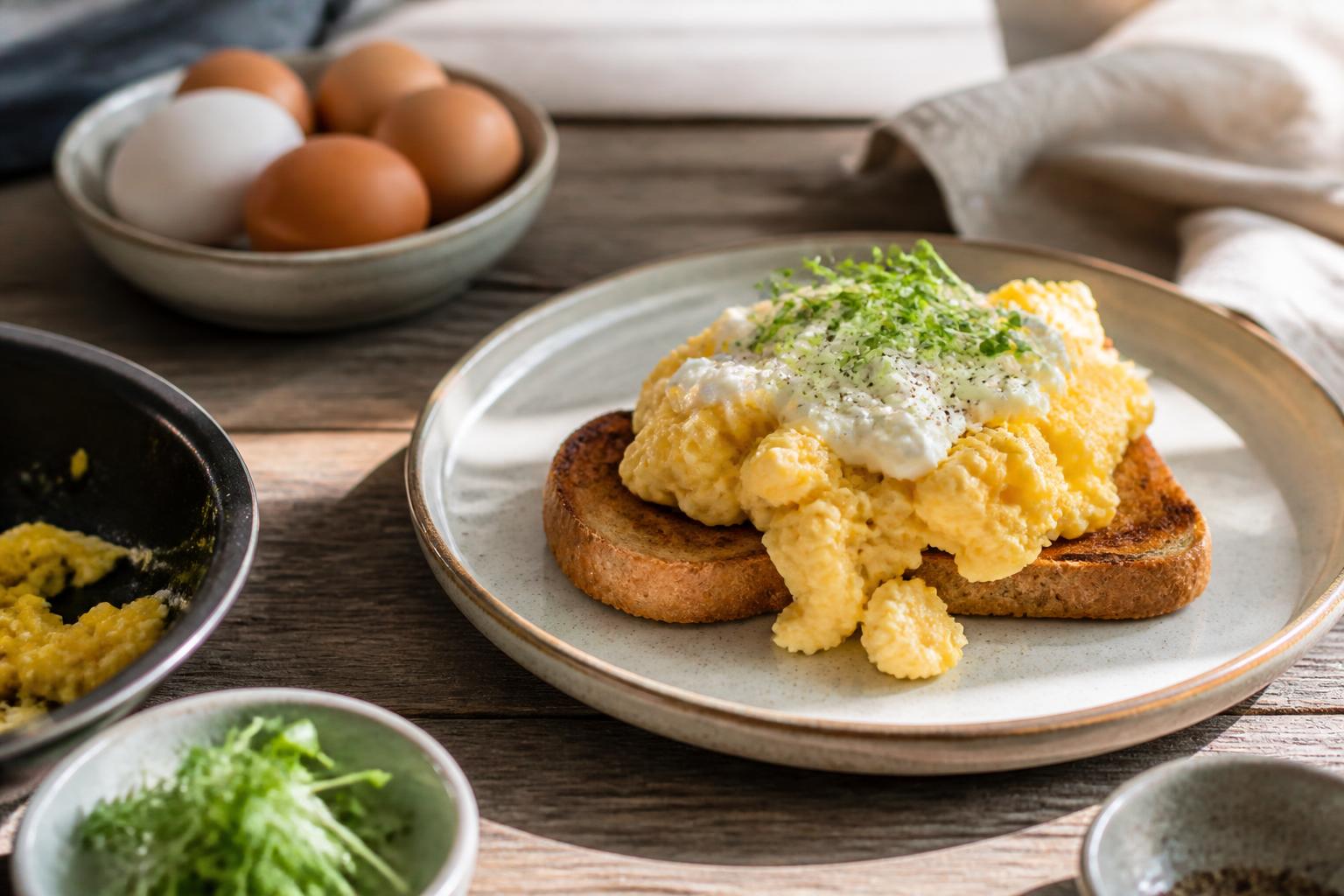
A third template is eggs plus carbohydrate plus produce. That might be two boiled eggs with wholemeal toast fingers and a clementine, or an egg muffin with spinach packed alongside cherry tomatoes. If you eat eggs regularly, boiling several at once makes weekday mornings easier. In the UK, Lion Mark eggs have specific food safety standards, and official advice on eggs differs in some respects from broader EU level assumptions because UK guidance recognises those standards. Even so, once eggs are cooked and peeled, they still need sensible storage and should not be left warm for long.
You can also think in pairs. Toast and peanut butter. Yoghurt and fruit. Cheese and oatcakes. Hummus and a wholemeal wrap. None of these is complicated, but pairs often become more satisfying if you add one extra element. Toast and peanut butter becomes more substantial with sliced banana. Yoghurt and fruit becomes more filling with oats. A wrap becomes more effective with beans, egg or chicken rather than salad alone.
It helps to avoid overcorrecting. Some people build a very light breakfast in the name of being healthy, then end up hungry and grazing all morning. Others choose something labelled high protein but overlook the rest of the meal. A drink with added protein may be useful on a rushed day, but it does not always satisfy in the same way as food you chew. If staying full is your main problem, our round-up of high-protein breakfasts that keep you full for longer may help you match format to appetite.
Batch preparation is often the difference between a good intention and a habit. Overnight oats can be made for two or three days ahead. Egg muffins can be baked in a tray and refrigerated. Breakfast muffins can work well if they are based on oats and fruit rather than cake-like ingredients, and our piece on how oat breakfast muffins fit a healthier morning routine looks at where they make sense.
Which grab-and-go breakfasts are worth considering?
Porridge pots are a common starting point, and they can be useful. Their strengths are familiarity, warmth and decent fibre if oats are the main ingredient. Their weaknesses are often sugar and protein. Many flavoured pots are sweetened and still not especially filling on their own. A plain or lower sugar porridge pot becomes much better if you add milk instead of only water, and better again if you eat it with yoghurt, nuts or a boiled egg.
Yoghurt pots are convenient, but there is a big difference between types. Plain Greek yoghurt and skyr usually offer more protein than many standard fruit yoghurts. Some flavoured yoghurts look healthy because they include fruit imagery, but contain a lot of added sugar and not much fruit. If you buy yoghurt on the move, a plain pot plus a piece of fruit is often a steadier option than a dessert-like yoghurt with a granola topper.
Eggs are one of the most practical high protein options when prepared in advance. Two hard boiled eggs with fruit and a slice of wholemeal toast can be a genuinely solid breakfast. Ready-cooked eggs from supermarkets can be useful too, though they are usually more expensive than boiling your own. The drawback is smell and handling, which makes them less ideal in every setting.
Fruit is easy to carry, but fruit alone is usually not enough for most adults. Bananas, apples, pears, satsumas and grapes are all portable, but they work best as part of breakfast rather than the whole thing. Pair fruit with yoghurt, nuts, cheese, toast or oats if you want more staying power.
Toast alternatives matter because ordinary toast is hard to transport well. It goes cold, can become soggy, and is awkward to eat while moving. Better portable versions include wraps, folded flatbreads, breakfast muffins, oatcakes or savoury scones. Peanut butter in a sandwich, a wholemeal wrap with egg, or cream cheese in a seeded bagel can all work, though portion size matters because breads and bagels vary a lot.
Supermarket breakfast options can be perfectly reasonable if you know what to look for. A small pot of plain yoghurt, a banana and a pack of nuts is often a better breakfast than a smoothie and a pastry. A supermarket meal deal can also be adapted. If there is a choice, look for the item with more protein and fibre, and treat juice-heavy combinations with caution if they leave you hungry quickly. Smoothies can contribute fruit, but they are often less filling than whole fruit and easier to consume quickly without much satiety.
Breakfast bars are the most mixed category. Some are essentially biscuits with a healthier image. Others are oat-based and more substantial, but still small. They are best seen as a backup, or as one part of breakfast with yoghurt or milk, rather than a guaranteed complete meal. The same applies to many bottled breakfast drinks.
How to read breakfast labels quickly in a shop
Start with portion size. Nutrition panels in the UK are usually given per 100g and often per portion as well. The per 100g figure helps you compare products, but the portion figure tells you what you are likely to eat. A yoghurt that looks moderate in sugar per 100g can still deliver a lot if the pot is large. A granola pot may appear sensible until you realise the topper doubles the sugar and calories.
Check the ingredients list next. Ingredients are listed in descending order by weight. If sugar, syrup, fruit juice concentrate or sweetened chocolate appears near the top, the product is likely to be sweeter than its front-of-pack wording suggests. There are many names for added sugars, and while they are not nutritionally identical in every context, they all still count as sugar in practical terms. “No refined sugar” is not the same as low sugar if the product relies heavily on syrups or concentrated fruit ingredients.
Then look at protein and fibre. For a breakfast to keep you going, these are often more useful than front-of-pack slogans. There is no single magic number that suits everyone, but products with a meaningful amount of protein and some fibre generally hold up better than products built mostly from refined starch and sugar. A breakfast with oats, dairy or soy, nuts, seeds or eggs will often do better here than a sweet pastry or a cereal bar.
Sugar deserves context. A plain yoghurt with fruit mixed in at home can end up lower in added sugar than a pre-flavoured yoghurt, even if total sugars on the label look similar once lactose and fruit sugars are included. On UK labels, total sugars include naturally occurring sugars as well as added sugars. That is why the ingredients list matters. It tells you where the sweetness is coming from.
Be careful with claims such as “high protein”, “source of fibre”, “natural”, “wholesome” or “made with whole grains”. These claims have specific regulatory meanings in some cases, but they do not guarantee an overall balanced breakfast. A product can qualify as high protein and still be high in sugar. It can contain whole grains and still be more confectionery than breakfast.
Traffic light labelling can help with a quick comparison in UK shops, especially for sugar and saturated fat, but it is not the whole story. Some genuinely filling foods, such as nuts or full fat yoghurt, may not look ideal on every colour marker. Use traffic lights as a prompt, not a verdict.
Finally, keep an eye on how much breakfast you are actually buying. Some pots and bakery items are much larger than they first appear. Others are tiny and leave you needing a second purchase an hour later. A breakfast that is too small can be just as unhelpful as one that is oversized if it sets up a cycle of snacking.
When is skipping breakfast fine and when does it backfire?
Skipping breakfast is not automatically a problem. Some adults are not hungry early, prefer to eat later, or feel better with a delayed first meal. If that pattern suits your appetite, energy and routine, there is no rule saying breakfast must happen at a particular hour.
What matters is what happens next. If skipping breakfast means you comfortably eat later without becoming distracted, irritable or ravenous, it may be perfectly fine for you. If it means you buy the first sugary thing you see at 11am, overeat at lunch, or spend the morning thinking about food, then it is probably backfiring.
Routine plays a large part. People with long commutes, physically active jobs, early starts or limited lunch breaks often do better with some breakfast, even if it is small. The same can be true if you take medication that is easier on the stomach with food, or if you know from experience that you make less balanced choices when you get too hungry. We are not talking about moral weakness here, only predictable appetite patterns.
A partial breakfast can be a good middle ground. If a full meal feels too much first thing, try something light but useful, such as yoghurt, a banana with peanut butter, or a small pot of overnight oats. You can then eat a second part later in the morning. For many people, this works better than forcing a large breakfast or skipping it entirely.
It is also worth separating hunger from habit. Some people skip breakfast because mornings are rushed, not because they truly prefer not to eat. In that case, the answer may be better planning rather than heroic self-control. Keeping a few reliable options at home, at work or in your bag often solves the problem more effectively than trying to become someone who never needs breakfast.
The most practical on the go healthy breakfast is the one you will actually prepare, carry and eat. That may be overnight oats three times a week, supermarket yoghurt and fruit on busy days, and eggs or wraps when you have ten minutes more. A workable breakfast is not the most photogenic option. It is the one that fits your morning, keeps safely, and leaves you properly fed.

Questions about this article or a correction to suggest? Get in touch. Read more about our editorial approach.