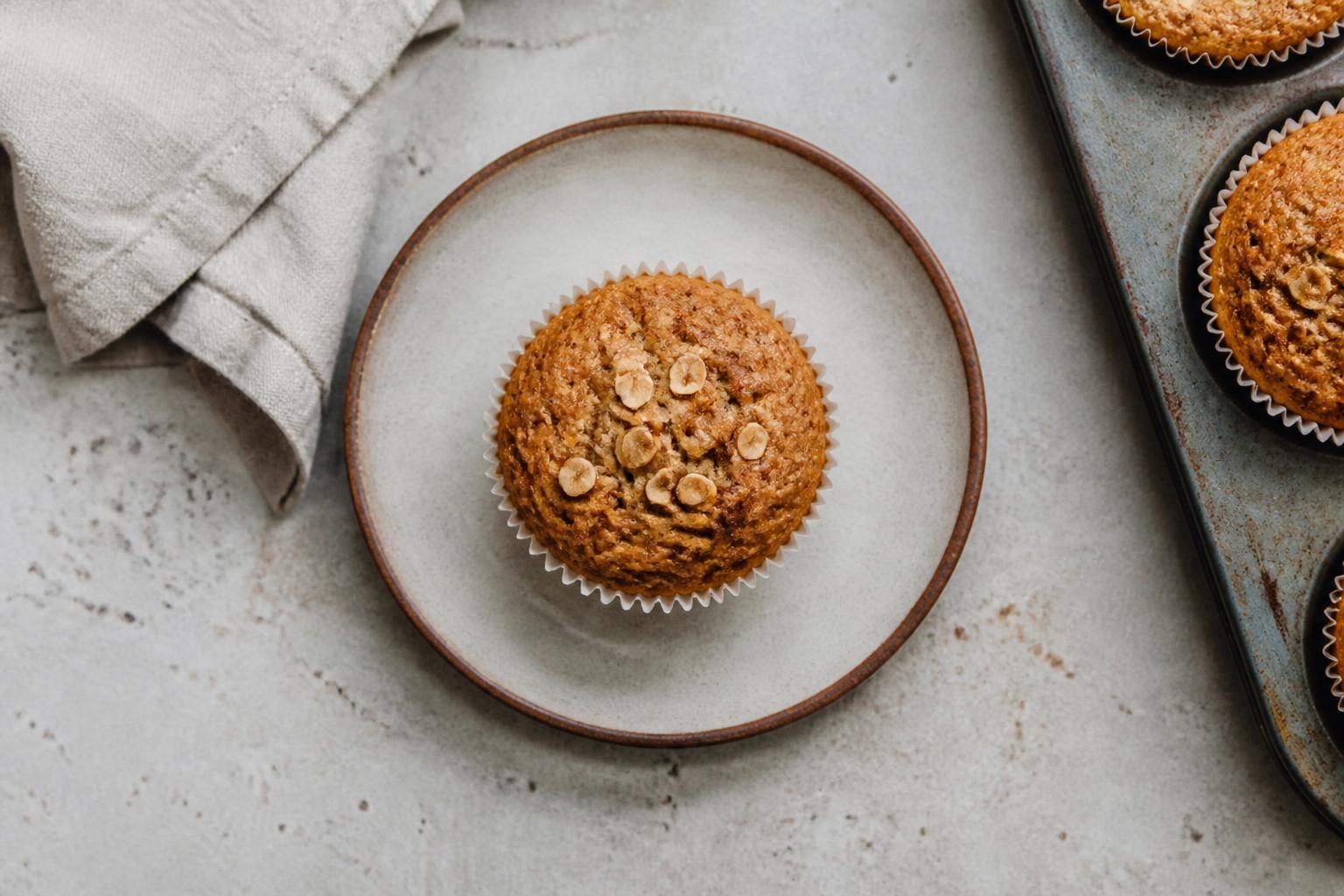
A breakfast muffin made with oats can fit a healthier morning routine, but it depends far more on the full recipe than on the word “oat” on the pack. Oats do bring useful fibre and tend to create a wholesome impression for good reason. Even so, a muffin can still be high in free sugars, refined flour and saturated fat, which changes how satisfying and balanced it is at breakfast.
In practice, healthy oat breakfast muffins are the ones that combine oats with sensible amounts of sugar and fat, a decent portion of fruit, and enough fibre or protein to keep you going. They work best when you judge them as a complete food rather than assuming oats do all the nutritional heavy lifting.
What makes an oat breakfast muffin seem healthy?
Oats have a strong health halo. Most people associate them with porridge, steady energy and fibre, and that association is partly accurate. Oats naturally contain beta-glucan, a soluble fibre linked with cholesterol-lowering benefits when eaten in sufficient amounts as part of the diet. They also tend to feel more substantial than a plain white flour bake.
That said, the presence of oats alone does not make a muffin a healthy breakfast. In many shop-bought muffins, oats are only one ingredient among several, and sometimes not the main cereal at all. A product may be marketed with images of oats and fruit while the bulk of the bake comes from refined wheat flour, sugar and oil. The result can still be closer nutritionally to a cake than to a bowl of porridge.
Texture also plays a part in the healthy impression. Oats make muffins look rustic and less processed, especially when they are visible on top. That visual cue can be misleading. A muffin topped with rolled oats may still contain a sweetened batter underneath, with syrups, chocolate chips or concentrated fruit purées adding more sugar than the packaging first suggests.
Portion size matters too. A small, fairly plain oat muffin can sit comfortably in a balanced breakfast. A large café-style muffin, even one made with oats, can be a very different proposition. If it is oversized and dense with sugar and fat, it may deliver plenty of calories without keeping you full for as long as expected.
So the healthy image is not entirely marketing fiction, but it is incomplete. Oats can improve the nutritional profile of a muffin. They do not automatically transform it into a balanced breakfast.
Which ingredients matter most?
If we want to judge an oat breakfast muffin properly, we need to look beyond the headline ingredient.
Oats are still a good place to start. Rolled oats or oat flour can add fibre, texture and some slow-digesting carbohydrate. They can also make a muffin more satisfying than one made entirely from refined flour. But the benefit depends on quantity. If oats appear well down the ingredients list, their contribution may be fairly modest.
Flour is the next important piece. Many muffins use wheat flour alongside oats because oats alone do not always give the light texture people expect. There is nothing inherently wrong with that, but the type of flour changes the picture. Wholemeal flour adds more fibre and often more staying power than white flour. A muffin made from mostly white flour with a scattering of oats is less impressive nutritionally than one using a larger share of oats and wholegrain flour.
Sugar has one of the biggest effects on whether a breakfast muffin is genuinely a good everyday option. Sugar may appear as sugar, brown sugar, honey, maple syrup, glucose syrup, fruit juice concentrate or date syrup. Some of these sound more wholesome than others, but they still contribute free sugars. A muffin does not need to be sugar-free to fit a healthy diet, but the amount matters. At breakfast, a very sweet muffin is less likely to keep hunger steady than one with more restrained sweetness.
Fat matters for similar reasons. Muffins are commonly made with butter, rapeseed oil, sunflower oil or coconut oil. Unsaturated oils such as rapeseed or sunflower oil often give a more favourable fat profile than butter or coconut oil, which are higher in saturated fat. Still, quantity matters as much as type. A muffin can use a respectable oil and remain calorie-dense if the recipe is generous with it.
Fruit can improve both flavour and nutritional value, but again it depends on form. Mashed banana, grated apple, berries and dried fruit all bring something different. Whole or mashed fruit contributes some fibre and moisture, which can allow for less added sugar. Dried fruit can be useful, but it is more concentrated in sugars and easier to overuse. Fruit juice concentrate often functions more like a sweetener than like a serving of fruit.
Seeds and nuts can make a muffin more filling. Chia seeds, flaxseed, pumpkin seeds and chopped nuts can add fibre, fat and, in some cases, a little protein. They can improve texture and satiety, though they also increase energy density. That is not automatically a problem, but it reinforces the importance of portion size.
Flavourings are worth checking too. Cinnamon, ginger, vanilla and citrus zest mainly add taste and can help recipes rely less on sugar. Chocolate chips, sweetened yoghurt coatings or caramel pieces move the muffin in a different direction.
This is why we prefer to think in combinations rather than labels. A healthier oat breakfast muffin usually has oats as a meaningful ingredient, moderate sweetness, some wholegrain content, and enough structure from fruit, seeds or dairy alternatives to feel like breakfast rather than a treat. If you want a more detailed comparison point, our guide to choosing a healthier breakfast muffin in the UK breaks down what to look for on typical packs.
How filling are they at breakfast?
How filling a muffin feels depends on four things, fibre, protein, portion size and what else you eat with it.
Fibre is one of the main reasons oat-based breakfasts can be satisfying. Oats contribute soluble fibre, and if the muffin also includes wholemeal flour, fruit or seeds, the total fibre content may be reasonably helpful. In the UK, a food can only be described as a “source of fibre” if it contains at least 3g of fibre per 100g, and “high fibre” if it contains at least 6g per 100g. Those claims can give a useful clue, though they still need context because a small serving may not provide very much in practice.
Protein is often where breakfast muffins fall short. Oats contain some protein, but not enough on their own to make most muffins especially sustaining. A muffin made with yoghurt, eggs, nuts or seeds may do a little better, but many commercial muffins are still relatively low in protein. That is one reason people can feel hungry again not long after eating one.
Portion size can work both ways. A very small muffin may not be enough breakfast on its own, even if the ingredients are sensible. A very large muffin may provide plenty of energy but still not satisfy well if much of that energy comes from sugar and refined flour. Fullness is not just about size. It is about the balance of carbohydrate, fibre, fat and protein within that portion.
What you eat alongside the muffin often makes the biggest practical difference. A single muffin grabbed on the way out the door may leave you wanting more by mid-morning. Pairing it with Greek yoghurt, skyr, a pot of unsweetened soya yoghurt, a boiled egg or a piece of fruit can make breakfast more balanced and more filling. If you are aiming for a plant-based breakfast, our ideas for healthy vegan breakfasts that keep you full for longer cover the same principle from a different angle.
This is why we would not treat an oat muffin as automatically complete. It can be breakfast, but it often works best as part of breakfast. One moderate muffin plus a protein-rich side is usually more satisfying than one oversized muffin eaten alone.
What should you check on the label in the UK?
In the UK, the ingredients list is the first place to look. Ingredients are listed in descending order by weight at the point of manufacture. If oats appear near the top, that suggests they make up a meaningful part of the product. If sugar or syrup appears before oats, or if several sweeteners appear across the list, the muffin may be sweeter than the front of pack suggests.
Next, look at the nutrition table. For breakfast muffins, the most useful lines are energy, fat, saturates, sugars, fibre and protein. The traffic light system used on many UK packs can help you scan quickly. It is voluntary rather than compulsory, but where it is present it gives a clear visual guide to fat, saturated fat, sugars and salt per 100g, and often per portion as well. A green or amber sugar figure is usually more encouraging than a red one for an everyday breakfast item, though you still need to check the serving size behind it.
Serving size is easy to overlook. Some packs present values per muffin, others per half muffin, and others per 100g only. A muffin that looks moderate on a per 100g basis can become less modest once you realise each one weighs much more than a standard slice of bread or breakfast biscuit portion. We always compare both per 100g and per serving before deciding whether a product is realistic as a routine breakfast.
Fibre claims deserve a second look rather than blind trust. As noted above, “source of fibre” and “high fibre” have specific thresholds in the UK. Since Brexit, Great Britain follows retained nutrition claims rules that are very similar to the EU framework, while Northern Ireland continues to align more directly with certain EU rules under the Windsor Framework arrangements. For everyday shoppers, the practical wording on pack is usually the same, but where rules differ between the UK and the EU generally, manufacturers selling into both markets need to stay compliant with the relevant regime. For readers, the key point is that a fibre claim means the product has met a threshold, not that it is low in sugar or well balanced overall.
Watch for wording around fruit too. “Made with real fruit” can mean many things. A muffin with a little fruit purée or a fruit preparation is not nutritionally equivalent to one built around a substantial amount of whole fruit. If the product highlights blueberries, apples or bananas on the front, check how far up they appear in the ingredients list.
Finally, do not let “oat”, “wholesome” or “breakfast” on the front of pack do all the persuading. The back and side panels tell you far more. If you want a broader framework for reading these products, our article on how to judge a healthier breakfast flapjack is useful because many of the same label-reading habits apply.
When are homemade versions likely to be the better option?
Homemade muffins are often the better option when you want more control over sweetness, fat, fibre and portion size. They allow us to decide how much sugar goes in, whether to use wholemeal flour, how much fruit to include, and whether to add seeds or nuts for texture and staying power.
That control is the biggest advantage. A homemade recipe can lean more heavily on mashed banana or grated apple for moisture, use rapeseed oil instead of butter, and keep portions modest by baking smaller muffins. It can also avoid the common commercial habit of making breakfast products taste like cake in order to broaden their appeal.
Homemade versions are especially useful if you have a specific goal. If you want more fibre, you can increase oats and wholegrain flour. If you want a more filling breakfast, you can build in yoghurt, nut butter or seeds and then pair the muffin with a protein-rich side. If you need to manage allergens or dietary preferences, home baking also gives you more flexibility than many shop shelves do.
But homemade does not automatically mean healthier. It is still easy to produce a muffin that is heavy on sugar, honey, coconut oil or chocolate chips. In some cases, home baking can even lead to larger portions because tins are bigger or recipes are treated casually. A generous homemade muffin can contain just as much sugar and fat as a shop-bought one.
There are practical limits as well. Homemade muffins take time, ingredients and a recipe that actually works. They also have a shorter shelf life unless you freeze them. For many households, convenience matters, and a carefully chosen supermarket muffin may be more realistic than a homemade batch that never gets baked.
So when are homemade versions likely to be the better option? Usually when you are willing to use that control deliberately. If you are baking with a clear plan, moderate sweetness, meaningful oat content, some fruit, and sensible portions, homemade can be a strong choice. If you are simply swapping a packaged muffin for a home recipe packed with sugar and oil, the advantage narrows quickly.
For readers who like breakfast baking but want something easier to batch and portion, our guide to making a healthier breakfast bar at home covers many of the same ingredient decisions in a slightly more practical format.
Healthy oat breakfast muffins can absolutely have a place in a healthier morning routine. The key is to judge the whole product, not the oat branding alone. Oats can add fibre and make a muffin more satisfying, but sugar levels, flour choice, fat, portion size and what you eat alongside it all matter just as much.
Our rule of thumb is simple. If the muffin is built around oats rather than merely decorated with them, keeps sweetness in check, and contributes some fibre without pretending to be a complete breakfast on its own, it can be a useful option. If it is really a cake in breakfast clothing, the label will usually give it away.

Questions about this article or a correction to suggest? Get in touch. Read more about our editorial approach.