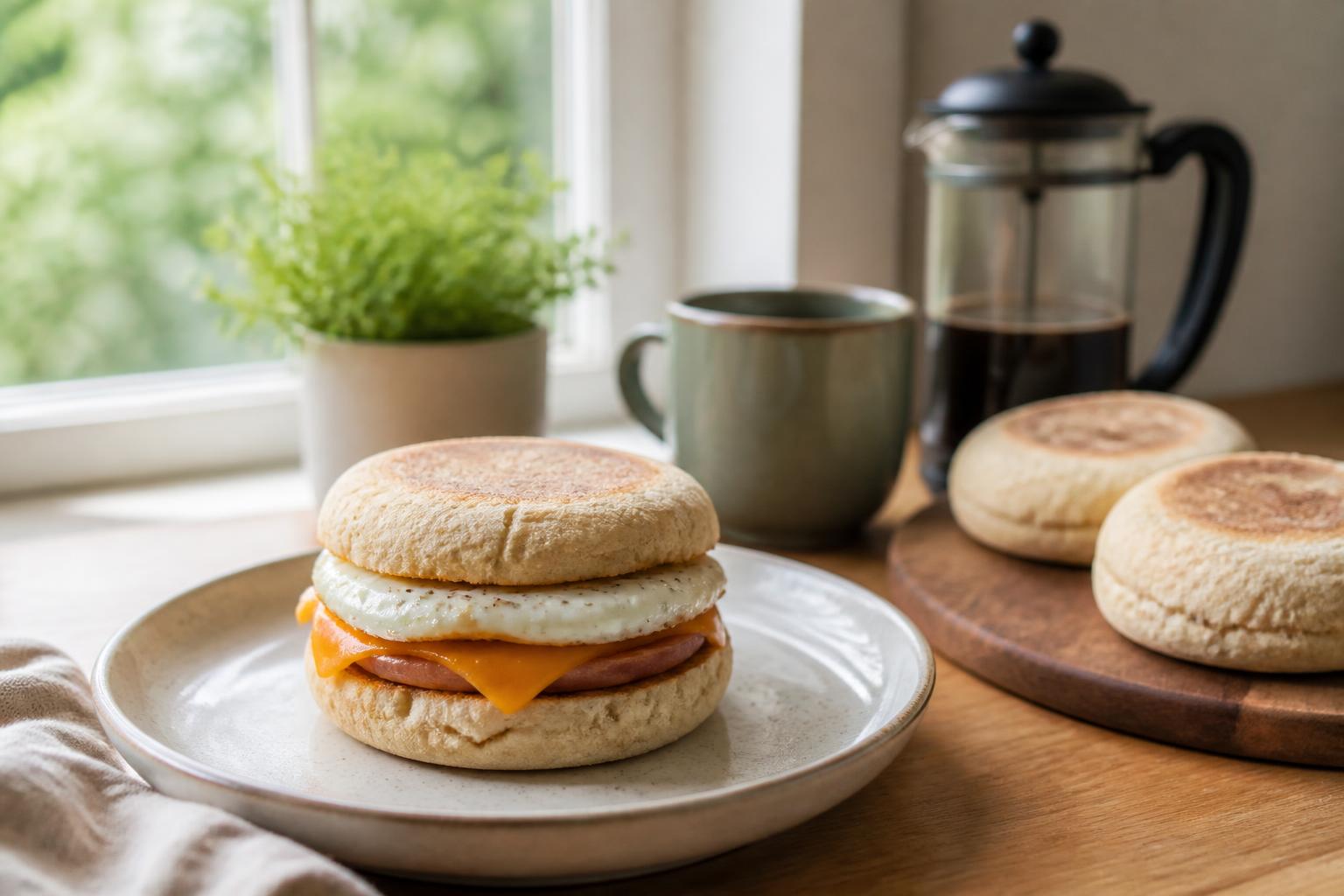
Choosing a healthier breakfast muffin in the UK usually comes down to a few practical checks. We look for a muffin that is reasonably filling for its size, not overloaded with sugar, and not carrying more saturated fat or salt than you might expect from something sold as a quick breakfast. Fibre matters too, because it often tells us more about how satisfying the muffin will be than the marketing on the pack.
That means there is no single rule that makes one muffin “healthy” and another not. Some shop-bought muffins are essentially cake in a breakfast wrapper. Others are made with oats, wholemeal flour, fruit, nuts or seeds and sit much closer to an everyday breakfast food. If you are comparing healthy breakfast muffins in the UK, the useful approach is to read the pack in the same way every time and judge the whole product, not just one claim on the front.
What makes a breakfast muffin healthier
A healthier breakfast muffin is usually one that gives you more nutritional value per portion and keeps you going for longer, without pushing sugar, saturated fat, or calories too high for what is still a fairly compact food.
The first thing we check is fibre. Muffins made with wholemeal flour, oats, bran, fruit, seeds or nuts tend to contain more fibre than those made mainly from refined white flour and sugar. Fibre helps with fullness and makes a muffin feel more like part of a breakfast rather than a sweet snack that disappears quickly. In UK labelling, fibre is normally shown in the nutrition table, often per 100g and sometimes per serving. A higher-fibre muffin is usually a better starting point.
Sugar is the next big factor. Many breakfast-style muffins contain dried fruit, banana purée, apple purée, honey or syrups, so the total sugar figure can add up quickly even when the ingredient list sounds wholesome. That does not automatically make the muffin a poor choice, but it does mean we need to look at the total amount rather than relying on words like “natural” or “fruit sweetened”. A muffin that is high in sugar and low in fibre is less likely to keep you full.
Fat matters, but the type of fat matters too. Muffins made with rapeseed oil or olive oil often have a different fat profile from those made with butter, palm oil or large amounts of coconut oil. On UK packs, the front-of-pack traffic light gives separate information for total fat and saturates. For breakfast, saturated fat is often the more useful figure to focus on, because two muffins can have similar total fat levels but very different amounts of saturates.
Salt is easy to overlook in sweet baked goods, but it is still worth checking. You may only be eating one muffin, yet breakfast can already include bread, spreads, cheese or processed toppings later in the morning. A muffin with lower salt is usually the better everyday option, especially if you are buying them regularly.
Portion size can change the picture completely. One brand’s muffin may weigh much more than another’s, so a “healthier” looking option per 100g can still end up giving you more sugar or calories simply because the muffin is bigger. Oversized café muffins are the classic example. They can look like one item, but nutritionally they may function more like one and a half or two standard portions.
Finally, we ask how filling the muffin is in real life. A muffin made from refined flour with a sweet topping may be low enough in calories to look sensible on paper, but if it leaves you hungry an hour later, it may not work well as breakfast. Protein and fibre are usually the biggest help here. Ingredients like yoghurt, nuts, seeds and oats can make a muffin more satisfying than a plain blueberry-style sponge.
How to read the label on UK muffins
If you want to compare muffins fairly, start with the front-of-pack traffic lights, then move to the nutrition table and ingredients list. In the UK, traffic light labelling is voluntary, but many major brands use it. It gives a quick view of fat, saturates, sugars and salt, usually per serving, sometimes with the percentage of an adult reference intake.
The useful part of traffic lights is speed. If one muffin shows multiple red lights for sugars and saturates, and another is mostly amber and green, you already know which one deserves a closer look. The limitation is that traffic lights are often based on the manufacturer’s serving size. If that serving is unrealistically small, the pack can look better than the food actually is.
That is why we always compare the per 100g values as well. Per 100g lets you compare products on a like-for-like basis, even if one pack contains mini muffins and another contains large ones. This is especially important for bakery items, where serving sizes vary widely. If one muffin has lower sugar per serving only because it is much smaller, the per 100g figure will usually reveal that.
The ingredients list gives context that the numbers alone cannot. Ingredients are listed in descending order by weight at the time of manufacture, so the first few items tell you a lot. If sugar, glucose syrup, butter or palm oil appear near the top, the muffin is likely to be more indulgent. If wholemeal wheat flour, oats, fruit, yoghurt, nuts or seeds appear early in the list, the muffin may be more balanced.
Look out for how the flour is described. “Wheat flour” on its own usually means refined white flour unless the label specifies wholemeal. “Whole wheat flour”, “wholemeal wheat flour” or oats listed prominently generally suggest a more fibre-rich base. Mixed flour recipes can still be useful, but the order matters. A muffin made mostly from white flour with a small amount of wholemeal flour is not the same as one built around whole grains.
Serving information also matters more than it seems. Check how many muffins are in the pack and whether the nutritional panel is given for “half a muffin”, “one mini muffin”, or another serving that may not match how people eat it. UK labels must provide certain core information, but brands still have room to frame portions in ways that flatter the product.
If the muffin makes claims such as “source of fibre” or “reduced sugar”, read those carefully. In the UK, claims are regulated, but they only describe one aspect of the product. A reduced-sugar muffin may still be high in saturated fat. A source of fibre may still be large and calorie-dense. Claims are best treated as a prompt to inspect the full label, not a shortcut.
For readers who want a broader framework for breakfast choices, our guide to healthy breakfast foods that keep mornings practical uses the same label-reading approach across cereals, bars and other quick options.
Which ingredients usually make the biggest difference
The flour base often makes the biggest structural difference to a muffin’s nutrition. Wholemeal flour, oats and bran generally increase fibre and can make the muffin more substantial. Refined white flour gives a softer, lighter crumb, but it usually contributes less fibre and can leave the muffin feeling more like cake. That does not mean every wholemeal muffin is automatically healthier, because sugar and fat levels can still be high, but flour type is a strong clue.
Fruit can improve a muffin, but it depends on the form and quantity. Fresh berries, grated apple, mashed banana and carrot can add moisture and some fibre, sometimes allowing for less added sugar or fat. Dried fruit, such as raisins or dates, can also add fibre and flavour, but it is concentrated in sugars, so the total sugar figure may still be high. Fruit is not a free pass, but it can make a muffin nutritionally better than one sweetened heavily with syrups and little else.
Nuts and seeds often make a meaningful difference because they add texture, some protein, unsaturated fats and minerals. A muffin with almonds, walnuts, pumpkin seeds or sunflower seeds may be more filling than a plain sponge-style muffin. The trade-off is that nuts and seeds are energy-dense, so portion size still matters. A modest muffin with seeds can work well for breakfast. A very large muffin packed with nuts and sweeteners can still be more than many people need.
The fat used in the recipe matters too. Muffins made with rapeseed oil tend to be lower in saturated fat than those made with butter or coconut oil. Olive oil appears in some recipes as well, though less often in commercial muffins because of flavour and cost. Butter can give a richer taste and texture, but if it is used generously the saturated fat content rises. Coconut oil has a health-focused image in some settings, yet it is still high in saturates.
Sweeteners can change both the ingredient list and the way a muffin is marketed, but they do not always change the nutrition as much as people expect. Honey, maple syrup, agave and fruit concentrates may sound more natural than white sugar, but they still contribute sugars. Apple purée or banana can sometimes reduce the need for added sugar and fat, but the end result depends on the full recipe. We avoid assuming that homemade or artisan automatically means lower in sugar, because often it does not.
Added protein ingredients, such as yoghurt, skyr, whey protein or egg, can sometimes make a breakfast muffin more satisfying, but they vary widely. A little yoghurt in the batter will not necessarily turn a muffin into a high-protein breakfast. If protein is one of your priorities, the nutrition table is more reliable than front-of-pack wording. We cover the wider breakfast picture in our guide to healthy protein breakfasts that keep mornings practical.
Are breakfast muffins actually filling enough
Sometimes yes, but often not on their own.
A muffin can work as breakfast if it has enough substance, usually from fibre, some protein, and a sensible portion size. Oat-based muffins, wholemeal fruit muffins, or muffins that include nuts and seeds often do better here than the standard café-style fruit muffin made from white flour and sugar. Even then, many muffins are still too light to carry a whole morning by themselves.
There are a few clues that a muffin may not be enough. If it is very small, low in fibre, and mostly made from refined flour, it may act more like a sweet snack than a meal. If you find yourself hungry soon after eating it, that is useful feedback, not a lack of willpower. The food simply may not be doing enough for the job you are asking it to do.
The easiest fix is to treat the muffin as one part of breakfast rather than the whole thing. Pairing it with plain Greek yoghurt, skyr or another unsweetened yoghurt adds protein and makes the meal more substantial. Fruit on the side, such as berries, an apple or a pear, can add volume and fibre. Eggs can work well if you prefer a more savoury balance or know that a sweet muffin alone does not keep you full.
This is also where drink choices matter. A muffin and a sugary coffee drink can create a breakfast that feels light but adds up quickly in sugar. A muffin with tea, coffee, milk, or a lower-sugar drink often makes the overall meal easier to judge.
If you know you need a more substantial start, it may be worth looking beyond muffins altogether on some mornings. Our round-up of healthy vegan breakfasts that keep you full for longer shows how combinations of fibre and protein can improve staying power, even when breakfast needs to stay quick.
How shop-bought and homemade muffins differ
Shop-bought muffins are usually better for convenience, consistency and clear labelling. You can compare nutrition tables, ingredient lists and portion sizes before buying, and if you find one that works for you, it is easy to repeat. For busy mornings, that consistency is useful. The downside is that commercial muffins are often designed for softness, shelf life and broad appeal, which can mean more sugar, refined flour, or saturated fat than you would choose if you were baking yourself.
Homemade muffins give you more control over ingredients and size. You can use wholemeal flour, oats, fruit, rapeseed oil, nuts or seeds, and you can reduce sugar if the recipe allows for it. You can also bake smaller muffins, which helps with portion control. That said, homemade does not automatically mean healthier. Many home recipes are generous with honey, maple syrup, dried fruit, chocolate chips or nut butter, and the final result can still be quite rich.
One difference people often miss is consistency. A packaged muffin from the same brand is likely to be nutritionally similar each time. Homemade muffins can vary a lot depending on the recipe, substitutions, and how large each muffin turns out. If you are trying to make a reliable everyday breakfast, that variation matters.
Shop-bought muffins can also make portion control harder when they are sold in bakery format rather than pre-packed multipacks. Large in-store bakery muffins often look like a single serving because they are sold individually, but nutritionally they may be closer to a café treat. Pre-packed muffins can be easier to assess because the weight and serving information are stated clearly.
Homemade muffins win on flexibility. If you need a lower-sugar option, want to increase fibre, or need to avoid particular ingredients, baking your own gives you that room. If convenience and label transparency matter more, a carefully chosen shop-bought muffin may be the more practical answer.
The best approach is not to assume one category is always better. Compare the actual recipe or label in front of you. A well-made homemade oat and fruit muffin can be a solid breakfast component. So can a thoughtfully formulated shop-bought muffin with whole grains and moderate sugar. Equally, either one can end up closer to cake.
When we compare healthy breakfast muffins in the UK, we come back to the same basics each time. Check the fibre, sugar, saturated fat and salt. Compare per 100g values, not just per serving. Read the first few ingredients. Notice the portion size. Then ask the question that matters most at breakfast, will this actually keep you going? If the answer is no, the fix may be as simple as choosing a better muffin or adding yoghurt, fruit or eggs alongside it.

Questions about this article or a correction to suggest? Get in touch. Read more about our editorial approach.