A healthy vegan breakfast should do more than simply avoid animal products. If it is going to keep you full for longer, it needs enough fibre, a useful amount of protein, and some fat, with added sugar and salt kept in sensible check. In practice, that usually means building breakfast around oats, wholegrain bread, fruit, beans, seeds, nuts or fortified dairy alternatives, rather than relying on sweetened cereals, pastries or snack bars that disappear quickly.
Fullness through the morning is rarely about one “superfood”. It is usually about the combination on the plate. A bowl of plain porridge with fruit can be a solid start, but porridge with soya milk, chia seeds and nut butter will generally last longer. The same principle applies whether you prefer toast, overnight oats or a savoury breakfast. The most useful healthy vegan breakfast is the one that fits a normal weekday and still leaves you steady by mid-morning.
What makes a vegan breakfast healthy?
A healthy vegan breakfast is balanced, filling and realistic. It should contribute useful nutrients, not just calories, and it should help you reach lunch without the sharp rise and drop that often follows a sugary start.
A practical way to judge it is to look at five things.
First, fibre. This is one of the biggest strengths of a well-planned vegan breakfast. Oats, wholegrain cereals, wholemeal bread, fruit, nuts, seeds and beans can all help. Fibre slows digestion, supports fullness and can make breakfast more substantial without making it heavy. If breakfast is based on refined grains, such as sweetened puffed cereal or white toast alone, it is usually less satisfying.
Second, protein. Plant-based breakfasts can be light on protein if they are built only around fruit, toast with jam or low-protein plant drinks. A more satisfying breakfast often includes soya yoghurt, fortified soya drink, peanut butter, chia seeds, hemp seeds, tofu or beans. Oats contribute some protein too, but they work better as part of a wider combination.
Third, added sugar. A breakfast can be vegan and still be mostly sugar. Flavoured granola, chocolate cereals, sweetened yoghurts and breakfast bars often look wholesome on the front of pack, then turn out to be little different from a sweet snack. Fruit is not the issue here. The main question is how much sugar has been added during manufacture.
Fourth, salt. Breakfast foods can hide more salt than many people expect, especially in bread, savoury spreads, meat-free sausages and some breakfast bars. Salt is not the first thing most people check on a cereal box, but it is worth comparing products if you eat them often.
Fifth, overall balance. A healthy vegan breakfast is not defined by one number on a label. It is the overall pattern. Wholegrain carbohydrate for energy, plant protein for staying power, some fat for satisfaction, and fruit or vegetables for variety and micronutrients is usually a good structure.
That does not mean every breakfast has to be elaborate. Two slices of wholemeal toast with peanut butter and banana can be a balanced breakfast. So can overnight oats made with fortified soya milk and berries. The key is whether the meal is doing enough to nourish you and keep you going, not whether it looks especially virtuous.
How to build a breakfast that keeps you satisfied
If you often feel hungry by 10am, the issue is usually not that you need a bigger breakfast in volume. More often, breakfast is missing one of the components that helps slow digestion and improve satiety.
A simple framework is to combine three things.
Start with a wholegrain or high-fibre carbohydrate. Porridge oats, jumbo oats, muesli with no added sugar, wholemeal toast, rye bread, oatcakes or a higher-fibre breakfast cereal can all work. These foods provide energy, but the fibre content matters. Wholegrain options tend to be slower and steadier than refined ones.
Add a protein-rich plant food. This is where many breakfasts improve most. Good options include soya yoghurt, fortified soya drink, unsweetened soya skyr-style alternatives, peanut or almond butter, chia seeds, pumpkin seeds, tofu, baked beans or hummus. Soya foods are particularly useful because they usually provide more protein than oat, almond, coconut or rice alternatives.
Then include a source of fat. Nuts, seeds, nut butter, tahini and avocado all help make a meal more satisfying. Fat slows stomach emptying and can make breakfast feel complete rather than thin and temporary. You do not need a large amount. A tablespoon of seeds or nut butter may be enough to change how long breakfast lasts.
Texture matters too. A breakfast that needs chewing often feels more substantial than one that can be swallowed quickly. Compare a smoothie with a bowl of oats topped with chopped apple and walnuts. Even with similar ingredients, the second is often more satisfying.
Volume also helps, especially when it comes from foods with fibre and water. Fruit, berries, stewed apples, grilled tomatoes, mushrooms and spinach can all add bulk without turning breakfast into a heavy meal.
One point that is often missed is timing. If breakfast is rushed and eaten half-standing, it is easier to miss signs of fullness and easier to feel unsatisfied soon afterwards. That does not mean breakfast has to be leisurely, but it helps if it is assembled in a way that can be eaten properly. Overnight oats, pre-portioned seed mixes and toast toppings ready in the fridge can make a practical difference on workdays.
If you want more ideas on building a filling morning meal, our guide to healthy protein breakfasts that keep mornings practical goes into more detail on combining convenience with enough protein.
Everyday healthy vegan breakfast ideas
The best breakfast ideas are the ones that fit ordinary UK shopping habits and weekday routines. You do not need unusual ingredients or café-style presentation.
Porridge is one of the easiest places to start. Make it with oats and fortified soya milk, or half soya milk and half water, then add fruit and a topping that brings protein and fat. Good combinations include banana with peanut butter, apple with cinnamon and walnuts, or berries with chia seeds. A plain bowl of oats is fine, but a few additions can make it much more filling.
Overnight oats work well if mornings are rushed. Mix oats with fortified soya yoghurt or soya milk, then add chia seeds and fruit. Refrigerate overnight. By morning you have a breakfast that is ready to eat, and it usually keeps you fuller than many grab-and-go options sold as breakfast products.
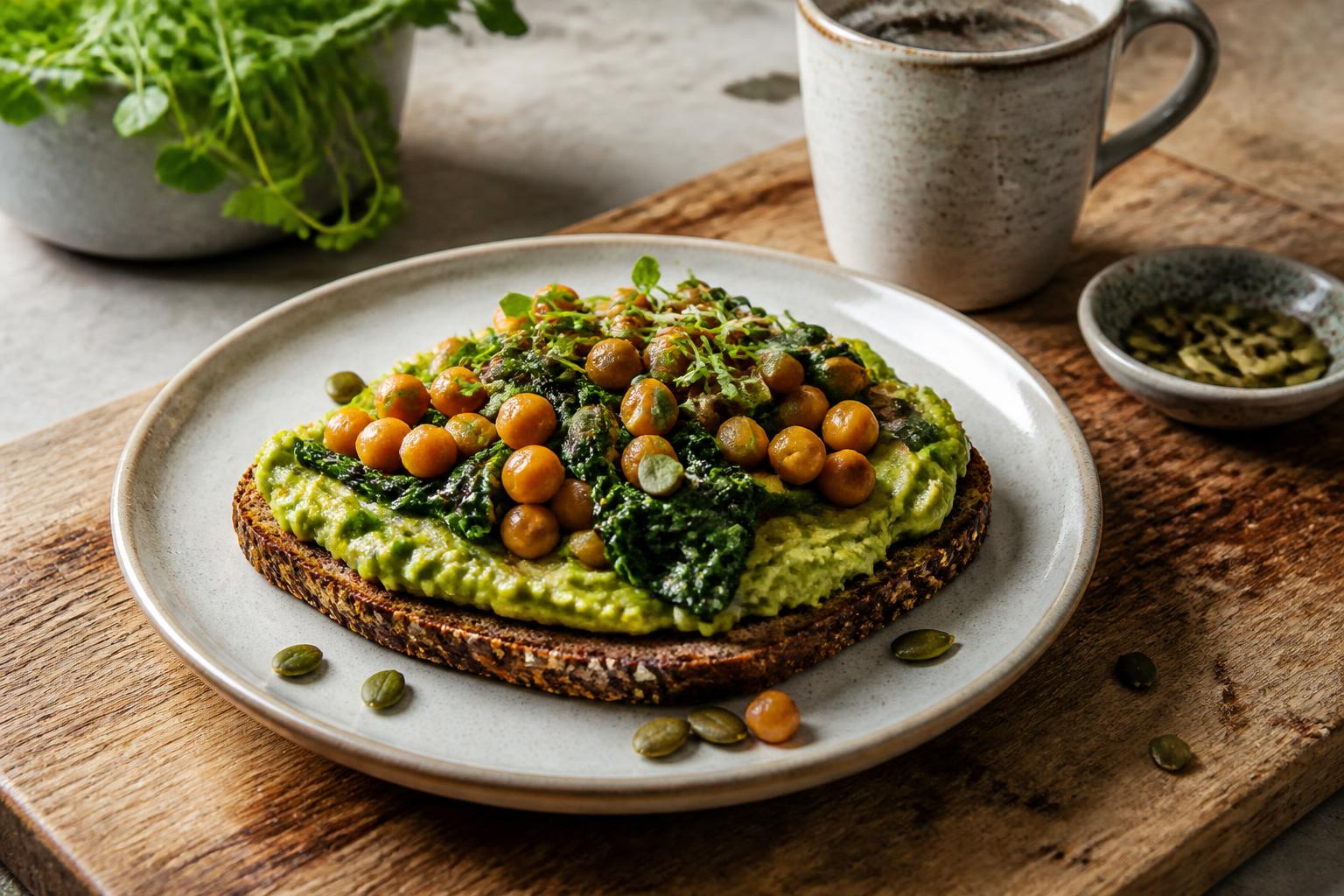
Toast can be a strong breakfast if the topping does enough work. Wholemeal or seeded bread gives a better base than white sliced bread. Peanut butter with sliced banana is a reliable option. Hummus with tomato and black pepper works well for a savoury version. Mashed avocado with pumpkin seeds can be satisfying too, though avocado alone is lower in protein, so it helps to add seeds or pair it with a protein-rich side.
Baked beans on wholemeal toast remain one of the more practical savoury vegan breakfasts in the UK. It is cheap, familiar and usually more filling than cereal. If you want to make it more substantial, add grilled mushrooms, tomatoes or wilted spinach.
Tofu can work well at breakfast without trying to imitate eggs exactly. A simple tofu scramble with turmeric, black pepper, mushrooms and spinach, served on toast, gives protein and volume. Keep the seasoning straightforward and watch the salt if you are using stock powder or salty sauces.
Unsweetened muesli is another useful format, but check the label. Some mueslis are essentially granola without the cluster shape and still carry a notable sugar load. A better version is one based on oats, wheat flakes, nuts and seeds, served with fortified soya milk and fruit.
Smoothies are less reliable for fullness, but they can still work if built properly. A smoothie made from fruit juice and banana alone is unlikely to last. One made with fortified soya drink, oats, berries, nut butter and ground flaxseed is more likely to keep you going. Even then, many people find a bowl or toast-based breakfast more satisfying than a drink.
Breakfast bars are best treated carefully. Some are useful in a pinch, but many are closer to a snack than a meal. If you want a homemade option, our guide on how to make a healthier breakfast bar at home covers the ingredients that make a bar more substantial and less sugary.
For people who like to rotate breakfasts, it can help to think in formats rather than recipes. A grain base, a protein addition, a fruit or vegetable element, and a topping with healthy fats is usually enough to create several combinations without much planning.
What to watch on labels and packaging
UK food labels can tell you a lot about whether a breakfast food is likely to be filling and balanced, but only if you look beyond the front of pack claims.
Start with the nutrition table. On cereals, compare fibre, sugar and protein per 100g. A cereal described as “natural”, “wholesome” or “source of wholegrain” can still be high in sugar. Fibre is often a useful dividing line between products that are likely to satisfy and those that are mostly refined starch. Protein can also help, especially if the cereal is going to be eaten with a lower-protein plant drink.
For plant drinks, the ingredient list and fortification matter as much as the calories. If you are choosing one for breakfast, check whether it is fortified with calcium, vitamin B12, vitamin D and iodine. In the UK, fortification is common but not guaranteed. Soya drinks usually contain more protein than almond, rice, coconut or oat drinks, though some oat products are fortified well and can still have a place nutritionally.
On yoghurts, compare unsweetened and flavoured versions. Plant yoghurts can vary widely. Some coconut-based products are low in protein and higher in saturated fat. Soya yoghurts are often more useful if you want breakfast to keep you full. Again, check for calcium and vitamin B12 fortification.
Breakfast bars deserve particular scrutiny. Look at portion size first. A bar may seem moderate in sugar until you notice it is very small and unlikely to satisfy on its own. Then check ingredients order. If syrup, glucose syrup, sugar or fruit purée concentrates appear near the top, the bar is likely to be more of a sweet product than a sustaining breakfast. Nuts, oats and seeds can improve the profile, but they do not cancel out heavy use of added sugars.
Traffic light labels can be helpful in the UK, but they are not mandatory on all products. When present, they offer a quick sense of sugar, fat, saturated fat and salt per portion or per 100g. They are less useful for assessing fibre, which is why the full nutrition table is still worth checking.
Ingredients lists can also reveal how processed a product really is. Long lists are not automatically bad, but if a cereal or yoghurt relies heavily on sweeteners, flavourings and starches while offering little fibre or protein, it may not be the strongest breakfast choice.
For a closer look at comparing products on shelf, our guide on using food labels to add more fibre at breakfast and lunch breaks down the label checks that make the biggest difference in practice.
Nutrients vegans should not ignore at breakfast
Breakfast is not the only meal that matters nutritionally, but it is a useful opportunity to cover nutrients that need more attention in a vegan diet.
Vitamin B12 is the most important one not to leave to chance. Reliable vegan sources are fortified foods and supplements. At breakfast, fortified plant drinks, breakfast cereals and some plant yoghurts may help, but intake can be inconsistent if you rely on food alone. That is why many vegans use a B12 supplement rather than hoping breakfast happens to cover enough.
Iodine is another nutrient worth checking carefully. In the UK, dairy is a major source for many people, so vegans need alternatives. Some plant milks are fortified with iodine, but not all are. Seaweed is not a simple solution because iodine levels can vary widely, and some seaweeds contain too much. If your breakfast regularly includes a plant drink, this is one of the first fortification points to check.
Calcium is often manageable on a vegan diet, but it depends on choices. Fortified plant drinks and yoghurts can contribute significantly. Calcium-set tofu can help elsewhere in the day. At breakfast, choosing a fortified drink over an unfortified one can make a meaningful difference over time.
Vitamin D is harder to obtain from food alone, whether vegan or not. Some plant milks, spreads and cereals are fortified, but routine intake still varies, especially in winter. In the UK, public health advice commonly supports considering a vitamin D supplement during autumn and winter, and some people may choose to take it year-round.
Iron matters too, though breakfast foods provide mixed amounts. Oats, fortified cereals, seeds, nuts and wholegrains can contribute, and a savoury breakfast with beans or tofu can help further. Plant iron is non-haem iron, which is absorbed less readily than iron from meat. Pairing iron-containing foods with vitamin C can help, so fruit alongside cereal or berries in porridge is useful for more than flavour.
One point of caution is that fortification practices differ across products and countries. A cereal or plant drink sold in the UK may not be fortified in the same way as a similar product sold elsewhere in Europe. Where rules differ between the UK and the EU more generally, the practical takeaway is simple, check the actual pack in front of you rather than assuming all versions are equivalent.
A healthy vegan breakfast does not need to solve every nutrient question by itself. It does, however, offer a regular daily chance to build in fibre, protein and useful fortification. If you choose foods that are both satisfying and nutritionally purposeful, breakfast becomes much more than a quick stop before the day starts.

Questions about this article or a correction to suggest? Get in touch. Read more about our editorial approach.