Food play at home can be simple, useful and genuinely enjoyable for babies, as long as it matches their stage. In practice, that usually means letting a baby look at, touch, squash, smell and eventually taste ordinary foods without pressure to eat a set amount. The point is not to turn mealtimes into a lesson. It is to help babies become familiar with food as part of everyday family life.
When people look for healthy eating activities for babies, they often mean ideas that support curiosity and confidence around food, rather than games with a nutritional message. For babies, the best activities are usually built into normal routines, sitting in a highchair while you prepare fruit, holding a soft-cooked vegetable stick, smearing yoghurt on a tray, or watching you eat the same food.
What healthy eating activities can babies actually do?
For babies, food-based activities need to be developmentally realistic. A six month old cannot sort foods by colour, talk about where carrots come from or understand why we eat vegetables. What they can do is explore food with their senses. That exploration is the activity.
At this age, healthy eating activities are usually about:
- seeing different foods
- touching different textures
- smelling familiar and unfamiliar foods
- hearing the sound food makes when dropped, squashed or stirred
- practising hand to mouth movements
- learning that mealtimes are calm and predictable
That matters because exploring food and eating food are not the same thing. A baby may poke avocado, smear porridge across the tray and drop broccoli on the floor without swallowing much at all. That still counts as useful learning. It helps them recognise food, tolerate mess, and build oral and sensory familiarity before they are ready to eat more confidently.
This is where adults can accidentally make things harder. If every food activity becomes a test of how much a baby has eaten, the baby is more likely to feel pressure. We get better results when we treat touching, licking, mouthing and even rejecting food as normal parts of the process.
It also helps to keep expectations in line with age. Babies do not need themed food crafts or complicated setups. In most homes, the best activities use ordinary foods and ordinary equipment, a highchair, a spoon, a bowl, a bib, a clean tray and a few minutes when nobody is rushing.
When are babies ready for food-based activities?
In the UK, NHS guidance is to start introducing solid foods at around 6 months. Before then, babies get what they need from breast milk or infant formula. That timing matters for food play too. A baby who is not ready for solids should not be given foods to mouth or taste just for the sake of an activity.
Signs that a baby may be ready at around 6 months include:
- staying in a sitting position and holding their head steady
- coordinating eyes, hands and mouth so they can look at food, pick it up and put it in their mouth
- swallowing food rather than pushing it back out with the tongue
The old idea that chewing fists, waking at night or wanting extra milk means a baby is ready for solids is not enough on its own. Readiness is about physical development.
Before solids, food-related play should stay indirect. That might mean watching you wash fruit, smelling herbs while held securely, or sitting nearby while the family eats. Once a baby is ready for solids, activities can become hands-on.
Readiness also affects what counts as suitable. A younger baby just starting solids may manage smooth textures on a spoon or soft pieces they can grasp with a whole hand. An older baby with more sitting balance and hand control may enjoy picking up peas one by one, dipping toast fingers into hummus, or helping to stir porridge with assistance.
If there is any concern about development, swallowing, allergies or feeding difficulties, it is sensible to speak to a health visitor, GP or dietitian before trying more adventurous food activities.
Simple healthy eating activities for babies by stage
The easiest way to plan healthy eating activities for babies is by thinking in stages rather than exact ages. Babies develop at different rates, but their feeding skills tend to move in a similar direction.
Younger babies, before solids
Before around 6 months, keep it observational and sensory, without offering food to eat.
Simple ideas include:
- letting your baby watch you prepare meals from a safe seat
- holding them while you smell a peeled orange, fresh mint or warm toast together
- talking through what you are doing, such as washing a pear or stirring porridge
- sitting them with the family at mealtimes so food becomes familiar
This stage is less about participation and more about exposure. Babies learn a great deal by watching faces, hands and routines.
Babies starting solids
Once solids begin, keep activities short and manageable. One food at a time is often enough.
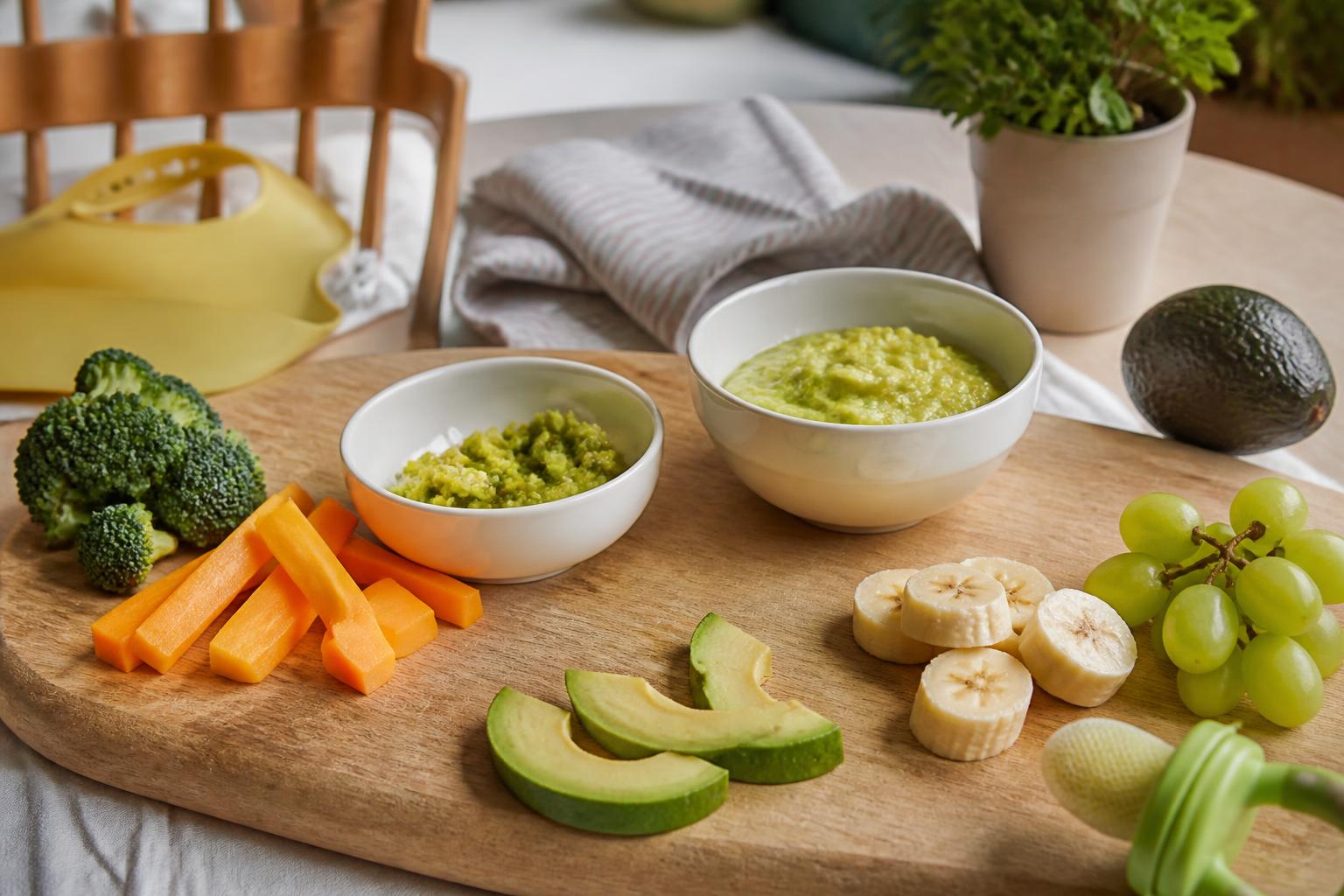
Good first options include:
- mashed banana spread thinly on the highchair tray for patting and smearing
- thick plain yoghurt for scooping with fingers or a pre-loaded spoon
- soft-cooked carrot sticks, parsnip batons or broccoli florets to hold and mouth
- porridge with a thick texture, so it stays on a spoon more easily
- ripe pear or avocado slices, prepared so they are soft and easy to grasp
At this stage, we would focus on foods that are soft, simple and recognisable. There is no need to make shapes or scenes from food. A strip of omelette can be interesting enough.
You can also use routine as the activity. For example:
- show the banana before peeling it
- let the baby touch the skin
- peel it slowly in front of them
- offer a small piece to squash or mouth
- name it without demanding a response
That sequence helps babies connect the whole food with what ends up on the tray.
Older babies with more hand control
As babies become more confident eaters, they can do more with ordinary meals.
Useful activities include:
- picking up soft pieces from a plate, such as roasted sweet potato or soft courgette
- dipping cucumber sticks or toast fingers into yoghurt or hummus
- transferring soft fruit pieces from one bowl to another with hands
- helping stir overnight oats, mashed potato or porridge with your hand over theirs
- exploring mixed textures, such as lentil dahl with soft rice, if they are coping well with lumps
This is also the stage when babies often enjoy copying. If you bite into a soft peach slice, they may want to do the same. If you tap a spoon on a bowl, they may copy that too. Shared eating is often more effective than any planned activity.
Activities built into household routines
The most sustainable ideas are the ones that fit around real life.
Try:
- offering a soft vegetable while you finish plating dinner
- giving a baby-safe spoon while you eat your breakfast
- letting your baby feel a cooled baked potato before it is opened
- showing different colours at lunch, such as peas, red pepper and butternut squash
- sitting together for snack time, even if your baby mainly explores
If your baby later becomes wary of certain foods, the groundwork you lay now still helps. Repeated low-pressure exposure is one of the most useful tools for later feeding. We cover that in more detail in our guide to healthy eating that works for fussy eaters.
How can parents make food play safe?
Food play should feel relaxed, but the safety basics matter. For babies, the main issues are choking risk, hygiene, allergens, supervision and portion size.
Choking risk
Babies must always be upright and closely supervised when food is offered. They should not eat while reclined, crawling, walking around or strapped into a car seat or pram.
Avoid foods that are firm, round, small or sticky in ways that raise choking risk. That includes whole grapes, whole cherry tomatoes, whole nuts, popcorn, hard raw apple, chunks of raw carrot and spoonfuls of nut butter. Grapes and cherry tomatoes should be cut lengthways into quarters. Nut butters can be thinned and spread lightly.
Texture matters as much as size. Foods used for activities should be soft enough to mash easily between fingers. If you are offering finger foods, they should be prepared in a shape a baby can hold safely and gum effectively.
Gagging can happen as babies learn, and it is different from choking. Gagging is noisy and often part of normal learning. Choking is silent or near-silent and needs immediate action. It is worth taking an infant first aid course so you know what to do.
Hygiene
Because babies touch everything, food play gets messy quickly. Start with clean hands, a clean tray or table, and clean utensils. Perishable foods should not be left sitting out for long, especially dairy, cooked grains and cooked meats.
If food has been squashed into the highchair straps, mixed with saliva and left warm, it should be thrown away rather than saved. Wash reusable bibs, bowls and spoons thoroughly after use.
For very young babies, a small amount of food is enough for exploration. Using less food keeps waste and mess under control without changing the value of the activity.
Allergens
In the UK, common allergens include cow's milk, eggs, peanuts, tree nuts, sesame, soya, wheat, fish and shellfish. Current guidance supports introducing these foods from around 6 months, not delaying them without a medical reason.
When introducing an allergen, it is usually best to do it at home, during the day, and one new allergen at a time so any reaction is easier to spot. A tiny amount is enough for a first exposure. For example, plain yoghurt on a spoon, well-cooked egg, or smooth peanut butter thinned with yoghurt or breast milk and spread thinly.
If a baby has eczema, a known food allergy, or immediate family history that raises concern, speak to a health professional for individual advice. UK guidance may differ from assumptions people pick up from broader European advice online, so NHS or allergy service advice is the better reference point for families here.
Supervision
Food activities are not independent play. Even with very soft foods, babies need an adult present and paying attention. That means no stepping away to answer the door or put washing on while a baby is eating.
It also helps to keep sessions short. A few focused minutes is safer and usually more productive than leaving food in front of a tired baby for half an hour.
Portion size
Babies do not need adult portions for learning. A spoonful of yoghurt, a few vegetable sticks, or half a soft fruit slice can be enough. Small portions reduce waste and make it easier to notice what your baby is managing.
If they want more, you can add more. Starting small also prevents the tray from becoming overwhelming.
What helps babies build a positive relationship with food?
A positive relationship with food starts long before a child can say what they like. For babies, the key ideas are responsiveness, repetition, low pressure and realistic expectations.
Responsive feeding
Responsive feeding means we decide what, when and where food is offered, and the baby decides whether to eat and how much. That sounds simple, but it changes the tone of mealtimes.
In practice, responsive feeding means:
- noticing hunger and fullness cues
- not coaxing for one more bite
- not using food as a reward
- allowing babies to stop when they have had enough
- accepting that appetite varies from day to day
A baby turning their head, closing their mouth or throwing food may be saying they are done, overstimulated or tired. We do not need to win that moment. We need to notice it.
Repetition
Babies often need to see and experience a food many times before it feels familiar. A first refusal tells us very little. It does not mean the food is disliked forever. It may simply mean the texture, smell or look is still new.
That is why repetition works best when it is calm. Offer the food again another day, in a small amount, without commentary. A baby who would not touch courgette this week may happily pick it up next week when it appears beside a familiar food.
Low-pressure exposure
Low-pressure exposure is one of the most practical tools we have. It means letting babies be near food, see food, touch food and watch others eat food, without making performance the goal.
That can look like:
- putting one piece of a new vegetable on the tray beside a familiar food
- eating the same food yourself
- naming the food once, then leaving it there
- staying neutral if it is ignored or dropped
This is often more effective than praise-heavy feeding. Constant cheering for every bite can make some babies more self-conscious, not less.
Realistic expectations
Babies are messy, inconsistent and often unpredictable with food. That is normal. Some days they will seem fascinated by everything. Other days they will throw the spoon after two minutes. Progress is rarely neat.
It helps to remember that healthy eating in infancy is not about perfect balance at every sitting. Over time, what matters more is regular exposure to a range of foods, a calm feeding environment and a baby who feels safe exploring.
Parents sometimes worry that if a baby plays with food, they will never learn to eat properly. In reality, age-appropriate food play is often part of learning to eat properly. Touching, smearing and dropping are not signs that the process has gone wrong. They are part of how babies gather information.
If you want a broader sense of how public advice shapes these everyday choices, our piece on how UK healthy eating campaigns shape everyday food choices sets out the guidance many families are already absorbing without realising it. For parents trying to build routines around meals and snacks, our guide to healthy eating plans that fit ordinary UK routines is also useful.
The most effective healthy eating activities for babies are usually the least elaborate. Offer ordinary food, at the right stage, in a safe setup, with no pressure. Let your baby watch, touch, smell, taste and stop when they have had enough. That is not a lesser version of learning. For babies, it is the real thing.

Questions about this article or a correction to suggest? Get in touch. Read more about our editorial approach.