
American food is not automatically unhealthy, and it is not automatically a better choice just because it looks simpler or more “natural”. In the UK, the healthier option usually comes down to the same things that matter in any cuisine, how much veg, beans, wholegrains and protein it contains, how heavily processed it is, and how much salt, sugar and saturated fat come with it.
That matters because “American” can describe a flavour profile, a format, or a portion style, not a nutrition outcome. If you want healthier American food in the UK, the useful question is not whether it is authentically American. It is whether the product or meal is balanced enough to fit ordinary eating most days.
What people usually mean by American food
For UK shoppers, “American food” usually covers a wide mix of products. Some are classic dishes associated with the US, such as bagels, pancakes, chilli, burgers, deli sandwiches, slaws and barbecue flavours. Others are supermarket imports or American-style versions of snacks, cereals, sauces, drinks and desserts.
That distinction matters. A cuisine style is not the same thing as a nutrition profile. A bowl of bean chilli with rice, salad and yoghurt can be a solid midweek meal. A giant muffin with a sweet coffee drink is also American-style, but nutritionally it sits in a very different place.
It also helps to separate American food culture from the most visible export categories. In Britain, the American section in a supermarket often leans heavily towards sweets, sugary cereals, flavoured drinks, marshmallow treats, pancake syrups and novelty crisps. Those products are real enough, but they do not represent the full range of American-style eating, and they certainly do not define the healthier end of it.
When we talk about healthier American food, we usually mean foods that borrow familiar US formats while still working for everyday eating in the UK. That could be porridge with peanut butter and berries, a turkey and salad sandwich on wholemeal bread, a bean chilli, a grain bowl with black beans and avocado, or a simple coleslaw made with a lighter dressing rather than a heavy one.
So the most useful way to think about “American food” is this. It is a broad style of cooking and packaging, not a fixed nutrition category. The same cuisine can produce highly processed snack foods and very balanced meals. The label on the front tells you where it comes from stylistically. The ingredients list and nutrition panel tell you whether it is a sensible choice.
Which American-style foods can fit a healthier everyday diet?
Quite a few American-style foods can fit comfortably into a healthier routine, especially when they are built around protein, fibre and reasonably plain ingredients.
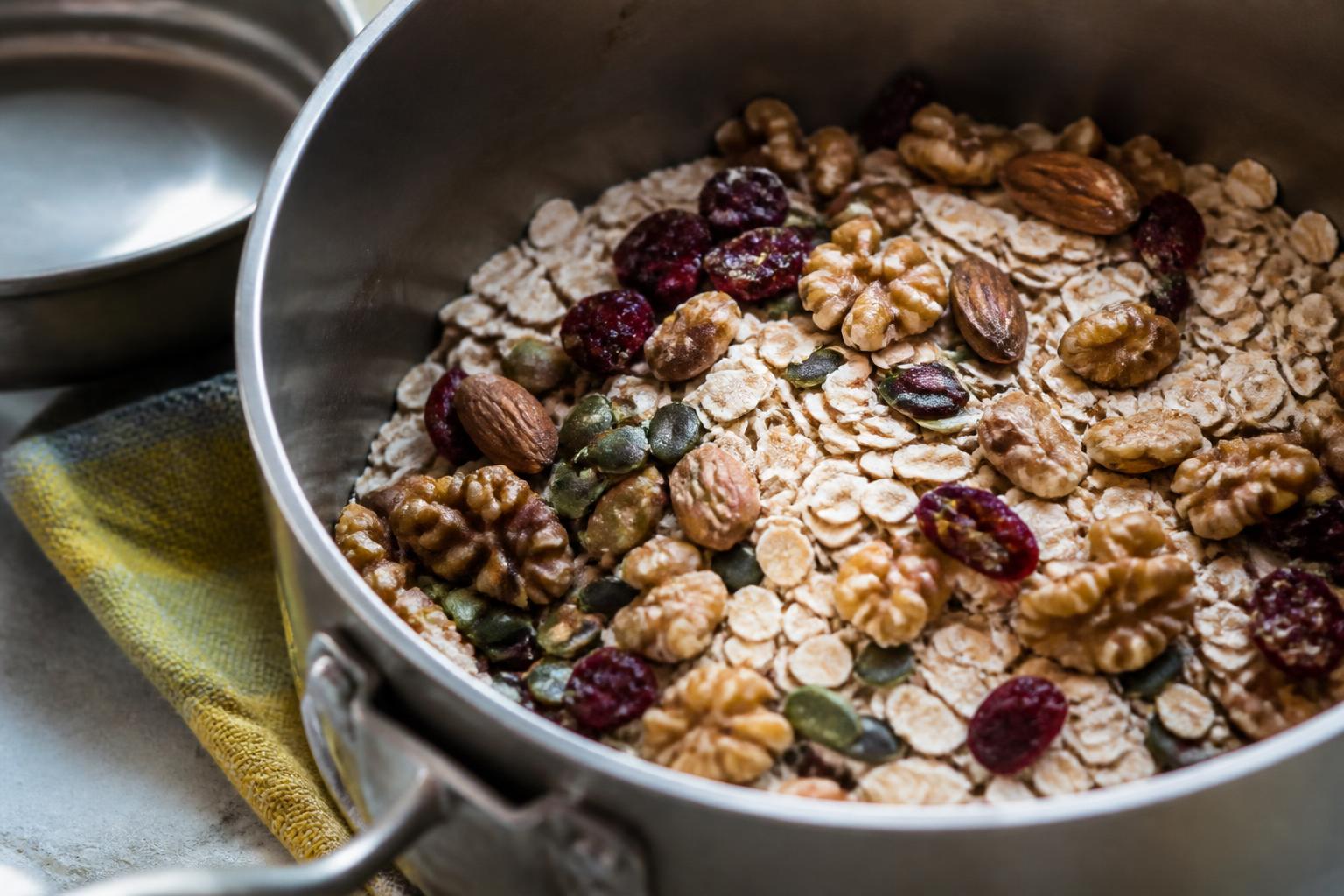
Breakfast is one of the easiest places to start. American-style breakfasts in the UK often get reduced to stacks of pancakes, syrup and bacon, but that is only one version. Better everyday options include oatmeal, overnight oats, Greek yoghurt with fruit, eggs on wholegrain toast, or a breakfast burrito with beans and salsa. Bagels can also work if the filling does the heavy lifting, for example smoked salmon and cucumber, egg and spinach, or peanut butter with banana. If breakfast is the area you are trying to improve, our guide to choosing a healthier breakfast muffin in the UK is useful for packaged and grab-and-go options.
Sandwiches and deli-style lunches can also be balanced. The strongest choices tend to have a clear protein source, a decent amount of salad or vegetables, and bread that contributes some fibre rather than just bulk. Think grilled chicken, turkey, tuna, egg, hummus or beans, paired with tomatoes, lettuce, pickles, peppers or slaw. The weaker versions are usually the oversized ones packed with multiple processed meats, melted cheese and rich sauces.
Chilli is another good example of an American-style dish that can be very practical nutritionally. A chilli based on beans, tomatoes, onions and peppers can be high in fibre and filling without needing much added fat. A beef chilli can also fit well if the balance still leans towards beans and vegetables rather than just mince. Portioning matters, but the format itself is not the problem.
Salads are often overlooked because “American salad” can suggest creamy dressings and extras piled on top. In practice, many US-inspired salads are perfectly workable if built well. Cobb-style combinations, taco salads, chopped salads and grain bowls can all be balanced if they include leaves or veg, beans or lean protein, and a dressing used with some restraint. The issue is usually not the salad concept. It is the amount of dressing, cheese, fried toppings and sweetened sauces.
Snacks need a bit more care, but there are still better choices. Popcorn can be reasonable if it is not heavily coated. Pretzels are often marketed as lighter, although nutritionally they can still be salty and not very filling. Nut butter on apple slices, yoghurt pots, roasted chickpeas, trail mix in modest portions, or oat-based bars with straightforward ingredients tend to work better than highly processed “American candy” style snacks.
Some supermarket formats that look indulgent can also be improved at home. A breakfast bar, for example, can be made around oats, seeds and nut butter rather than syrup-heavy fillers. We have a practical guide on how to make a healthier breakfast bar at home if you want a more reliable option than many packaged bars.
The broad rule is simple. American-style foods are easier to fit into everyday eating when they are based on grains, beans, eggs, dairy, nuts, lean meats and vegetables, and harder to fit in when they are mostly sugar, refined flour, processed meat and sauces.
How to read labels on American foods sold in the UK
If you are buying American foods in the UK, the label matters more than the branding. Imported products can look appealing because they feel different, but the nutritional differences are often less about nationality and more about formulation and serving size.
Start with the nutrition table per 100g, or per 100ml for drinks. In the UK, this is the easiest way to compare one product with another because serving sizes can be manipulated. One cereal may list a tiny bowl, one sauce may list a tablespoon, and one snack may split a small packet into two “servings”. Per 100g gives you a common basis.
For everyday comparison, check four things first, calories, saturated fat, sugars and salt. Which one matters most depends on the product category.
For cereals, breakfast bars and sweet snacks, sugars and fibre are often the main pressure points. A product can look wholesome because it contains oats or wholegrain flour, but still be sugar-heavy. If the ingredient list starts with sugar, glucose syrup, syrup, or several sweeteners in close succession, treat the health halo carefully.
For savoury snacks, deli meats, sauces and ready meals, salt is often the bigger issue. In the UK, traffic-light labelling on the front of pack can help if it is present, but it is voluntary, not universal. Many imported foods will not use the familiar UK front-of-pack colour coding at all, so you may need to rely on the back label.
For items like peanut butter, dressings and spreads, look beyond calories alone. A peanut butter with peanuts and a little salt is very different from a sweetened spread with added oils. Likewise, a dressing based on oil, vinegar and seasonings is usually more straightforward than one built around sugar and stabilisers.
Ingredients lists are especially useful for American-style products because the front of pack can be very marketing-led. Terms such as “all natural”, “protein”, “baked”, “smokehouse” or “maple” do not tell you much on their own. We look for the first few ingredients, because they make up the bulk of the product. If those first ingredients are whole foods you recognise, that is generally a better sign than a list dominated by syrups, refined starches and additives.
Portion size deserves special attention. Some American imports are sold in larger packs than the equivalent UK product, and some are designed around a more indulgent single serve expectation. A bottle of iced tea, a muffin, a cookie or a bag of crisps may technically contain more than one serving, but many people will eat or drink the whole thing. Read the label with your likely portion in mind, not the manufacturer’s idealised one.
If the product is sold in Great Britain, the label should comply with UK rules. Since Brexit, Great Britain and the EU are not always identical on food labelling in every detail, although the nutrition panel format remains familiar. Northern Ireland follows different arrangements in some areas because of post-Brexit trading rules. For most shoppers, the practical point is this, use the UK nutrition declaration, compare per 100g, and do not assume imported branding means the product follows US serving conventions only.
Where American-style foods often become less healthy
The usual problems are not mysterious. American-style foods tend to become less healthy when portion size expands, sugary drinks are added, sauces pile up, processed meats dominate, or the food is sold mainly as a high-salt snack.
Portions are often the biggest issue. A burger is one thing. A double burger with bacon, extra cheese, loaded fries and a milkshake is another. The same applies to pancakes, muffins, subs and burritos. The basic format may be manageable, but the meal deal around it changes the nutritional picture quickly.
Sugary drinks are another common pressure point. American-style eating is often marketed with sodas, sweet teas, flavoured lemonades and refillable soft drinks. In the UK, that can turn a reasonable meal into one with a lot of added sugar and very little satiety. If you want the meal rather than the sugar hit, water, sparkling water, unsweetened tea or a no added sugar option usually does more for balance than changing the food itself.
Sauces are easy to underestimate. Barbecue sauce, burger sauce, ranch, honey mustard and flavoured mayo can add a lot of sugar, salt or fat without making the meal more filling. We do not need to avoid them altogether, but using one sauce rather than several, or choosing a sharper sauce used in a smaller amount, can make a noticeable difference.
Processed meats are another regular weak point. Hot dogs, pepperoni, salami, bacon-heavy sandwiches and deli stacks can push up salt and saturated fat quickly. They also tend to crowd out vegetables and beans that would make the meal more balanced. If the filling is mostly processed meat, it is usually not the strongest everyday option.
Snack formats are where American branding often leans hardest into excess. Large sharing bags, intensely flavoured crisps, cheese-coated snacks, giant cookies, frosted pastries and sweets are designed to be very easy to overeat. Even when the pack suggests sharing, many are eaten solo. That does not make them off limits, but it does make them poor candidates for a routine “healthy” shop.
Breakfast can be another trap. Many American-style breakfast products sold here, especially pastries, sweet waffles, frosted cereals and muffins, are much closer to cake than to a sustaining breakfast. If you want ideas that are practical rather than performative, our round-up of healthy vegan breakfasts that keep you full for longer shows the kind of structure that works, even if you are not vegan.
Practical ways to choose better options without overthinking it
The easiest way to find healthier American food is to use a few repeatable rules rather than trying to judge every product from scratch.
For meals, start with the base. Ask what is providing fibre and what is providing protein. If the answer is “not much”, the meal is likely to be less satisfying and easier to overeat. Beans, wholegrains, eggs, yoghurt, chicken, fish, tofu and lentils all help here. Then add at least one obvious vegetable component, even if the meal is still fairly simple.
For sandwiches, wraps and bagels, choose one main protein, add salad or veg, and be selective with cheese and sauces. A turkey bagel with tomato and cucumber is usually easier to place in an everyday diet than a triple-meat sub with two sauces. This sounds obvious, but it is often the difference between a satisfying lunch and an over-salty one.
For chilli, burrito bowls and rice bowls, use the “half built from plants” rule where possible. That does not need to be literal half a plate of leaves. It can mean beans in the chilli, peppers and onions in the filling, salsa, sweetcorn, tomatoes, avocado, salad or slaw on the side. The point is to stop the meal becoming just starch plus meat plus sauce.
For breakfast products, be cautious with anything that is effectively a dessert in breakfast clothing. Muffins, toaster pastries, sweet waffles and frosted cereals are easy to romanticise because of the American diner image, but they are usually not the strongest daily choice. Oats, eggs, yoghurt, fruit and nut butter tend to travel better into real mornings.
For snacks, try to choose something that either contains protein, contains fibre, or genuinely satisfies in a modest portion. Plain popcorn, nuts, yoghurt, fruit with peanut butter, or a simple oat bar usually do that better than novelty sweets or heavily flavoured crisps.
In the supermarket, compare similar products side by side rather than trying to remember perfect numbers. Check per 100g, glance at salt and sugars, and scan the first few ingredients. If one option is clearly lower in salt or sugar and has a shorter, more recognisable ingredient list, that is often enough to make a sensible decision.
It also helps to ignore health halos. “American-style granola”, “protein cookie”, “keto brownie” and “natural soda” can all sound better than they are. The front of pack sells a story. The back of pack tells you what you are buying.
Finally, remember that healthier eating is about patterns, not purity. You do not need to reject American-style food to eat well in the UK. You just need to recognise which versions are built for everyday use and which are really occasional treats. When a meal is centred on beans, grains, vegetables and a sensible protein, American flavour and format can fit perfectly well. When it is built around oversized portions, sugary drinks and ultra-processed extras, the label on the cuisine matters far less than the structure of the meal.

Questions about this article or a correction to suggest? Get in touch. Read more about our editorial approach.