Breakfast becomes easier when you stop treating it as a different cooking project every morning. A couple of reliable combinations, ingredients you actually enjoy and a little preparation are usually more useful than an elaborate menu.
There is no single breakfast that suits everyone. Your appetite, working hours, budget and dietary needs all matter. These ideas are starting points for an ordinary adult breakfast, with room to change the ingredients and quantities.
Start with a familiar base
Choose something you would be happy to eat on a weekday: porridge, toast, a bowl of cereal or a simple sandwich. Then consider what would make it a more varied meal.
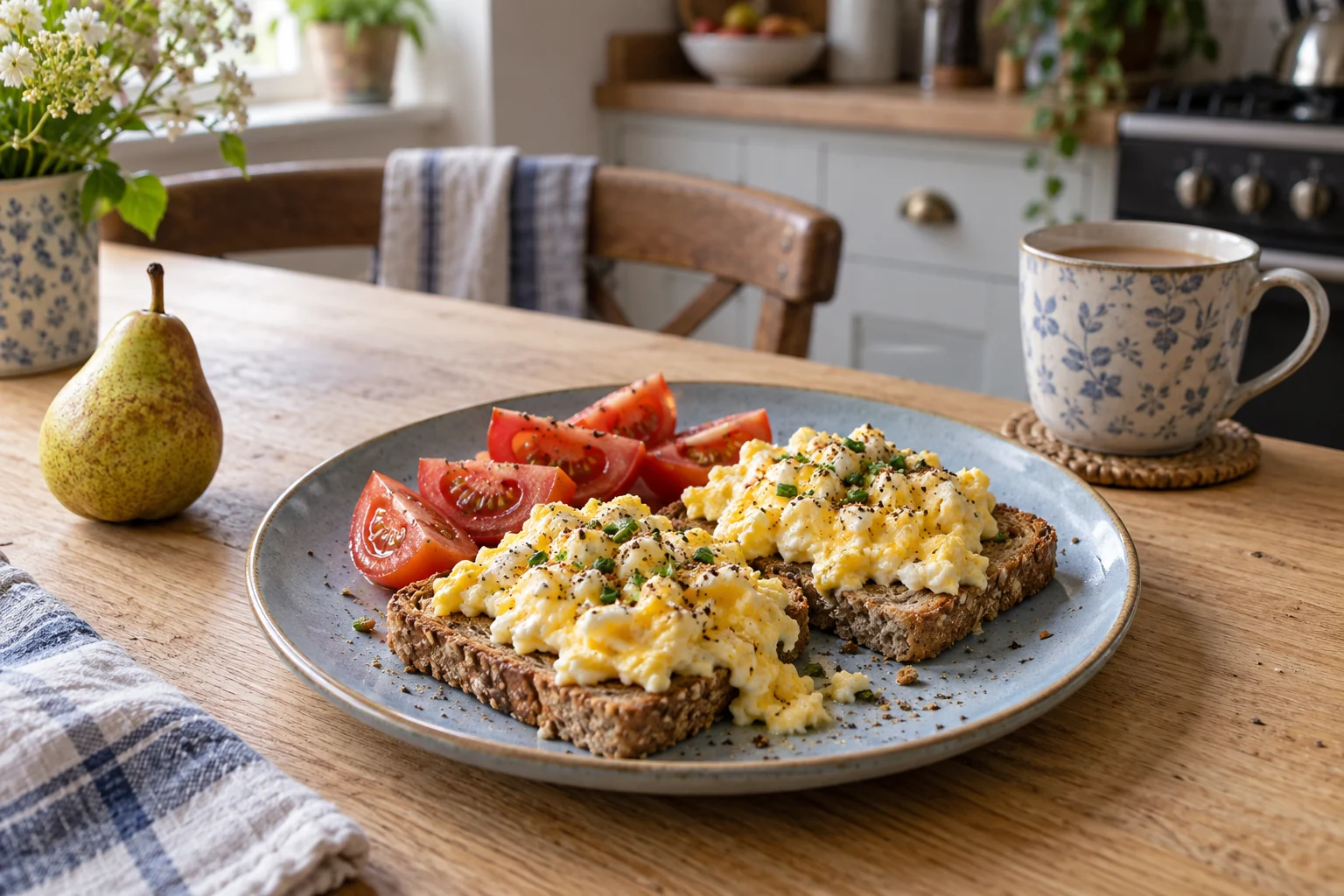
For example, oats can become warm porridge with milk and sliced pear. Toast can hold scrambled egg with tomatoes on the side. Plain yoghurt can sit alongside wholegrain cereal and fruit. You do not need every possible ingredient in one bowl.
The NHS guidance on starchy foods recommends choosing wholegrain or higher-fibre options where possible. Try one swap you enjoy, such as wholemeal toast or porridge, rather than replacing everything in the cupboard.
Three combinations to keep on repeat
A warm bowl: prepare plain porridge according to the packet, using your usual milk or a suitable fortified alternative. Add sliced apple or pear and a little cinnamon. If you like a contrast in texture, finish with a small spoonful of seeds.
A savoury plate: put cooked eggs or scrambled tofu on toast, with tomatoes or leftover cooked vegetables alongside. Use whichever vegetables are already in the fridge. Breakfast does not have to be sweet to be convenient.
A cold breakfast: combine plain yoghurt, oats or an unsweetened cereal and fruit. Keep the cereal separate until you eat if you prefer it crunchy. Check the label on plant-based alternatives, as their ingredients and fortification vary.
These are meal ideas, not nutritionally identical substitutions. Pick quantities that suit your appetite and use ingredients compatible with any allergies or dietary requirements.
Give fruit a practical role
Fruit is often easiest to use when it has a job. Bananas can go with toast, berries can top yoghurt, and stewed apple can go into porridge. Tinned fruit in juice can be useful when the fresh fruit bowl is empty.
Dried fruit also works well stirred into a meal. The NHS recommends keeping dried fruit to mealtimes because of its effect on teeth. Think of a modest amount mixed into breakfast, rather than grazing on it throughout the morning.
Freeze-dried fruit can be a topping too, but check the specific packet rather than assuming every small bag supplies a full fruit portion. Different products contain different amounts and may include other ingredients.
Make the night before do a little work
You do not have to prepare a week's breakfasts to save time. Put a bowl and spoon out, choose tomorrow's fruit or check that there is bread in the freezer. Small decisions made in advance can remove the familiar morning search for something to eat.
If preparing a chilled breakfast, use a clean covered container, refrigerate it promptly and follow the storage instructions for its ingredients. A dry mixture of oats and seeds can be packed separately from yoghurt or milk, ready to combine when you eat.
For a shared household, agree on two easy options. One person might prefer toast and another cereal; buying ingredients that overlap with lunches and snacks helps avoid a fridge full of half-used breakfast products.
Compare the breakfast you actually serve
A cereal portion pictured on a box may differ from the amount in your bowl. When comparing similar products, look at their information per 100g as well as the stated serving. Then consider what you add: milk, yoghurt, honey, fruit and spreads all change the finished meal.
Price deserves the same attention. A large bag of oats may offer better value than individual pots, but only if you will use it. Convenience can be worthwhile when it makes eating breakfast possible on a rushed day.
Let the routine fit your morning
If a large meal does not appeal early on, prepare something you can eat later rather than forcing an elaborate breakfast. Shift work and school runs rarely follow the schedule shown in a recipe photograph.
The BDA breakfast resource offers further ideas for combining food groups. Use it as a reference, then build a small personal shortlist. A breakfast worth repeating is one you can afford, prepare and enjoy on an ordinary Tuesday.

Questions about this article or a correction to suggest? Get in touch. Read more about our editorial approach.