
A healthy breakfast for teenagers is usually one that does three jobs at once. It needs to take the edge off hunger, provide steady energy through the morning, and be realistic enough to happen on an ordinary school day. That generally means a mix of carbohydrate for energy, some protein for staying power, and fibre, fat or both to slow things down so breakfast is not forgotten by first lesson.
The best option is not always the most elaborate one. For many families, a bowl of porridge and fruit, toast with eggs, or yoghurt with cereal is far more useful than a carefully planned breakfast that never gets made. Teenagers vary hugely in appetite, growth rate, school start times and activity, so the most effective breakfast is one they will actually eat, and one that can flex from a small early bite to a more substantial meal when needed.
What makes a breakfast filling and useful for teenagers?
A filling breakfast is not just about size. It is about composition. Many breakfasts that look substantial are mostly quick-digesting carbohydrate, which can leave a teenager hungry again by mid-morning. A more useful pattern is to build breakfast from a few familiar parts.
First, include a starchy food. This is often the base that provides energy after the overnight fast. In UK kitchens that might be porridge oats, wholegrain cereal, wholemeal toast, crumpets, bagels, breakfast muffins, potatoes left from the night before, or even a sandwich if that is what works. Carbohydrate is not the problem at breakfast. The issue is whether it comes with enough fibre and whether anything else is there to make it last.
Second, add protein. Protein helps make breakfast more satisfying and can support concentration simply by preventing the sharp drop that often follows a very sugary or very light meal. Easy options include eggs, milk, Greek-style yoghurt, skyr, cottage cheese, baked beans, peanut butter, other nut butters, or cheese. For teenagers who prefer savoury foods, leftovers can work well too. A toastie with beans, a boiled egg with toast, or a wrap with hummus and grated carrot can be more useful than a sweet breakfast they do not enjoy.
Third, think about fibre. Fibre slows digestion and helps breakfast feel more substantial. Fruit, oats, wholegrain bread, higher-fibre cereals, seeds and beans all contribute. If a breakfast is mostly white toast with jam or a sweetened cereal with little else, it may be quick and easy but it often does not last. We find that checking labels can help here, especially when comparing cereals, breads and breakfast biscuits. Our guide on using food labels to add more fibre at breakfast and lunch covers the practical label points that matter most.
Fat has a place as well. This does not mean breakfast needs to be greasy or heavy. It means a little fat from nuts, seeds, peanut butter, dairy or avocado can improve satiety. A bowl of porridge made with milk and topped with banana and peanut butter will usually keep someone going longer than plain instant oats made with water and a drizzle of syrup.
Micronutrients matter too, but they are best considered through food patterns rather than single superfoods. Milk and yoghurt can contribute calcium and iodine. Eggs provide several useful nutrients. Fruit adds vitamin C and fibre. Fortified breakfast cereals can help some teenagers top up iron or B vitamins, though the trade-off is that some are also high in sugar. In the UK, nutrition labels are straightforward to compare, and unlike some EU markets, we commonly see front-of-pack traffic light labelling on many packaged foods, which can be useful for quick checks, though it should not replace reading the full nutrition panel and ingredients list.
How much breakfast does a teenager really need?
There is no single correct breakfast size for every teenager, and rigid rules are rarely helpful. A fifteen-year-old who cycles to school, plays football after lessons and is in the middle of a growth spurt may need a very different breakfast from a thirteen-year-old who is not hungry until mid-morning. Both can still have a perfectly reasonable routine.
Hunger is the first guide. Some teenagers wake up ravenous. Others feel slightly sick if asked to eat too soon. Appetite can also shift from week to week during periods of rapid growth. Instead of treating breakfast as a test of discipline, it is usually more useful to ask whether what they eat matches what the morning demands.
School timing matters. If breakfast is eaten at 6.45 am and lunch is not until 1.00 pm, that is a long gap. A more substantial meal may make sense, or breakfast may need a planned top-up later, such as fruit and yoghurt at break. If school starts later, or if there is a proper morning break with time to eat, a smaller first meal may be enough.
Activity matters too. A teenager with PE first period, swim training before school, or a long commute on foot may need more carbohydrate and fluid in the morning than someone with a slower start. On the other hand, if a teenager is not active first thing and dislikes large breakfasts, pushing a heavy meal can backfire.
A useful way to think about portion size is in layers. Start with a base that feels manageable, then add according to appetite and schedule. For example:
- Small breakfast: toast with peanut butter, or yoghurt with fruit
- Medium breakfast: porridge with milk and berries, or eggs on toast
- Larger breakfast: porridge plus yoghurt, or eggs on toast with fruit and a glass of milk
That approach is more practical than prescribing exact calories or fixed serving sizes for every age. Teenagers are not machines. Growth, hormones, sleep, stress and sport all affect appetite.
One point worth watching is the pattern across the whole morning. If breakfast is tiny and the result is a raid on vending machines at 10.30 am, breakfast probably needs more substance. If a teenager consistently skips breakfast, cannot concentrate, feels faint, or is ravenous later in the day, that pattern deserves a closer look.
Easy breakfast ideas for rushed school mornings
Rushed mornings need breakfasts with low friction. The best options are usually those that rely on foods already common in UK shops and kitchens, with little chopping, cooking or washing up.
Porridge remains one of the most practical choices. Microwave oats take minutes, and they are easy to vary. Make them with milk for extra protein, then add sliced banana, frozen berries, raisins, chopped apple, nut butter or seeds. Overnight oats are useful for teenagers who prefer a cold breakfast or need something ready to grab from the fridge.
Toast is another dependable base. Wholemeal bread tends to be more filling than white, but the topping matters just as much. Good combinations include:
- Peanut butter and banana
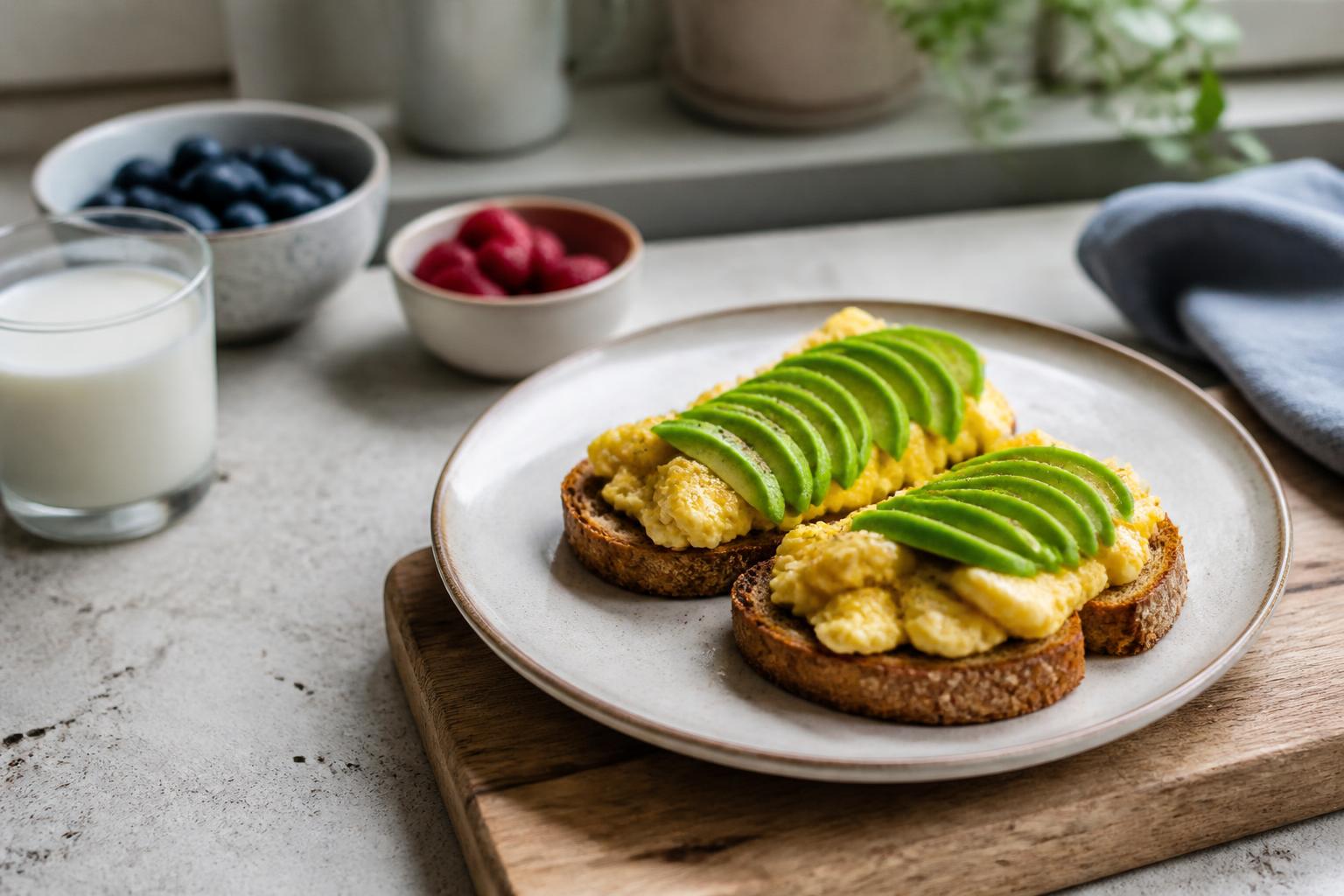
- Scrambled egg
- Baked beans and a little grated cheese
- Cottage cheese and sliced tomato
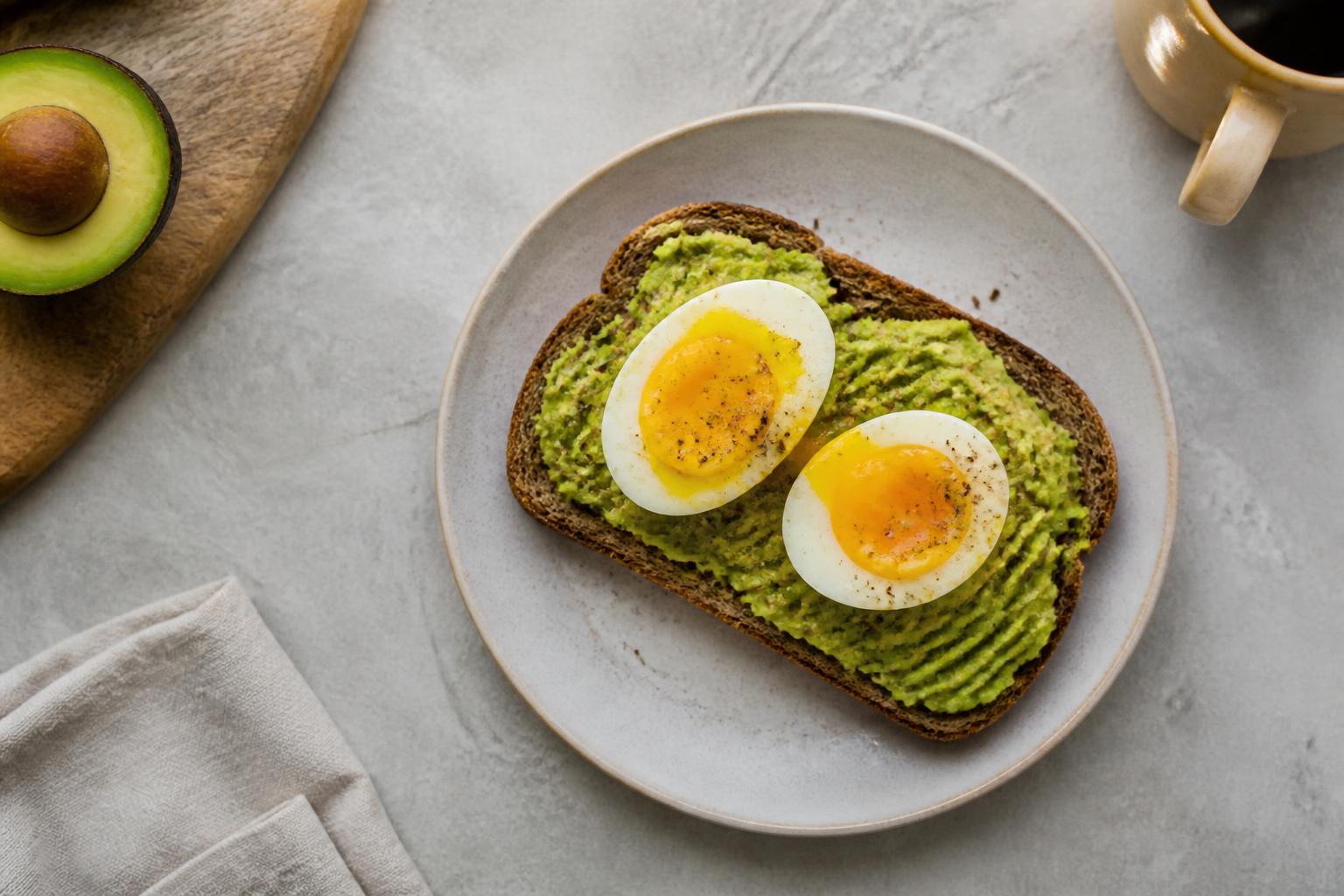
- Avocado and egg
Yoghurt bowls work well for teenagers who do not want hot food. Use plain or lightly sweetened yoghurt, then add a handful of cereal, oats or granola, plus fruit. If the cereal is low in protein and fibre, the yoghurt does the balancing work. If the yoghurt is very low in protein and the cereal is sugary, the bowl may not hold them for long.
Breakfast sandwiches and wraps are useful for eating at home or on the way. A wholemeal wrap with egg and spinach, or a toasted sandwich with cheese and tomato, can be made quickly. Leftover cooked sausages or roasted vegetables can be used too, though it is worth keeping an eye on how salty processed breakfast meats can be if they become a daily default.
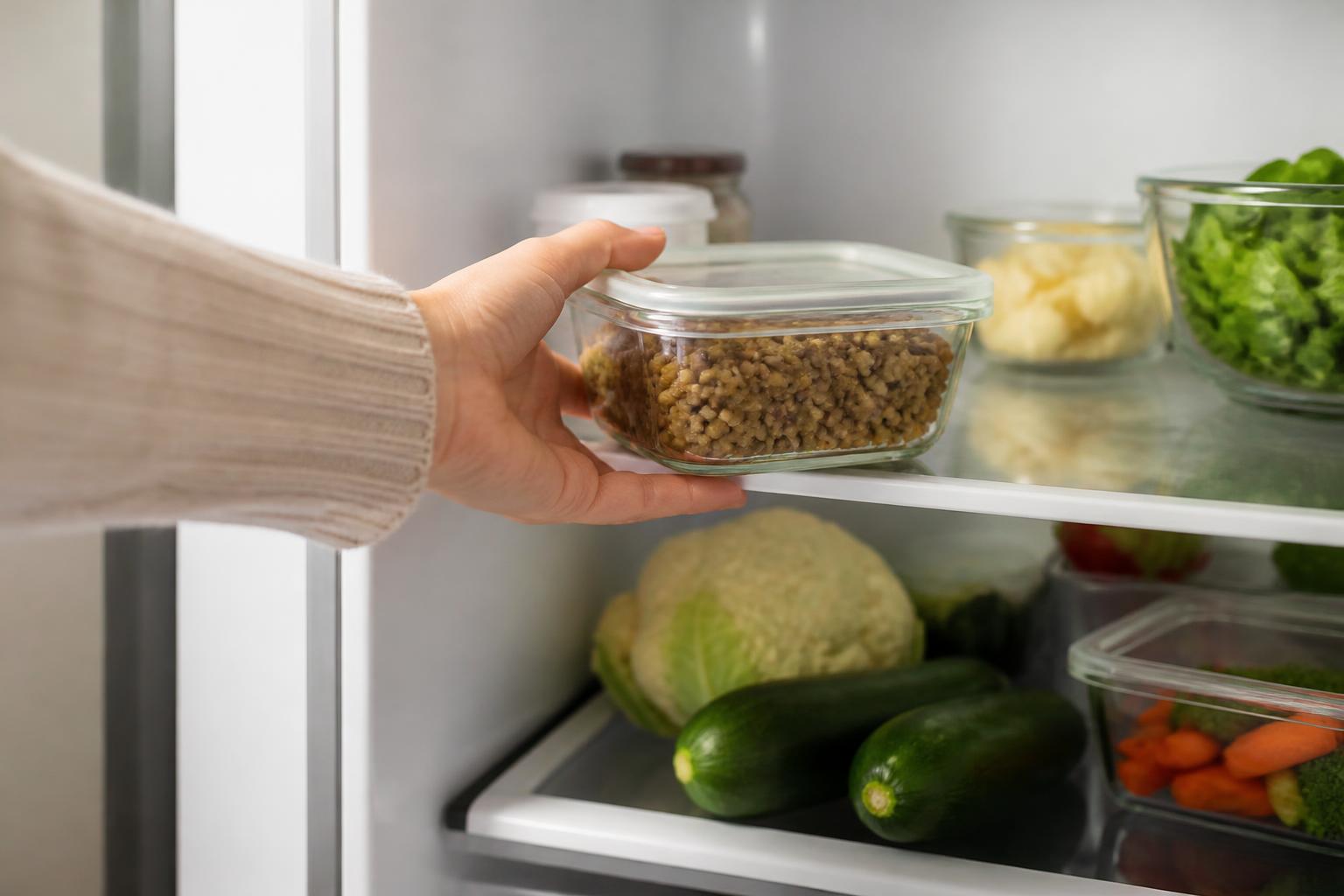
Prepared-ahead options often work best in busy households:
- Egg muffins baked in a muffin tin with vegetables and cheese
- Chia pudding made the night before
- Overnight oats in jars
- Mini bagels filled and wrapped for the fridge
- Hard-boiled eggs ready to pair with toast or fruit
For teenagers who like savoury breakfasts but are tired of standard breakfast foods, ordinary lunch-style foods are fine. A cheese sandwich, hummus on toast, or leftover rice with a fried egg can all be sensible. Breakfast does not have to look traditional to be useful.
If you want more realistic combinations rather than idealised social media breakfasts, our piece on healthy breakfast foods that keep mornings practical sets out simple pairings that suit real school-day routines.
Are cereal bars, breakfast drinks and grab-and-go options enough?
Sometimes they are enough for the moment, but often not enough for the whole morning.
Cereal bars are a common example. They are portable, tidy and easy to keep in a school bag. The problem is that many are small, low in protein, and not especially high in fibre once you read the label. Some are closer to biscuits than a balanced breakfast. That does not make them useless. It just means they often work better as part of breakfast rather than the entire thing.
A cereal bar becomes more useful when paired with something else, such as:
- A pot of yoghurt
- A banana
- A carton of milk
- A handful of nuts, if allowed and practical
- A boiled egg eaten before leaving
Breakfast drinks are similar. Some milk-based drinks offer protein and added vitamins, which can help on mornings when appetite is low. Others are mainly sweetened milk drinks and are less satisfying than they look. Smoothies can add fruit and dairy, but they are usually less filling than eating fruit and yoghurt separately. Liquid breakfasts also tend to be consumed quickly, which can mean they do not register as strongly as food that needs chewing.
Grab-and-go pastries, waffles and sweet muffins are convenient but often poor at keeping teenagers full. They are not forbidden foods, but if they are breakfast most days, the likely pattern is a quick lift followed by hunger well before lunch. Pairing helps here as well. A croissant with a yoghurt drink and fruit is not perfect, but it is more balanced than a croissant alone.
Breakfast biscuits sit in a similar category. Some are fortified and some contain whole grains, but many are still light on protein and easy to overestimate. If they are the emergency option in the cupboard, treat them as the carbohydrate part of breakfast and add protein or fruit around them.
The key question is not whether a convenience product is good or bad. It is what job it can realistically do. If a teenager leaves the house at 7.15 am and will not eat again until noon, a single small bar is unlikely to be enough. If they eat half a bagel at home and a yoghurt drink at break, that may work perfectly well.
What if a teenager does not want breakfast first thing?
This is common, and it does not automatically mean there is a problem. Early school starts, late dinners, anxiety, poor sleep and simply not being hungry yet can all reduce appetite first thing. For some teenagers, a healthy breakfast for teenagers is not a full meal at 7.00 am, but a smaller early option followed by something more substantial later in the morning.
A gentle start often works better than pressure. That might mean:
- A glass of milk and a banana
- Half a slice of toast
- A yoghurt pouch
- A small smoothie with oats and yoghurt
- A few spoonfuls of overnight oats
If appetite arrives later, pack something easy to eat at break. Good options include a filled bagel, oat pot, yoghurt with cereal, fruit and cheese, or a breakfast wrap. This is especially useful for teenagers with long commutes or very early starts.
It can also help to look at the evening routine. If a teenager eats a large meal late at night, followed by snacks, they may genuinely not be hungry in the morning. Shifting dinner slightly earlier, or reducing late-night grazing, can sometimes make breakfast easier without any direct pressure at all.
There are, however, patterns worth paying attention to. If a teenager regularly skips breakfast and also seems tired, dizzy, unable to focus, preoccupied with food later in the day, or unusually restrictive around eating, that is not something to dismiss as normal fussiness. Equally, frequent nausea in the morning may need discussion with a GP if it persists. Breakfast resistance is often practical, but not always.
For families trying to improve breakfast gradually, consistency matters more than perfection. A teenager who moves from nothing to a yoghurt drink and fruit on school days is making a meaningful change. From there, it is easier to build towards more filling combinations.
The most useful aim is not a picture-perfect plate. It is a routine that matches the teenager in front of you. Some will do best with porridge and toast before 8.00 am. Others will need a small early bite and a packed second breakfast for break time. Both can be sensible versions of a healthy breakfast for teenagers if they support appetite, energy and concentration across the morning.
If you are comparing packaged foods for those routines, it is worth learning which products genuinely add fibre, protein or staying power, and which simply market themselves well. Small label details often make the difference between a breakfast that works and one that looks convenient but does not last.

Questions about this article or a correction to suggest? Get in touch. Read more about our editorial approach.