A healthy eating table is best used as a guide for pattern and proportion, not as a set of strict meal rules. It helps you see, at a glance, how the main food groups fit together across the day so that ordinary meals, packed lunches, quick breakfasts and snacks are more balanced without becoming fussy.
For most UK adults, that means using the table to anchor everyday decisions. Are we getting enough vegetables and fruit? Is most of our starchy food higher in fibre? Are protein foods spread through the day? Are dairy foods, or fortified alternatives, included in sensible amounts? Once you use it that way, the table becomes practical, not theoretical.
What a healthy eating table is really for
A healthy eating table is a visual planning tool. In UK nutrition guidance, the closest familiar model is the Eatwell Guide, which shows the broad balance of foods that should make up our overall diet. The point is not to make every single plate look perfect. The point is to help us build a reasonable pattern over a day or a week.
That distinction matters. Many people look at a healthy eating table and assume it is telling them to weigh every ingredient, cut out favourite foods, or build every meal from scratch. It is not. Used properly, it does three simpler jobs.
First, it helps with proportion. If lunch is a cheese sandwich and crisps, the table reminds us what is missing. We may need some salad in the sandwich, a piece of fruit, or a yoghurt. If dinner is pasta, the table prompts us to ask whether there are enough vegetables and a useful protein source alongside it.
Second, it helps with variety. It is easy to eat the same few foods on repeat, especially when work is busy. A table encourages us to rotate choices within each group. That might mean porridge one morning and wholemeal toast with eggs the next, chickpeas in one evening meal and fish in another.
Third, it helps with routine. Many healthy eating problems are not about knowledge, they are about everyday structure. We skip breakfast, grab whatever is nearby at 4 pm, then overdo a takeaway later. A healthy eating table gives us a framework for ordinary meals so we are less dependent on convenience decisions made when we are hungry.
It is also worth saying what the table is not for. It is not a moral scorecard. No food is made automatically good or bad by appearing more or less often. Cakes, biscuits, chocolate, crisps and takeaways can still fit into real life. The table simply shows what should form the main base of everyday eating.
The food groups that belong on the table
In UK healthy eating guidance, the main groups are fruit and vegetables, starchy carbohydrates, beans, pulses, fish, eggs, meat and other proteins, dairy and alternatives, and oils and spreads. Foods high in fat, salt and sugar sit outside the main base of the table, not because they must never be eaten, but because they are not the foundation of a balanced daily pattern.
Fruit and vegetables
These should make up a substantial part of what we eat across the day. Their role is not just vitamins. They also contribute fibre, fluid, texture and bulk, which helps meals feel complete. Fresh, frozen, tinned and dried all count, with some caveats. Tinned fruit in juice is usually a better everyday option than fruit in syrup. Dried fruit counts, but because it is concentrated and sticky on teeth, portions are smaller and it is best eaten with meals.
In practice, this group works best when spread across meals rather than saved for one large serving at dinner. Berries on porridge, salad in a wrap, vegetable soup at lunch, peas with fish, roasted peppers with pasta, and fruit after supper all add up.
Starchy carbohydrates
This group includes bread, potatoes, pasta, rice, couscous, noodles, oats and cereals. Their role is to provide energy, and when we choose higher fibre versions more often, they also help with fullness and digestive health. In UK guidance, potatoes belong in this group, not with vegetables.
A useful everyday rule is to make wholegrain or higher fibre choices the default where they suit the meal. Wholemeal bread, porridge oats, brown rice, wholewheat pasta, high fibre breakfast cereals and potatoes with skins are all familiar examples. That does not mean every starch has to be brown or wholegrain every time. It means the overall pattern leans that way.
Beans, pulses, fish, eggs, meat and other proteins
This group supports muscle maintenance, repair and general body function. It includes lentils, beans, chickpeas, tofu, Quorn-style products, nuts, seeds, eggs, fish, poultry and leaner cuts of meat.
The table is useful here because it stops protein from becoming too narrow. Many households rely heavily on chicken and little else. A more varied pattern could include baked beans on toast, hummus in a wrap, lentil soup, eggs at breakfast, salmon once or twice a week, and a bean chilli for dinner. Oily fish has a particular place in UK guidance because of its nutrient profile, though not everyone eats fish and alternatives may be needed depending on the diet.
Processed meats such as bacon, sausages, ham and salami generally sit less comfortably as everyday staples because of their salt and, in some cases, saturated fat content. They can still appear, but they are not the best mainstay if we are trying to use the table well.
Dairy and alternatives
Milk, yoghurt and cheese provide calcium and other nutrients. Fortified plant alternatives can play a similar role if they are chosen carefully. In the UK, that usually means checking that plant milks and yoghurts are fortified, especially for calcium. Unsweetened versions are often the easiest fit for everyday use.
Cheese is nutritious but easy to overdo because it is concentrated. A healthy eating table helps keep it in proportion, as one component of a meal rather than the whole point of it.
Oils and spreads
These belong on the table in small amounts. Unsaturated oils and spreads are generally the better choice for routine use. The key word is small. It is easy for cooking oil, butter, mayonnaise and dressings to add up without making a meal more filling.
Foods high in fat, salt and sugar
A practical table leaves room for these foods without letting them crowd out the basics. Biscuits with tea, a takeaway on Friday, a dessert after Sunday lunch, all of that can fit. The table simply helps us see that they sit on top of the main pattern rather than replacing it.
How to build a balanced plate without overcomplicating it
The easiest way to use a healthy eating table is to think in meal templates, not perfect ratios. Most meals work well when they include a starchy base, a source of protein, and some fruit or vegetables, with dairy or a fortified alternative included somewhere across the day.
Breakfast
A balanced breakfast in UK terms does not have to mean a large cooked meal. It can be very simple.
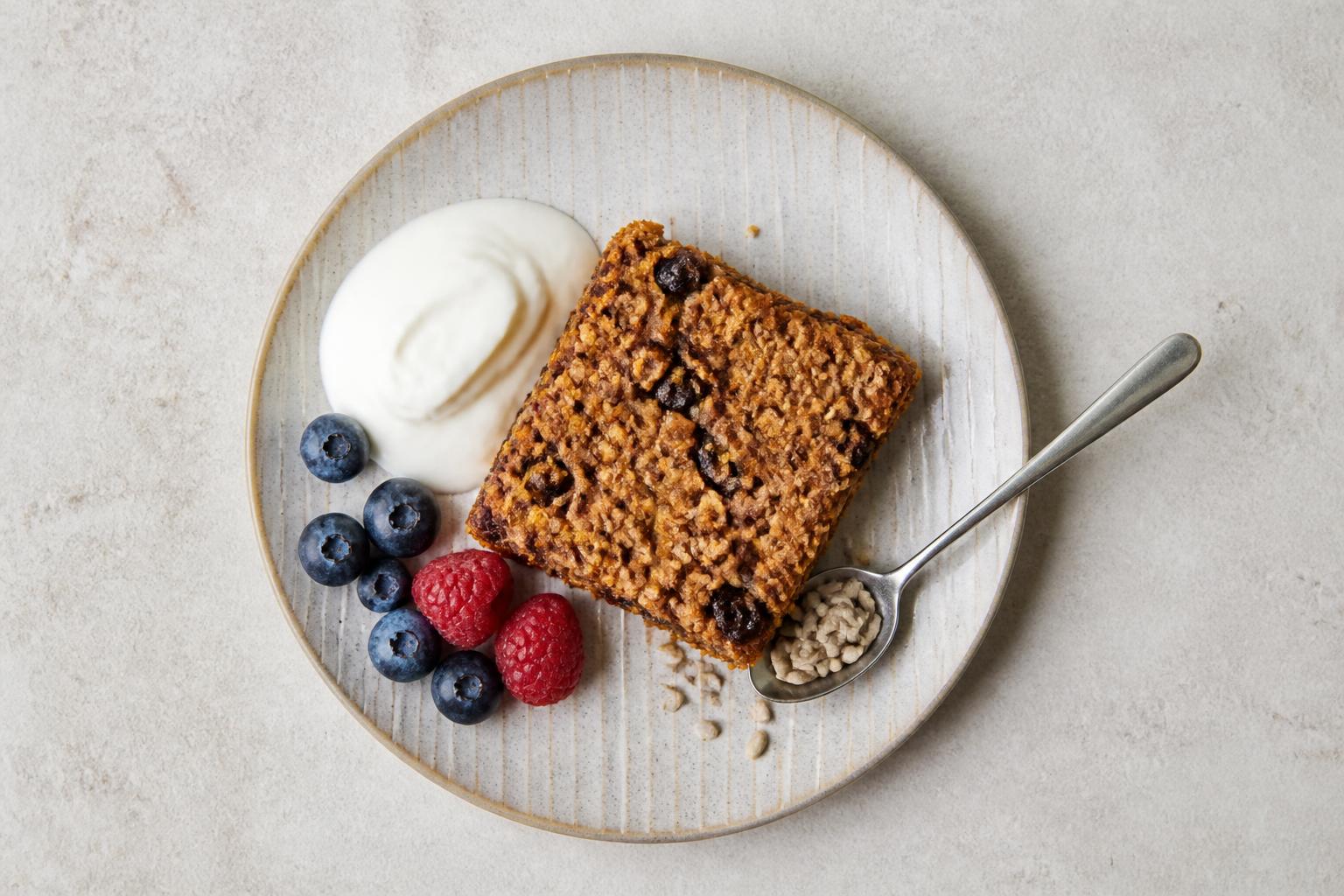
Porridge made with milk or a fortified alternative, topped with banana or berries and a spoonful of seeds, covers several groups neatly.
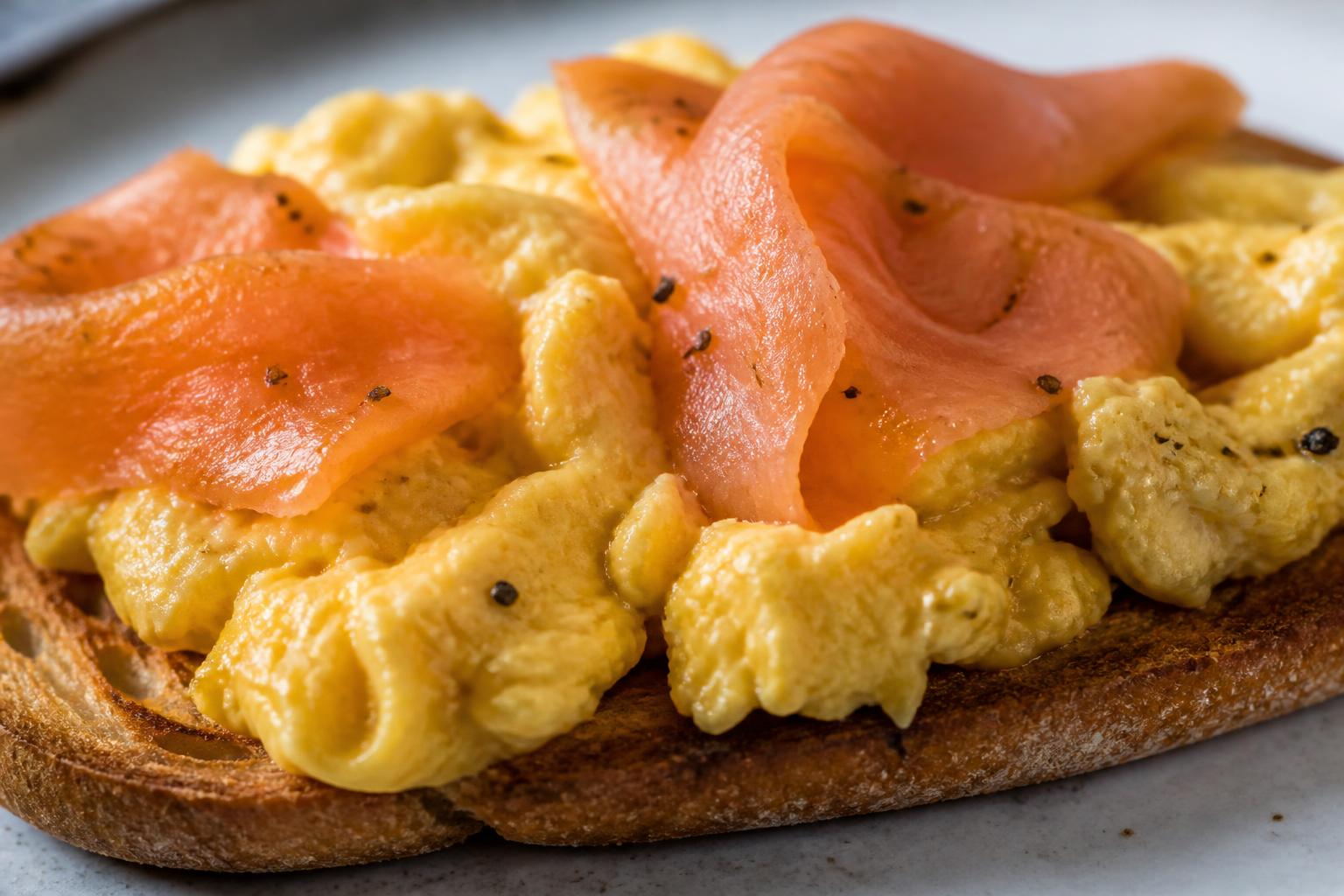
Wholemeal toast with eggs and grilled tomatoes does the same.
A higher fibre breakfast cereal with milk and fruit can work well too, especially if you compare products rather than assuming all cereals are similar. If breakfast tends to be rushed, our guide to healthy protein breakfasts that keep mornings practical may help with combinations that are quick without being flimsy.
Lunch
Lunch often falls apart because it is built around convenience only. The table helps by giving us a quick checklist.
A sandwich lunch is fine, but it is stronger when built out properly. Wholemeal bread, a filling such as chicken, tuna, egg, hummus or cheddar, plenty of salad, then fruit and yoghurt on the side, is a more balanced lunch than bread and filling alone.
Soup can also work well, especially lentil, vegetable or bean-based soups, but many people need something alongside it to stay full. A roll, oatcakes, or a sandwich half can make lunch more complete.
Leftovers are often the easiest option of all. Rice with chicken and vegetables, pasta with tomato sauce and beans, or a baked potato with chilli all translate well into a work lunch.
Dinner
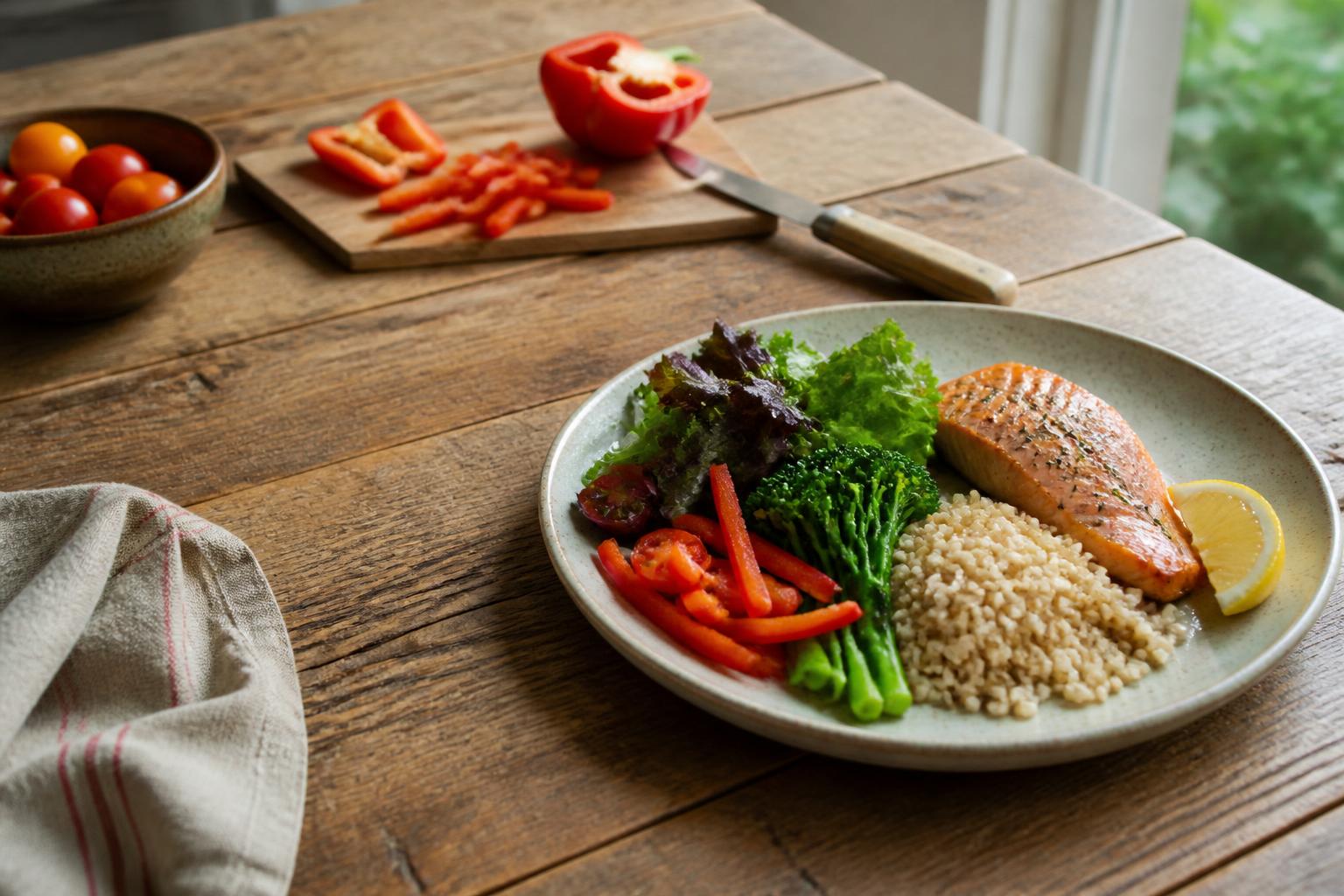
For dinner, the healthy eating table is often easiest to picture as a plate. We want a decent share of vegetables, a sensible portion of starch, and a protein source that suits the meal.
That could be:
- baked salmon, new potatoes and broccoli
- chicken curry with brown rice and extra vegetables
- wholewheat pasta with tomato sauce, lentils and spinach
- jacket potato with baked beans, salad and a little grated cheese
- tofu stir-fry with noodles and mixed vegetables
The point is not to force every meal into the same shape. A stew, pasta bowl, curry or traybake may not look like a textbook plate, but the same balance still applies.
Snacks
Snacks are where the table becomes especially useful. A lot of snacking is built around foods high in fat, salt or sugar because they are easy to grab. Sometimes that is fine. But if all snacks fall into that category, the day often feels less balanced overall.
Practical options include fruit with yoghurt, oatcakes with cottage cheese, a banana with peanut butter, carrot sticks with hummus, or a small handful of nuts with fruit. If you are trying to make changes gradually, our piece on healthy food swaps that fit everyday UK eating shows how to adjust familiar routines without rebuilding everything from scratch.
Where labels fit into a healthy eating table
A healthy eating table tells us the broad shape of a balanced diet. Labels help us choose between products within the same part of that table.
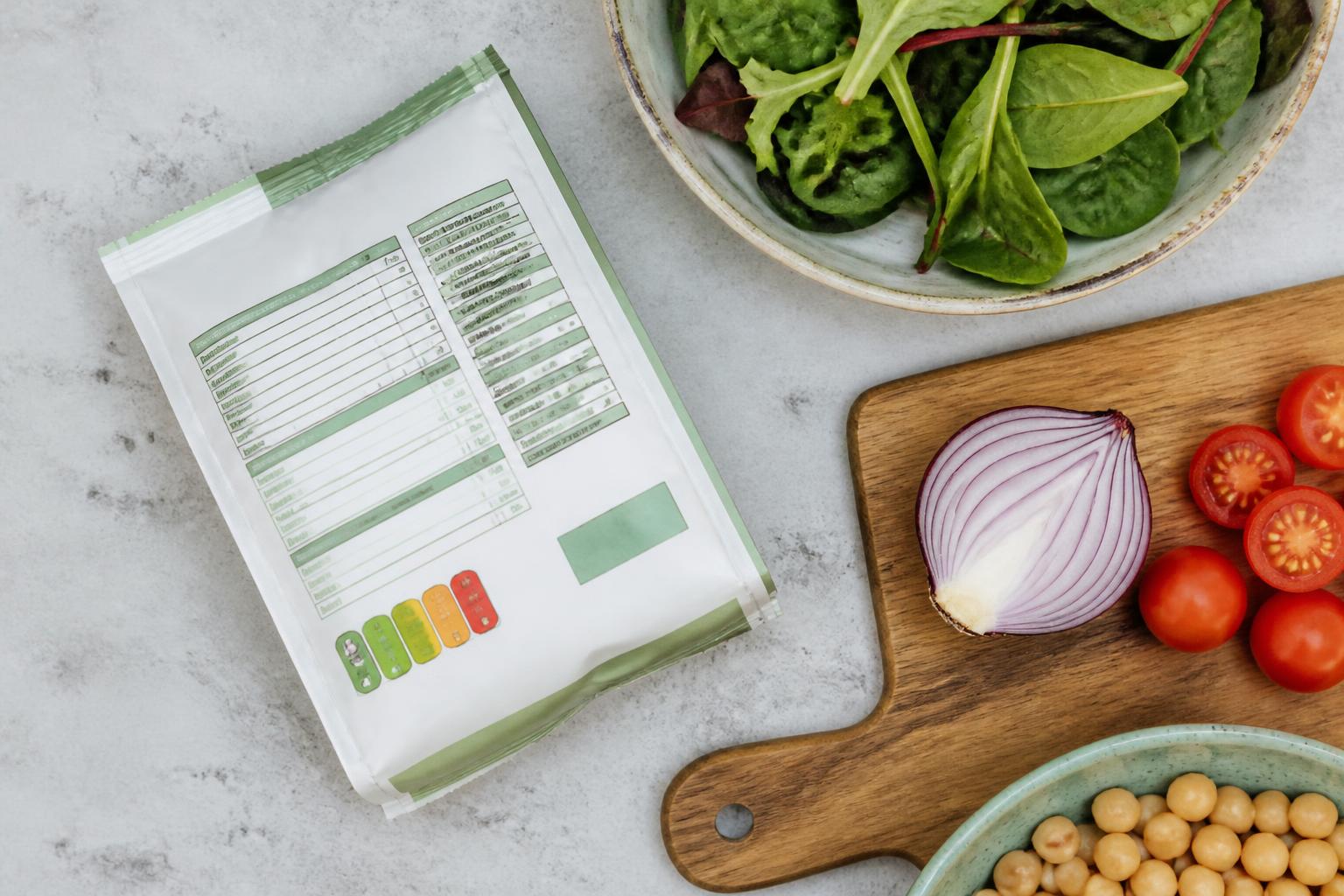
In the UK, front-of-pack traffic light labelling is widely used. It shows whether a food is low, medium or high in fat, saturated fat, sugars and salt, usually per 100g or 100ml. This is useful for quick comparison, but only when we compare similar products.
For example, compare one breakfast cereal with another breakfast cereal, or one ready meal with another ready meal. It is less useful to compare yoghurt with pizza, because they play different roles in the diet.
Traffic lights are especially handy when a category is crowded with products that all look healthy at first glance. Granola, cereal bars, flavoured yoghurts, soups and meat-free products are common examples. One version may be much higher in salt, sugar or saturated fat than another.
The back-of-pack nutrition panel gives more detail. In the UK, this usually includes energy, fat, saturates, carbohydrate, sugars, protein and salt, listed per 100g or 100ml, and often per portion as well. The per 100g figure is the fairest way to compare products because portion sizes set by manufacturers can vary.
Ingredients lists also matter. They are listed in descending order by weight, so the first few ingredients tell us a lot about what a product is mainly made from. If a fruit yoghurt is mostly sugar and cream with very little fruit, that changes how we see it. If a bread is sold as seeded but mostly white flour with a scattering of seeds, the list will usually show that.
It is worth noting that UK labelling practice has its own regulatory framework. Since the UK left the EU, food law is no longer identical in every detail to the EU position, even though many labelling features still look familiar to shoppers. For everyday use, the practical point remains the same, use labels to compare like with like, and keep them in service of the bigger picture rather than treating them as the whole answer.
If labels tend to leave you stuck between products that all sound sensible, our guide to healthy eating ideas that work on ordinary UK days shows how those comparisons play out in real meals rather than in theory.
What a healthy eating table does not tell you
A healthy eating table is useful, but it has limits.
It does not tell you exactly how much to eat. Portion size depends on age, body size, activity level, health status and appetite. Someone doing manual work or training regularly may need much larger portions of starchy food and protein than someone with a desk-based routine and lower energy needs. The table gives balance, not exact quantities.
It does not account for medical needs. People with coeliac disease, type 1 diabetes, kidney disease, IBS, food allergies, raised cholesterol, or a history of eating disorders may need a more specific approach. In those situations, general healthy eating guidance may need adapting, sometimes substantially.
It does not settle every question about ultra-processed foods. Some ultra-processed foods are clearly less helpful as daily staples, especially when they are high in salt, sugar and saturated fat and displace more nourishing foods. But the category is broad. Wholemeal sliced bread, fortified plant milk, baked beans and some breakfast cereals may all be processed or ultra-processed to some degree, yet still have a reasonable place in a balanced diet. The table works better when we judge foods by both their role and their nutritional profile, not by one label alone.
It does not know your appetite on a given day. Some days we are genuinely hungrier. Some days less so. The table helps with what to include, but not whether you personally need a larger lunch or a lighter dinner. Learning to notice hunger and fullness is still part of eating well.
It does not mean every meal must be mixed and complete. Sometimes breakfast is just toast. Sometimes lunch is soup and a roll. Sometimes dinner out is pizza. Balance can be restored across the rest of the day or week. The table becomes less helpful when used rigidly and more helpful when used consistently.
Finally, it does not remove the need for judgement. A healthy eating table is a map. It shows the main roads, but we still have to drive the route in real life, through work schedules, family meals, budgets, preferences and what is actually in the fridge. That is why the best use of it is simple and flexible. Build meals mostly from the main groups, use labels to compare similar products, leave room for ordinary pleasures, and aim for a pattern that is balanced often enough to be sustainable.

Questions about this article or a correction to suggest? Get in touch. Read more about our editorial approach.