
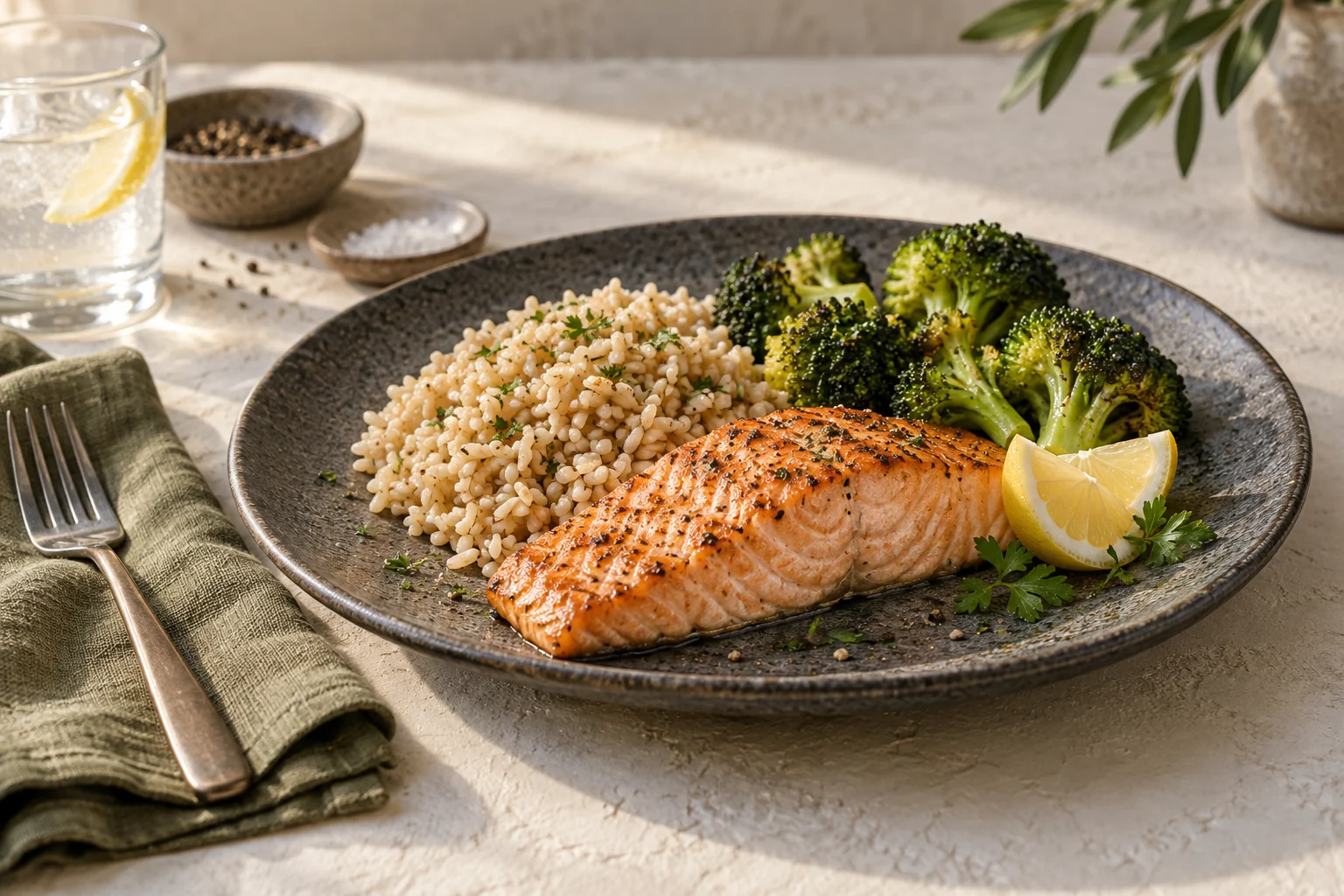
Food supports an active routine, but no ingredient builds strength on its own. If you have started resistance exercise, the most useful kitchen question is often whether you are eating regular, varied meals that fit your day.
It is easy to be drawn towards tubs, bars and packets with prominent protein claims. Before adding them to your shopping list, look at the ordinary foods you already enjoy and how they fit around your activity.
Put the training and the meal in context
The NHS explains strength activity as activity that makes muscles work harder than usual. The appropriate exercise depends on your ability and circumstances; nutrition does not replace that work.
A person adding two manageable home sessions has different needs from someone training intensively for a competition. This guide is about everyday meal planning, rather than prescribing a training diet or a protein target.
If you have a condition that affects what you should eat, especially kidney disease, discuss substantial diet changes with your healthcare team. General gym advice is not a substitute for individual guidance.
Find the protein foods already in your kitchen
Protein has a role in growth and tissue repair. Mersey Care NHS guidance discusses familiar sources such as beans, dairy, eggs and fish, and encourages thinking about meals rather than assuming special products are needed.
Write down a few options that suit you. They might include lentils, tofu, yoghurt, chicken, cheese or canned fish. The list can reflect your preferences, budget, allergies and whether you eat animal products.
You do not need all of these foods. Having several options simply makes it easier to avoid relying on the same meal every day.
Build a complete meal
Start with a meal you know and consider its parts. For example, a lunch bowl could include a grain or potato base, beans or another protein food, vegetables and a dressing you like.
A sandwich can follow the same approach: bread, a filling such as egg or hummus, and vegetables or fruit alongside. Dinner might be pasta with lentil sauce, or fish with potatoes and greens.
There is no need to remove bread, rice or potatoes to make a meal appear more focused on protein. The NHS balanced diet guide includes starchy foods as part of the overall pattern.
These examples are meal ideas, not matched nutrient prescriptions. If you need a particular amount of a nutrient, use product information and qualified advice.
Make breakfast and lunch easier
An active evening can become awkward if the rest of the day has involved little food and no proper break. Look for the point in your routine where eating is regularly difficult.
For breakfast, an easy option might be porridge with milk or a suitable fortified alternative, toast with eggs or beans, or yoghurt with cereal. For lunch, keeping ingredients for two familiar fillings can remove a daily decision.
If the obstacle is access, packing food may help. If the obstacle is time, a simpler meal may be more realistic than an elaborate recipe you never get around to preparing.
Keep useful options for busy evenings
After a class or home session, you may want dinner quickly. A meal built from ready-prepared components can still be a proper meal.
Try a microwaveable grain pouch with cooked beans and vegetables, a jacket potato with a filling, or an omelette with toast. Check product directions and storage requirements, especially where chilled or cooked food is involved.
If you regularly cook from scratch, an extra portion can be convenient. If batch cooking does not suit your home, do not treat it as a requirement. The best system is one you can use consistently.
Read a protein claim in the whole-product context
A prominent number on the front of a pack tells you only part of the story. Consider the serving size, ingredients, allergens, price and whether you enjoy the food.
A bar may be convenient on a journey. That does not mean you need to buy it for every session, or that an ordinary sandwich is inadequate. Equally, you do not have to reject a convenient product because it comes in a packet.
Avoid promises that a particular food will transform your body. Progress varies, and a marketing claim cannot account for your training, health or overall diet.
Review what actually helps
A useful food routine leaves you with practical answers: there is breakfast available, lunch is manageable, and you know what you will eat after an evening session. It also leaves room for meals with friends and foods chosen for enjoyment.
If you increase training substantially, struggle to eat enough or need more specific support, consult a registered dietitian. For an ordinary active week, start with a varied set of meals you like and can reliably prepare.

Questions about this article or a correction to suggest? Get in touch. Read more about our editorial approach.