A useful home movement routine starts with what you can repeat, not with the hardest workout you can find. Some days that may mean a short walk and a few supported exercises. On another day you might have time for a longer session.
Movement can be worthwhile without using a change in body weight as the measure of success. This guide focuses on building a manageable habit, with public NHS resources for exercise technique rather than promises about calories burned or a particular body shape.
Choose a starting point that fits you
Think about your current activity, available space and what you would enjoy. A person who already walks regularly will have a different starting point from someone returning after illness or a long break.
The NHS adult activity guidance recommends speaking to a GP first if you have not exercised for some time or have medical conditions or concerns. Adapt activity to your circumstances; a generic online routine cannot assess injuries, pregnancy, balance difficulties or recovery needs.
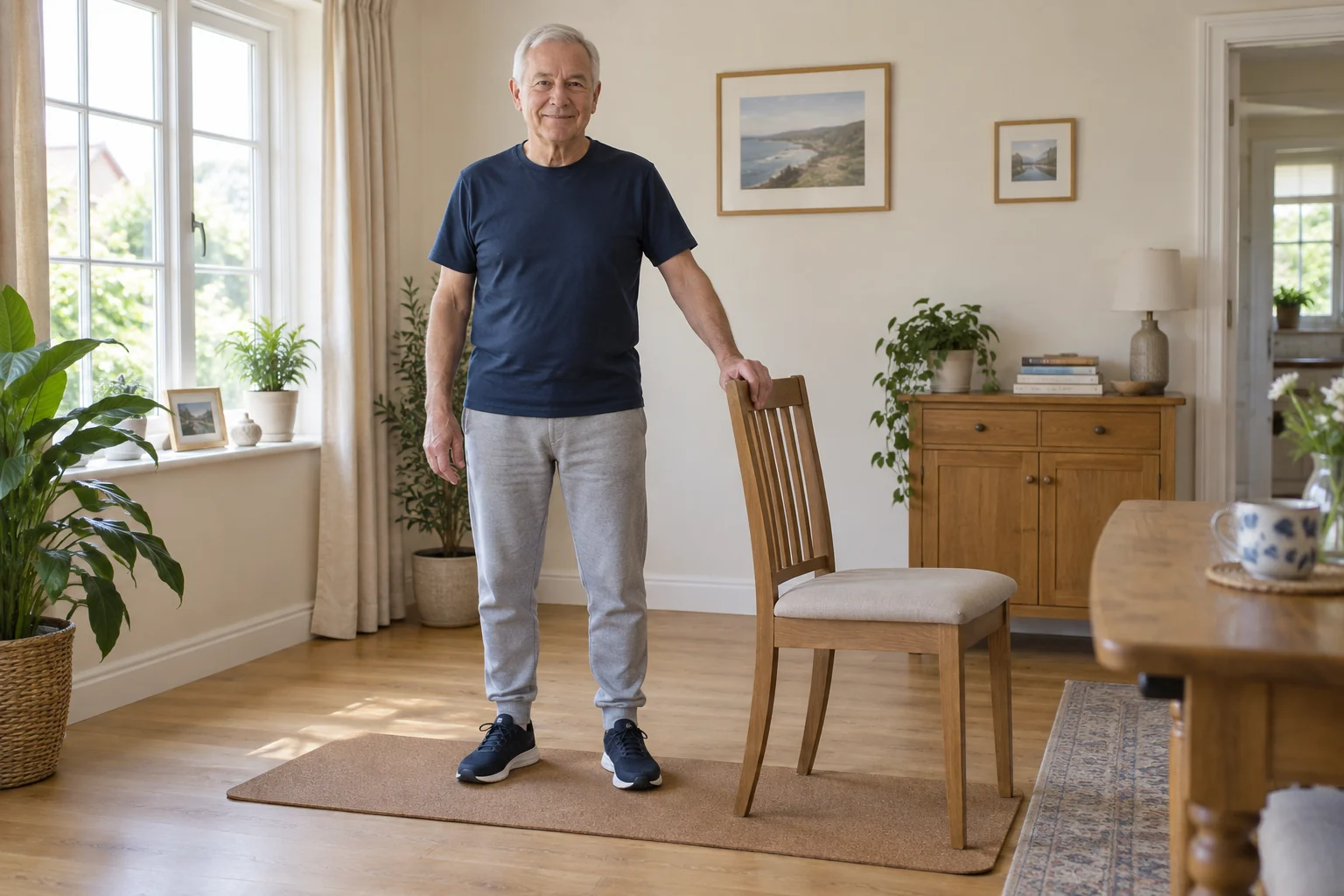
Before starting, clear enough space to move comfortably. Use a stable chair for seated or supported activity, keep the floor free of loose items and have suitable footwear if your chosen activity requires it.
Separate movement into a few useful options
It helps to have choices instead of one all-or-nothing workout.
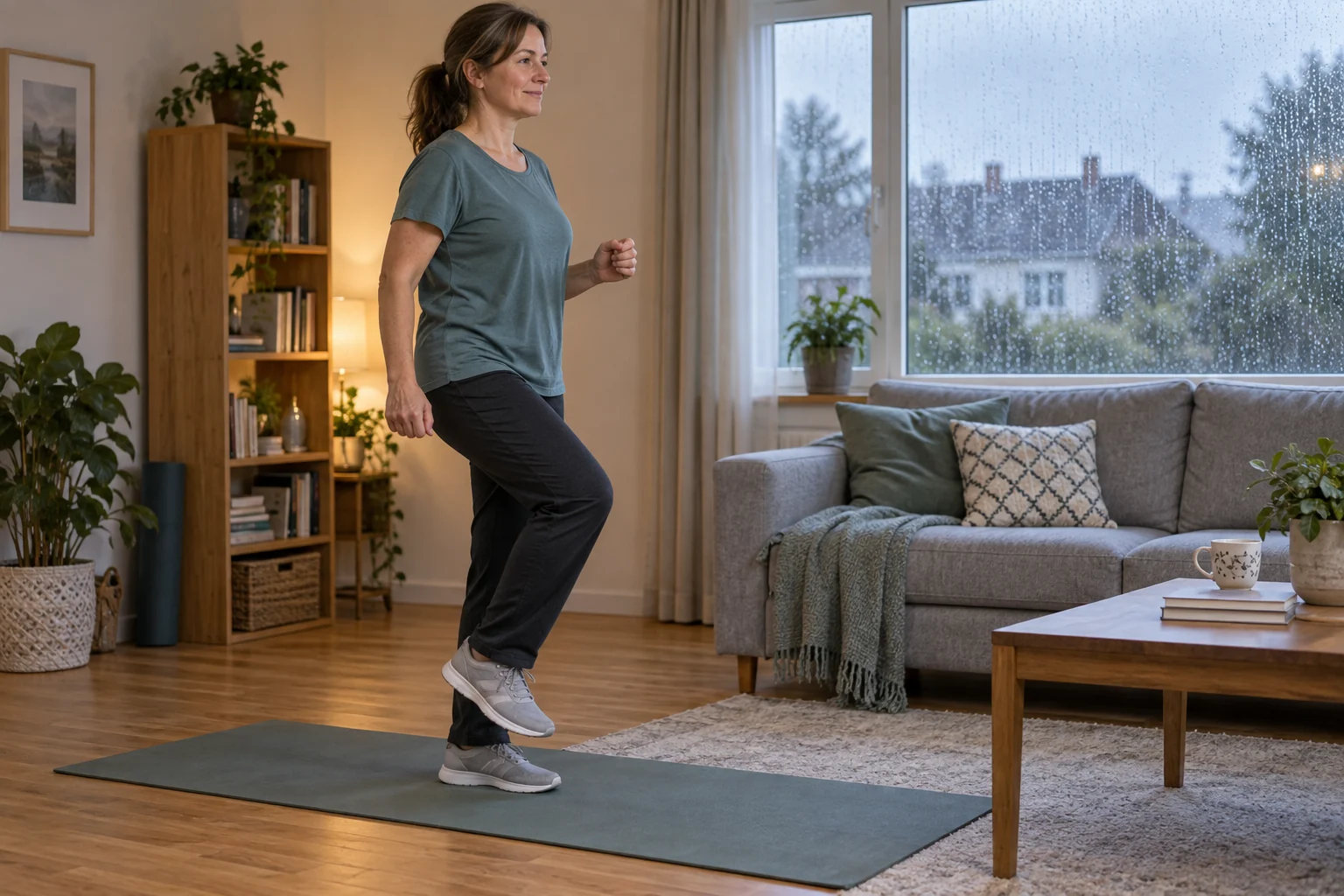
A short movement break: stand up, walk around the room or move gently in a way that is comfortable for you. This can fit between tasks and help interrupt a long period of sitting.
An aerobic option: walk outdoors, dance at home or follow an appropriate exercise session. Pick something with a pace you can adjust.
A strength or mobility option: use an established beginner resource to practise controlled movements. The NHS strength exercises include examples such as sit-to-stand and wall press-ups, with instructions.
These categories are a menu. You do not need to do all of them at once, and a busy day does not have to become a missed day.
Follow instructions rather than rushing repetitions
For an unfamiliar exercise, read the full instructions or watch the demonstration first. Check the starting position, available support and how the movement is meant to finish. Move within a comfortable range rather than copying the deepest bend or fastest pace you see.
If getting down to the floor is difficult, choose a different activity instead of making the floor transition an obstacle. The NHS sitting exercises provide a gentler entry point for some people.
Do not use pain as a target. Stop if an activity causes pain or you feel unwell, and seek appropriate advice rather than trying to push through an unexplained symptom.
Build a week you can recognise
An example planning pattern might be a walk on Monday, a short strength session on Tuesday, ordinary movement breaks on Wednesday, and another walk or dance session later in the week. Adjust the days around work, caring responsibilities and recovery.
For adults aged 19 to 64, NHS guidance includes working towards at least 150 minutes of moderate activity weekly, or 75 minutes of vigorous activity, alongside strength work on at least two days. These are population guidelines, not a requirement to jump straight into that amount from your first week.
If your current routine is much smaller, begin there. Adding a manageable session is more useful than drawing up a timetable you immediately abandon.
Make the habit easier to start
Attach movement to something already in your day. A walk after finishing work, a few seated movements before lunch or a planned session after the school run can be easier to remember than “exercise more”.
Keep equipment simple. You do not need to buy weights before trying a suitable bodyweight or chair-based routine. If you do use equipment, learn how to handle it safely and choose resistance you can control.
Decide in advance what a shorter version looks like. On a rushed day, choosing a brief comfortable activity can preserve the routine without demanding the full session.
Notice practical progress
Record things you can observe: completing a regular walk, feeling more confident with a movement, or remembering to break up sitting time. These can make progress visible without turning every session into a performance test.
Food and rest also belong in an active week. Exercise does not have to earn a meal, and missing a session does not require restricting food. Choose a routine that can sit comfortably beside eating, sleeping, work and enjoyment. The useful plan is the one that keeps adapting with you.

Questions about this article or a correction to suggest? Get in touch. Read more about our editorial approach.