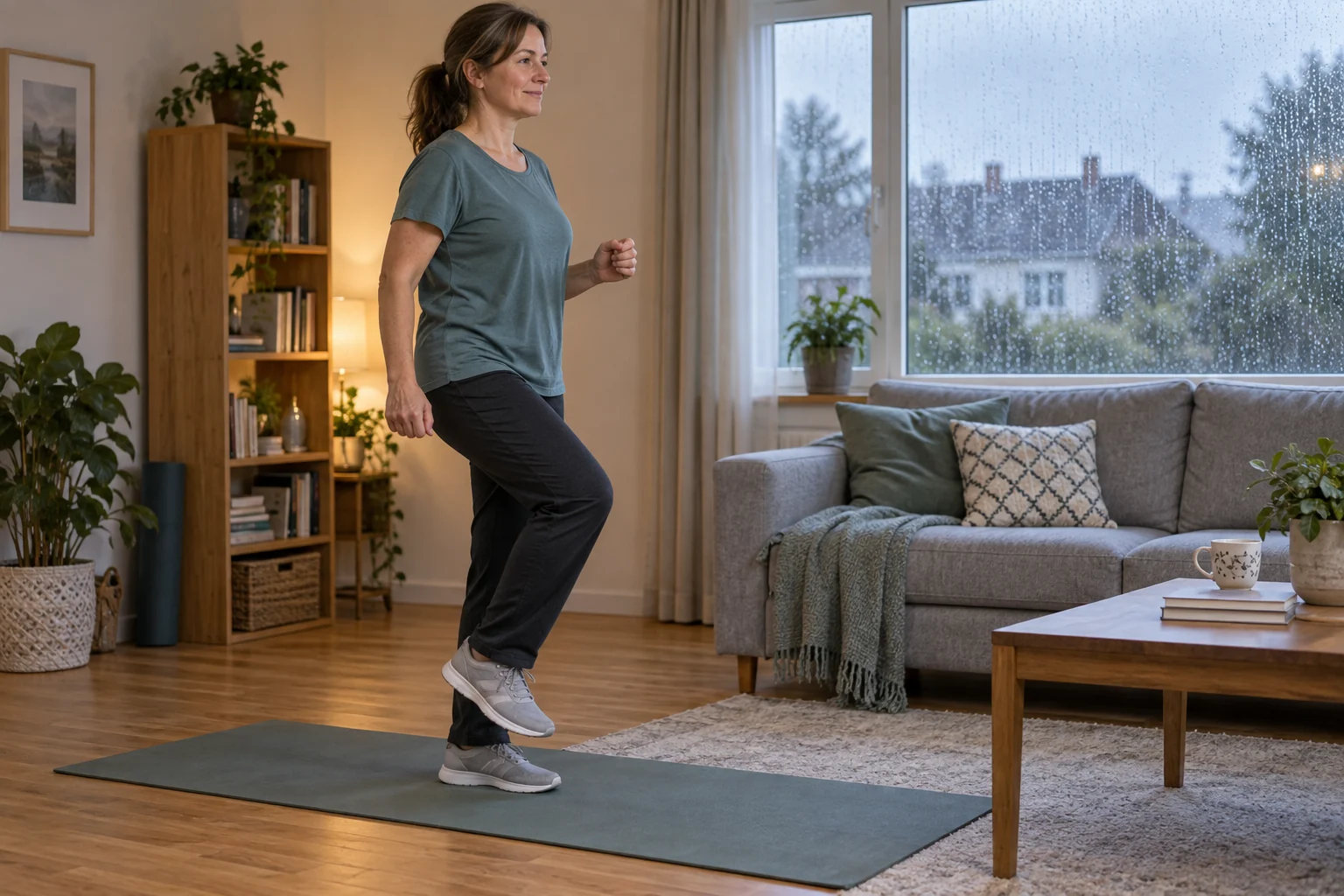
Shorter days and wet weather can make a familiar outdoor routine harder to keep. An indoor option gives you another choice, whether that means moving at home, visiting a local leisure centre or joining a class.
The goal is to find activity that suits you. You do not need a home gym, an intense challenge or a promise to exercise every day. A modest plan that fits the room and the week is a useful place to start.
Begin with the space you actually have
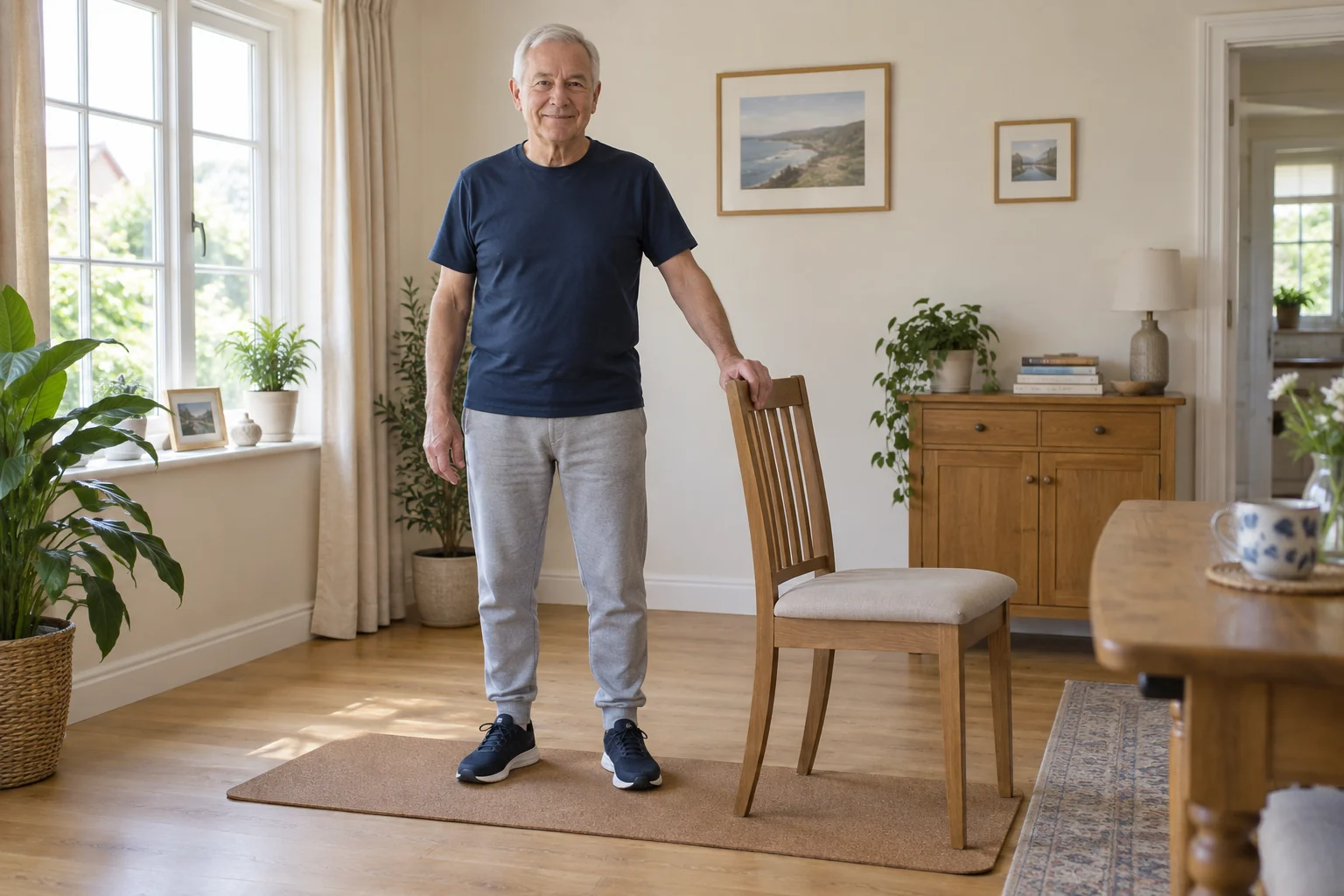
Look for a clear area where you can move comfortably. Check the floor, nearby furniture and anything that could trip you. Make sure you can see a video without twisting awkwardly or trying to balance a phone in an unsafe position.
Think about other people too. If you live in a flat, a quiet activity may suit your neighbours better than jumping. If children or pets share the room, choose a time or arrangement that keeps the space clear.
You can move furniture a little without redesigning the whole home. A routine that needs ten minutes of preparation may be harder to repeat than one you can start with minimal fuss.
Choose an activity for your mood and ability
Some days you may want music and movement; on others, a calm guided session will sound more appealing. Indoor walking, dancing, suitable seated exercises or a beginner class can each serve different preferences.
The NHS strength exercise guide and sitting exercise guide provide illustrated starting points. Use the instructions and adapt only within what is safe and comfortable for you.
If you have a health condition, an injury or concerns about starting activity, speak to an appropriate healthcare professional. A generic online routine may not be suitable simply because it is described as gentle.
Make the first session deliberately manageable
Choose a short opportunity you can realistically repeat. It might be a movement break after finishing a piece of work or a brief session before preparing dinner.
You do not have to complete a full video just because it is there. Check the description first, start within your ability and stop if you feel pain or unwell. Progress is not measured by keeping pace with an instructor on screen.
Prepare one choice for a busy day and another for when you have more time. That way, a disrupted schedule does not automatically mean abandoning the idea altogether.
Use indoor activity as a change of scene
Movement can create a useful boundary between tasks. Put on a different playlist, move away from your desk or invite someone in the household to join you.
NHS Every Mind Matters describes activity as one way to support mental wellbeing and encourages choosing something enjoyable at your own pace.
That does not mean exercise is a test of attitude or a cure for every difficulty. If you are struggling with persistent low mood, seek support rather than feeling that you should be able to solve it with a workout.
Consider going somewhere indoors
A home routine is not the only wet-weather option. A community hall, swimming pool, leisure centre or accessible local class may offer an activity and some welcome company.
Check cost, travel, accessibility and the level of instruction before committing. A trial session can help you find out whether the time and atmosphere suit you. Ask about beginner options or adaptations where needed.
It can help to arrange activity with a friend, but leave room for different abilities and preferences. Sharing the appointment does not require doing the same exercise at the same intensity.
Plan the small practical details
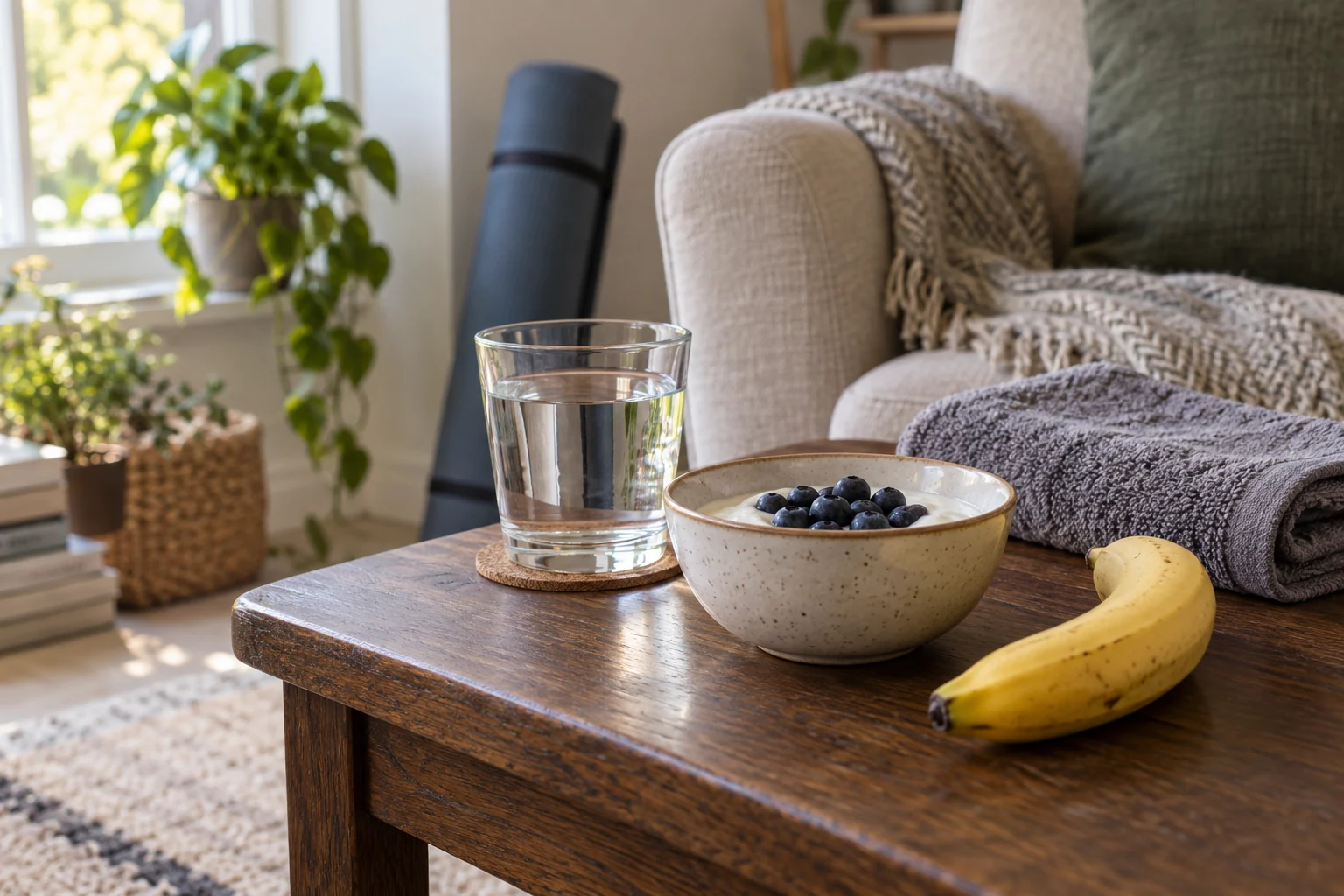
Keep comfortable clothing where you can find it. Have drinking water available. If the session falls near a meal, decide what you will eat afterwards so you are not left making dinner decisions while tired.
For a video session, save a reliable link rather than searching from scratch each time. If advertisements or unfamiliar instructions keep interrupting, choose a simpler resource.
Try avoiding commitments that depend on buying equipment immediately. Establish whether you enjoy the activity first. If you later need equipment, look for something appropriate to the exercise and your ability.
Let the routine change with the season
An indoor plan can sit alongside outdoor activity whenever conditions suit you. There is no need to label the whole winter as either active or inactive.
After a week or two, consider what helped you start and what repeatedly got in the way. Adjust the time, activity or location. If the plan has become something you dread, try a different option.
A useful winter routine is flexible enough to survive ordinary life. It gives you a few practical ways to move, while recognising that rest, social contact and support matter too.

Questions about this article or a correction to suggest? Get in touch. Read more about our editorial approach.