
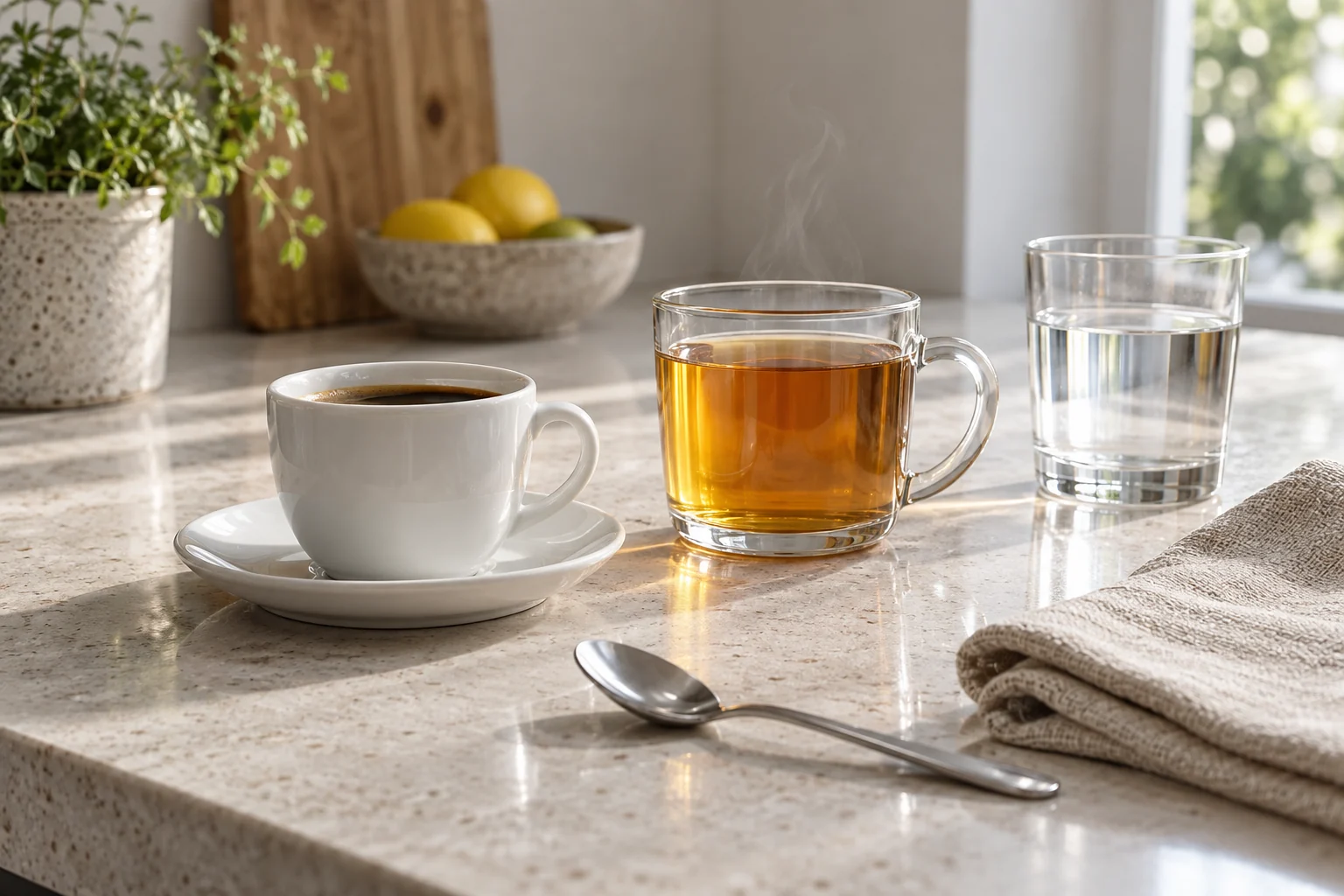
Coffee can be a pleasant part of a morning; tea can mark a welcome pause. Choosing to have less caffeine does not require declaring either drink off limits. You might want an earlier last cup, a smaller serving or a different evening ritual.
This guide looks at practical choices rather than telling a personal quitting story. It also avoids treating symptoms as a diagnosis: being unsettled after a drink is a reason to pay attention, but it does not by itself establish caffeine intolerance or an allergy.
Work out what you want to change
Start with one concrete reason. Perhaps you drink coffee late without really enjoying it, want to reduce spending on takeaway drinks, or are considering whether caffeine is affecting your sleep.
A specific aim helps you choose a proportionate change. If the issue is the late-evening cup, replacing your favourite morning drink may not address it. If you routinely order the largest size, trying a smaller cup is a different experiment from stopping altogether.
Write a brief note of the drinks you have over a few ordinary days. Record the type, size and time. There is no need to create a permanent tracking habit; the purpose is to make a mostly automatic routine visible.
Look beyond coffee
Caffeine is also present in tea, cola, energy drinks and some other products. Check labels and the product information for anything marketed as an energy or pre-workout supplement. If you take medicines, a pharmacist can help you check their ingredients.
Two drinks called coffee can contain different amounts. Size, preparation and the number of shots matter, so a generic chart will only take you so far. When the amount is important, use the manufacturer's information or ask the café about the specific drink.
Decaffeinated choices can make a useful swap, but check the product if you need to avoid caffeine completely. The word decaffeinated is not a promise that every serving is identical.
Consider the timing of your last cup
Caffeine can make you feel more awake and can interfere with sleep. NHS advice on insomnia recommends avoiding tea and coffee for at least six hours before bed.
Use that advice as a reason to look at your afternoon and evening routine, rather than a guarantee that a particular cut-off will solve sleep difficulties. Bedtimes vary, and some people notice effects more readily than others.
An evening alternative might be warm milk, a suitable caffeine-free drink or water. Check a herbal product's ingredients if you are pregnant, taking medicines or have been advised to avoid particular substances. A product being herbal does not answer every suitability question.
Make changes gradually
If you decide to reduce substantially, NHS guidance on tiredness advises a gradual reduction, noting that suddenly stopping can cause headaches and sleep problems.
A manageable approach might be to replace one regular cup, choose a smaller size or move the last caffeinated drink earlier. Keep the rest of the routine familiar while you see how that change fits. There is no need to publish a strict timetable or compare your progress with somebody else's.
Think about the ritual as well as the drink. If making tea is how you take a screen break, keep the break. If meeting a friend for coffee matters to you, you can still meet and choose a different drink.
Keep ordinary hydration simple
You do not need a detox drink to reduce caffeine. NHS hydration guidance notes that water, milk and tea or coffee all contribute to fluid intake. Choosing water for some drinks is a straightforward option.
Be wary of replacing every coffee with a costly drink that makes broad wellness promises. Consider taste, price and ingredients in the same way you would for any food purchase.
During pregnancy, NHS advice is to limit caffeine to 200mg per day, counting all sources. Use pregnancy-specific guidance and speak to your maternity team if you need help working out your intake.
Know when a drink diary is not enough
Persistent tiredness, ongoing sleep difficulty or symptoms that worry you deserve proper assessment. Do not keep attributing them to caffeine without checking other possibilities with a healthcare professional. If you suspect a food or drink allergy, get medical advice rather than testing it by repeatedly exposing yourself.
You can finish this process with less caffeine, differently timed caffeine or simply a clearer idea of your routine. A useful change is one that fits your circumstances and responds to what you actually need.

Questions about this article or a correction to suggest? Get in touch. Read more about our editorial approach.