Healthy fats have a place in ordinary meals. In practice, the useful question is not whether fat is “good” or “bad”, but which kinds of fat show up most often in the food we eat, and what they are replacing. For most UK adults, the everyday advice is fairly simple: use more foods that provide mainly unsaturated fats, keep an eye on foods that are high in saturated fat, and avoid trans fats where possible.
That does not mean building meals around bottles of oil or handfuls of nuts. Fat is energy-dense, so portions still matter. The aim is to use healthy fats in food in a way that supports a balanced diet, makes meals satisfying, and fits normal shopping, cooking and label-reading.
What people mean by healthy fats
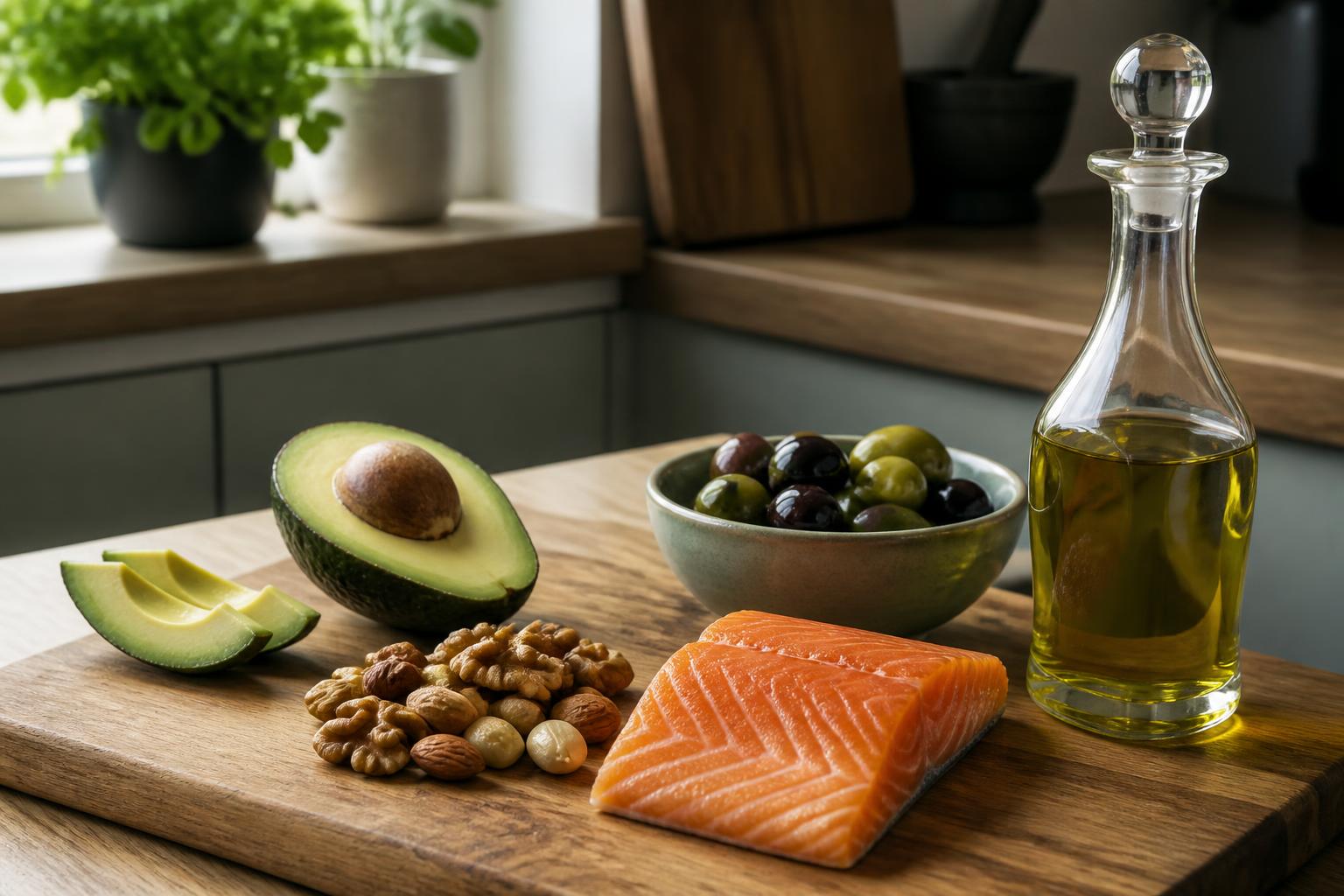
When people talk about “healthy fats”, they usually mean unsaturated fats. These are the fats found in foods such as olive oil, rapeseed oil, nuts, seeds, avocados and oily fish. Unsaturated fats include monounsaturated fats and polyunsaturated fats. Both can be part of a balanced diet.
Saturated fat is different. It is found in higher amounts in foods such as butter, ghee, lard, fatty cuts of meat, sausages, pastry, cream, many cheeses, chocolate, biscuits and cakes. Some plant foods, such as coconut oil and palm oil, are also relatively high in saturated fat.
Trans fats are the least favourable group. Industrially produced trans fats were historically used in some processed foods made with partially hydrogenated oils. These are much less common now in the UK food supply, but it is still sensible to check ingredients if you want to be cautious. Naturally occurring trans fats are also present in small amounts in some meat and dairy foods.
Why does everyday advice usually focus on replacing some saturated fat with unsaturated fat? Because that is the practical decision people make meal by meal. Most of us are not choosing between fat and no fat at all. We are choosing between butter or olive oil, crisps or nuts, a creamy dressing or one based on rapeseed oil, a pastry snack or toast with peanut butter.
That replacement point matters. Simply adding more fat to an already energy-heavy diet is not especially helpful. Swapping part of the saturated fat in your routine for unsaturated fat is the more realistic approach. For example, using peanut butter instead of butter on toast, or choosing salmon and new potatoes instead of a cheese-heavy pie, changes the fat profile of the meal without turning it into a “diet food”.
It is also worth remembering that foods are not made of one nutrient. A yoghurt may contain some saturated fat but also provide protein and calcium. A nut mix provides mostly unsaturated fat, but also fibre and minerals. A croissant is not “bad” because it contains saturated fat, and an avocado is not “good” simply because it contains unsaturated fat. The pattern of eating over time matters more than one ingredient in isolation.
Which foods are the main sources
In UK shopping habits, the main foods that provide mostly unsaturated fats are fairly familiar.
Vegetable oils are one of the clearest examples. Olive oil and rapeseed oil are common in British kitchens and both are mainly unsaturated. Sunflower oil is also widely used. These oils work for dressings, roasting and pan-cooking, although smoke point and flavour vary. Rapeseed oil is especially practical for everyday cooking in the UK because it has a neutral flavour and suits a wide range of dishes.
Nuts are another major source. Almonds, walnuts, hazelnuts, cashews, pistachios and peanuts all provide mostly unsaturated fat, though the exact mix differs. Walnuts provide more polyunsaturated fat, while almonds and hazelnuts are richer in monounsaturated fat. Peanut butter can be a useful cupboard staple, provided you check the label and understand what has been added.
Seeds also contribute useful unsaturated fats. Sunflower seeds, pumpkin seeds, sesame seeds, chia seeds and flaxseed can all be used in small amounts on porridge, yoghurt, salads or soups. Tahini, made from sesame seeds, is another practical option.
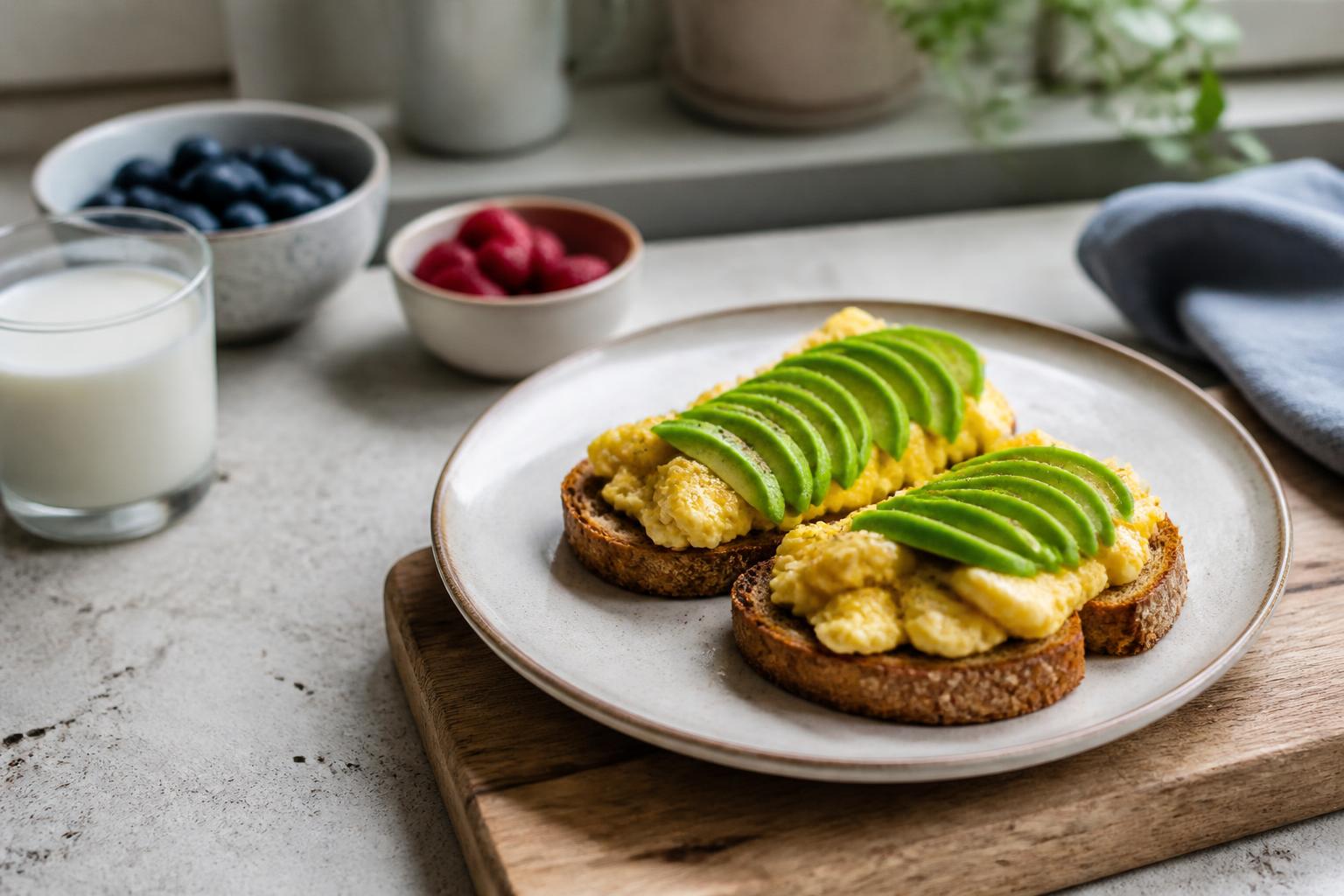
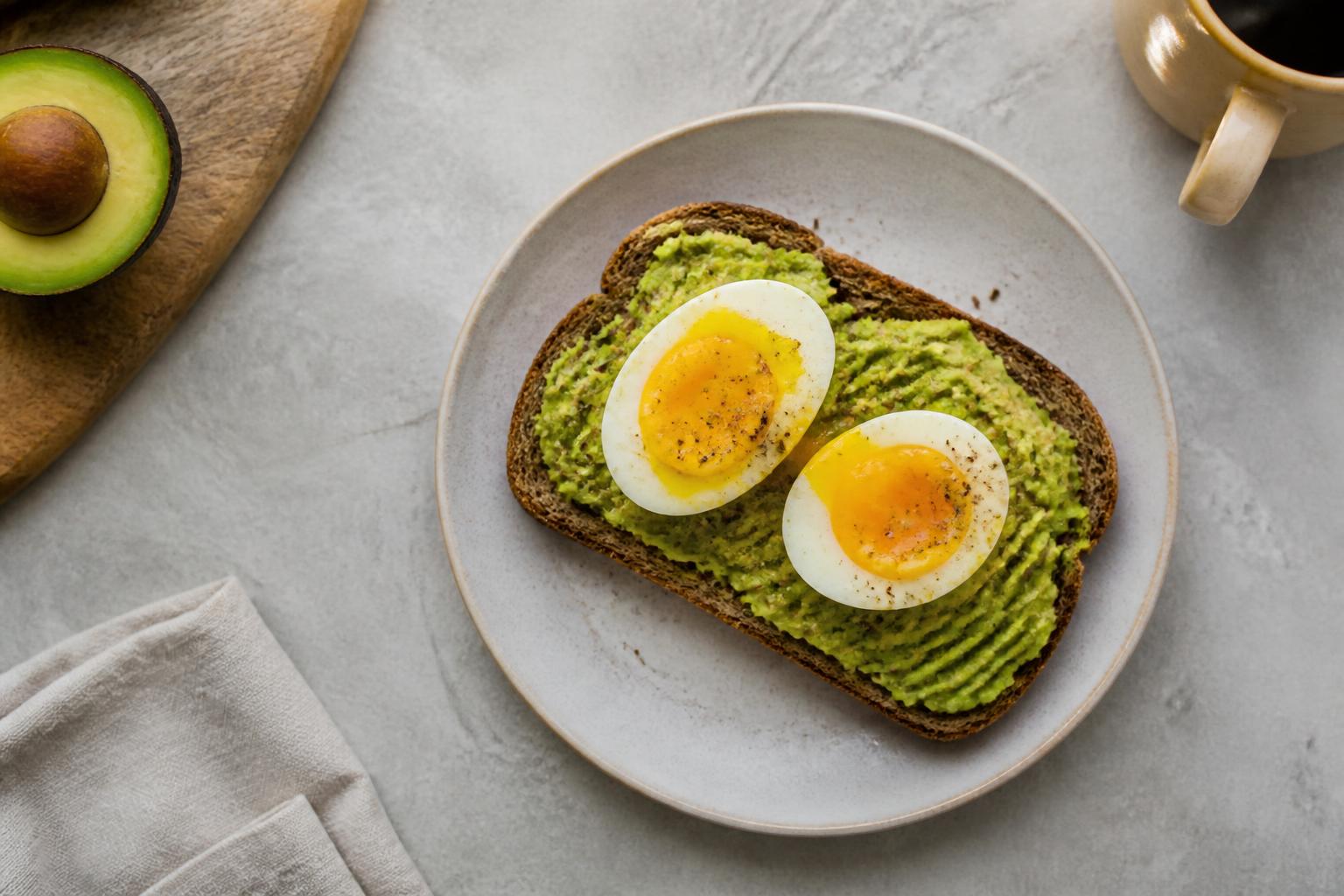
Avocados are often discussed as a healthy fat food because most of their fat is unsaturated. They are easy to use in lunches and snacks, though they are not essential if they are not something you buy regularly. A small amount can go a long way in a sandwich, salad or on toast.
Oily fish is especially relevant because it provides unsaturated fat along with omega-3 fatty acids. Common UK examples include salmon, mackerel, sardines, trout and herring. Tinned sardines and mackerel are often overlooked, but they are convenient for lunches and quick dinners.
Some spreads and dressings are also based mainly on unsaturated fats. Soft spreads made from vegetable oils often contain less saturated fat than butter, though labels vary. Vinaigrettes made with olive or rapeseed oil are another straightforward way to shift the balance.
At the same time, many foods contain a mixture of fats. Cheese contains saturated fat, but not only saturated fat. Eggs contain a mix. Chicken with skin, mince, ready meals, granola, cereal bars and baked goods can all contain mixed fat sources depending on ingredients and processing. That is why broad assumptions can be misleading. “Plant-based” does not automatically mean low in saturated fat if a product relies heavily on coconut oil. “Homemade” does not automatically mean lower in saturated fat if the recipe uses lots of butter and cream.
This is also where ordinary staples matter. Hummus, for example, usually provides unsaturated fat from tahini and oil. Plain nuts, olives, pesto, seeded bread and oil-based dressings can all contribute. If you want more ideas for building sensible meals around everyday ingredients, our guide to healthy eating ideas that work on ordinary UK days is a useful next step.
How to read labels without overcomplicating it
UK nutrition labels can help, but they are easiest to use when you keep the comparison simple. The most useful figures for this topic are total fat and saturates, usually shown per 100g or per 100ml, and often also per portion.
Per 100g or per 100ml is the best place to start when comparing similar products. If you are choosing between two salad dressings, two nut butters or two soft cheeses, per 100g lets you compare like with like. Portion figures can be helpful, but they are set by the manufacturer and may not reflect what you actually use.
On a standard UK back-of-pack nutrition table, look for:
- Fat
- of which saturates
If one product has a similar total fat content to another but much less saturated fat, that often tells you it contains a higher proportion of unsaturated fat. For example, an olive oil based spread may still be high in total fat, because spreads are mostly fat, but lower in saturated fat than butter.
This is where people sometimes get stuck. A food can be high in total fat and still be a reasonable choice in small amounts if most of that fat is unsaturated. Nuts, seeds, olive oil and peanut butter are obvious examples. Looking at saturated fat alongside total fat helps you avoid writing off a food just because the total fat number is high.
Front-of-pack traffic light labels can help with quick decisions, but they are only part of the picture. In the UK, many packaged foods use red, amber and green coding for fat, saturates, sugars and salt. A red light for fat on a bottle of olive oil is not especially informative, because oil is naturally almost all fat. The more useful clue there is the low level of saturates compared with butter or coconut oil.
Likewise, a snack bar may avoid a red light for fat because the portion is small, while still being based on ingredients that are not especially satisfying or useful nutritionally. Front-of-pack labels are a shortcut, not a full verdict.
Ingredients lists also matter. If you see “partially hydrogenated” oil in the ingredients, that points to trans fats and is a reason to think twice. In the UK, this is less common than it once was, but it is still worth recognising. Rules and market practice differ across countries. Some EU countries have specific legal limits on industrial trans fats in foods. The UK position has changed over time through retained and updated food law, and many manufacturers have reformulated, but from a shopper’s point of view the practical step is the same, check the ingredients if you are unsure.
If you want a clearer method for using pack information day to day, our guide on per 100g or per portion to compare food labels properly breaks down when each figure is most useful.
How much is sensible in everyday meals
Healthy fats fit into a balanced diet as one part of the whole meal, not the entire point of it. A useful plate might include vegetables, fruit, pulses, wholegrains or potatoes, a protein source, and some fat for cooking, dressing or texture. Fat helps with flavour and satiety, but it is easy to add more than you realise.
Portion size matters because fat is energy-dense. A drizzle of oil over roasted vegetables is different from several generous pours into the pan and over the finished dish. A spoonful of seeds on porridge is different from half a packet of trail mix eaten mindlessly at a desk. The food itself may be a good source of unsaturated fat, but quantity still changes the overall balance of the meal.
In practice, small and moderate amounts are usually enough. A thin spread of peanut butter on toast, a tablespoon of seeds on yoghurt, a small handful of nuts with fruit, half an avocado in a lunch, or a fillet of oily fish at dinner can all fit comfortably into ordinary eating patterns.
It also helps to think about what the fat is doing in the meal. Is it replacing something, or just being added on top? Roasting vegetables in a little rapeseed oil instead of serving them with a butter-heavy sauce is one thing. Adding avocado, nuts, dressing and cheese to an already rich salad can quickly turn a light lunch into a very energy-heavy one.
This is especially relevant for foods with a “health halo”. Granola, nut butter, chia puddings, seed crackers and smoothie bowls can all contain useful ingredients, but they can also become very calorie-dense if portions creep up. That is not a reason to avoid them. It is a reminder to build meals with proportion in mind.
A balanced approach also means not forcing healthy fats into every eating occasion. Some meals do not need much added fat at all. A bean soup with wholegrain toast, a baked potato with tuna and salad, or porridge topped with fruit can be perfectly balanced without trying to squeeze in extra oil, seeds or nuts for the sake of it.
Simple swaps that work in real life
The easiest way to use more healthy fats in food is through ordinary substitutions, not dramatic changes.
For breakfast, swap butter on toast for peanut butter or almond butter, and add sliced banana or berries. If you usually buy pastries on the go, porridge topped with a spoonful of ground flaxseed or chopped walnuts is a more balanced everyday option. Full-fat granola with lots of coconut may sound wholesome, but plain oats with fruit and a few seeds often gives you more control over both saturated fat and portion size.
For lunches, use avocado or hummus in sandwiches instead of thick layers of mayonnaise or butter. Choose an oil-based dressing for salad rather than a creamy one if that suits the meal. Tinned sardines or mackerel on toast can replace processed meat fillings a few times a week without much effort. If you make soups, a spoonful of seeds or a swirl of olive oil at the table can add texture without needing cream.
For dinners, cook with rapeseed or olive oil instead of butter where the dish allows. Grill or bake salmon, trout or mackerel in place of breaded or pastry-covered mains now and then. Use a tomato and olive oil based pasta sauce rather than a cream-heavy one. If you make curries, stews or traybakes, you can often reduce the amount of saturated fat simply by choosing leaner meat, using less coconut milk, or relying more on spices, herbs, onions and pulses for flavour.
For snacks, a small handful of unsalted nuts with fruit is often more filling than crisps or pastry snacks. Plain yoghurt with seeds can work well if you want something more substantial. Crackers with hummus or a little nut butter are another practical option. That said, nuts and seeds are easy to overeat straight from the pack, so it helps to portion them rather than grazing absent-mindedly.
A few swaps are worth treating with caution. Coconut products are often marketed as natural or wholesome, but coconut oil and many coconut-based snacks are high in saturated fat. Some protein bars and “healthy” snacks rely heavily on palm kernel oil or coconut fat. Some flavoured nut butters contain added sugar and oils that change the overall profile. This is where labels are more useful than branding.
None of these swaps need to be perfect or permanent. The point is to make ordinary choices that improve the overall pattern of eating. If breakfast is usually toast, change the topping sometimes. If lunch often comes from a supermarket meal deal, compare the labels and look for options with less saturated fat and more useful ingredients. If dinner defaults to cheese-heavy convenience food, keep tinned fish, pulses, olive oil and seeds around so you have alternatives that are just as easy to assemble.
For more practical meal ideas, our collection of healthy meals you can cook without overthinking it shows how these ingredients can fit into normal UK routines.
Healthy fats are not a separate category of “special” eating. They are part of regular food shopping, regular cooking and regular label reading. Once you know the main sources, understand what saturated fat looks like on a label, and keep portions realistic, the everyday choices become much easier.

Questions about this article or a correction to suggest? Get in touch. Read more about our editorial approach.