A healthy low-carb breakfast usually means one that keeps bread, cereal, pastries, juice and other concentrated sources of carbohydrate modest, while still giving you enough protein, fibre and energy to feel settled through the morning. In practice, that often looks like eggs, plain yoghurt, smoked fish, nuts, seeds, vegetables, tofu or leftovers, rather than toast with jam or a large bowl of granola.
That does not mean breakfast has to be joyless, tiny or built around rules that are impossible to follow on a workday. For most UK adults, the useful question is not whether breakfast is “low carb” in a strict diet-book sense, but whether it is lower in rapidly digested carbs than their usual option, and balanced enough to stop the mid-morning crash.
What counts as a healthy low-carb breakfast?
There is no single official UK definition of a low-carb breakfast. That is why the term can be confusing. Some people use it to mean very low carbohydrate intake, where grains, most fruit and milk are tightly limited. Others simply mean a breakfast that contains fewer carbs than standard options such as toast, porridge with honey, croissants or sweetened cereal.
For everyday eating, a practical approach is more helpful than chasing a fixed number. A breakfast can reasonably be described as lower in carbs if it is built mainly around protein-rich foods, unsweetened dairy or fortified alternatives, vegetables, seeds, nuts and healthy fats, with smaller amounts of bread, oats, fruit or other starchy foods than you might usually have.
The word healthy matters just as much as low-carb. A breakfast does not become healthy simply because it avoids toast. A plate of processed meat with very little fibre may be low in carbohydrate, but it is not automatically the best everyday choice. We look for balance, which usually means enough protein to satisfy, some fibre for fullness and digestion, and portions that fit the rest of the day.
For UK readers, realistic expectations help. Many common breakfast foods naturally contain some carbohydrate. Milk, yoghurt, beans, fruit and oats all do. That does not make them poor choices. If you want a healthier low carb breakfast, the aim is usually to reduce the foods that push carbs up quickly and do little for fullness, such as sugary cereal, fruit juice, pastries and oversized bakery portions.
It is also worth remembering that UK food labels present carbohydrate as a total figure, with sugars listed underneath. That differs from some US advice, where you may see “net carbs” discussed. On UK labels, we work with the carbohydrate line as printed. If you are comparing products, especially yoghurts, breakfast pots and granolas, that is the most straightforward way to judge them.
How to build a breakfast that is lower in carbs and still balanced
The breakfasts that keep people full for longer tend to combine four things, protein, fibre, fat and a sensible portion size. Remove one of those and breakfast often becomes less satisfying, even if it is technically low in carbs.
Protein is usually the backbone. Eggs, Greek-style yoghurt, cottage cheese, skyr, smoked salmon, sardines, tofu and leftover chicken all help because they digest more slowly than jam on toast or cereal with sugar. Protein also makes it easier to build a breakfast around real food rather than snack products marketed as healthy.
Fibre does a different job. It adds bulk and helps slow the meal down in the digestive sense. Vegetables, chia seeds, flaxseed, berries, nuts and seeds can all contribute. If breakfast is mostly eggs and cheese with nothing plant-based beside it, it may be low in carbs but not especially balanced. Adding spinach, mushrooms, tomatoes or a spoonful of seeds often improves that quickly.
Fat helps with satisfaction too, but it works best as part of the meal rather than the whole strategy. Avocado, nuts, seeds, olive oil, full-fat plain yoghurt and oily fish can all make breakfast feel more substantial. The trap is assuming that “low carb” means unlimited fat regardless of appetite or total intake. A breakfast that relies heavily on butter, cream and cheese can become very energy-dense without being especially filling for the volume.
Portion size still matters. It is possible to build a breakfast that is lower in carbs and then accidentally turn it into a huge meal by adding large amounts of nuts, cheese, nut butter and cream. Those foods can be useful, but they are concentrated. If you are aiming for fullness rather than heaviness, it often works better to centre the plate on protein and high-volume foods such as vegetables or plain yoghurt, then add fats in moderate amounts.
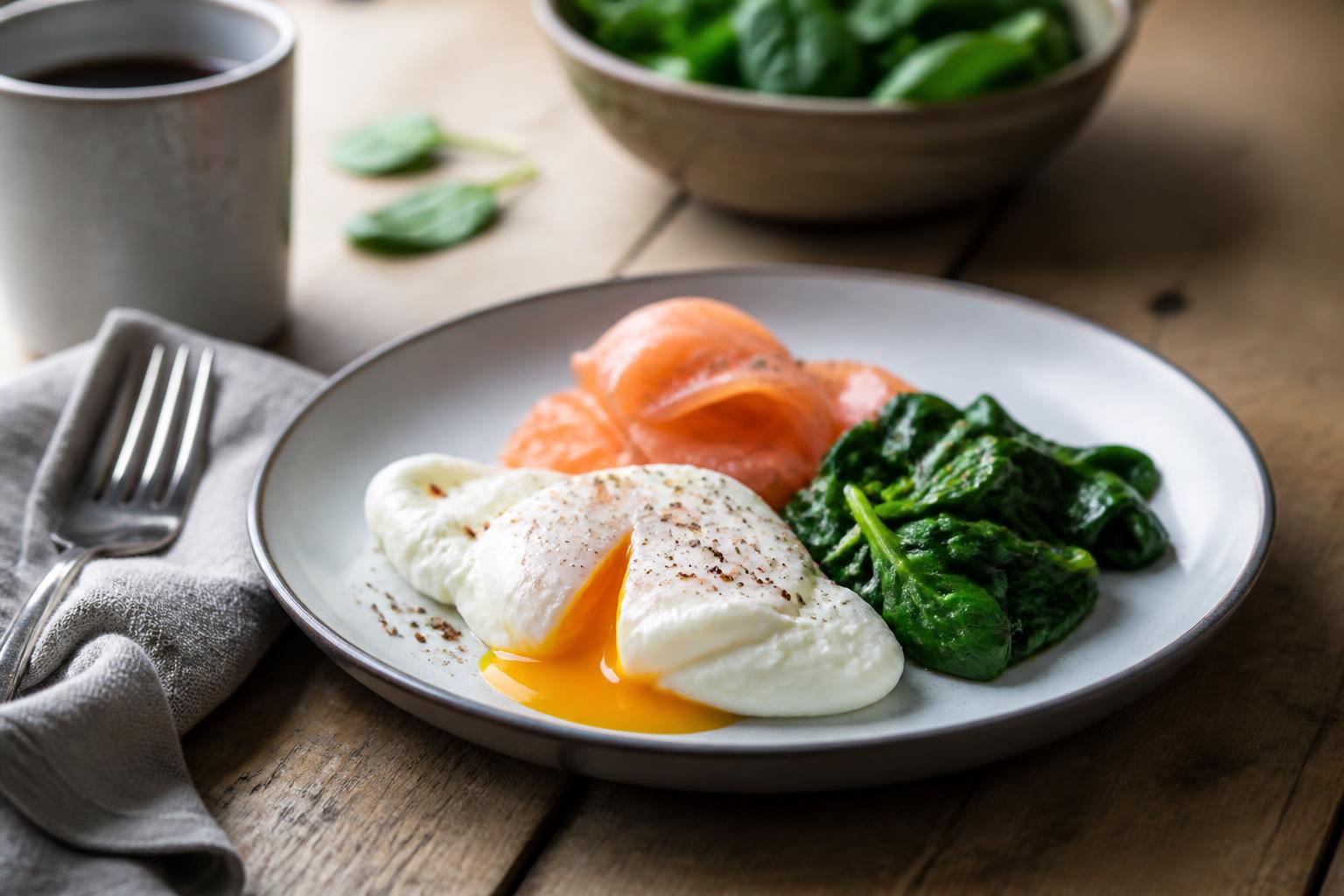
A practical formula is this: choose one main protein, add one or two fibre-containing foods, then include a small amount of fat if it is not already built in. For example, plain Greek yoghurt with chia seeds and a few berries. Or eggs with mushrooms and spinach cooked in a little olive oil. Or cottage cheese with cucumber, smoked salmon and pumpkin seeds.
If mornings are rushed, planning matters more than culinary ambition. Boiled eggs, plain yoghurt, pre-washed salad leaves, smoked mackerel, cherry tomatoes and leftover roast vegetables can all become breakfast in minutes. We have covered similar time-saving combinations in our guide to healthy protein breakfasts that keep mornings practical.
Everyday healthy low-carb breakfast ideas using UK staples
The best low-carb breakfasts are usually the ones built from food already common in UK shops, not specialist products that taste disappointing and cost more than they should.
Eggs are the easiest place to start. Scrambled eggs with spinach and mushrooms are simple, filling and widely available. An omelette with tomatoes, peppers and a little cheese works well too. If you like a cooked breakfast feel, grilled mushrooms, tomatoes and eggs can give that without relying on hash browns, toast or baked goods.
Plain yoghurt is another reliable base. Greek-style yoghurt, skyr or unsweetened natural yoghurt can be topped with chia seeds, ground flaxseed and a small handful of berries. That gives protein, some fibre and a bit of sweetness without drifting into dessert territory. If you usually buy flavoured yoghurt, compare labels side by side and the difference is often obvious.
Cottage cheese is underused at breakfast. It pairs well with cucumber, radishes, tomatoes, black pepper and seeds for a savoury bowl. It also works with smoked salmon or leftover roast chicken. If you prefer sweet breakfasts, cottage cheese can be mixed with cinnamon and topped with a few chopped nuts and berries, though the savoury route is often lower in carbs overall.
Smoked fish is particularly useful. Smoked salmon with scrambled eggs and watercress is classic for a reason. Smoked mackerel with cucumber and a spoonful of plain yoghurt makes a quick plate with plenty of flavour. Tinned sardines or salmon can work too, especially if you are eating breakfast at home and want something substantial without much preparation.
Vegetables deserve more space at breakfast than they usually get. Tomatoes, spinach, mushrooms, peppers, spring onions and leftover roasted courgettes all fit naturally into egg dishes, yoghurt bowls on the side, or savoury breakfast plates. They add volume and fibre without pushing carbohydrate up quickly.
Leftovers can make excellent breakfasts. A portion of last night’s roast chicken with avocado and tomatoes is perfectly acceptable. So is leftover frittata, grilled salmon or roasted vegetables with a poached egg. Many people only think in terms of “breakfast foods”, but using leftovers is often one of the simplest ways to avoid a high-sugar convenience choice.
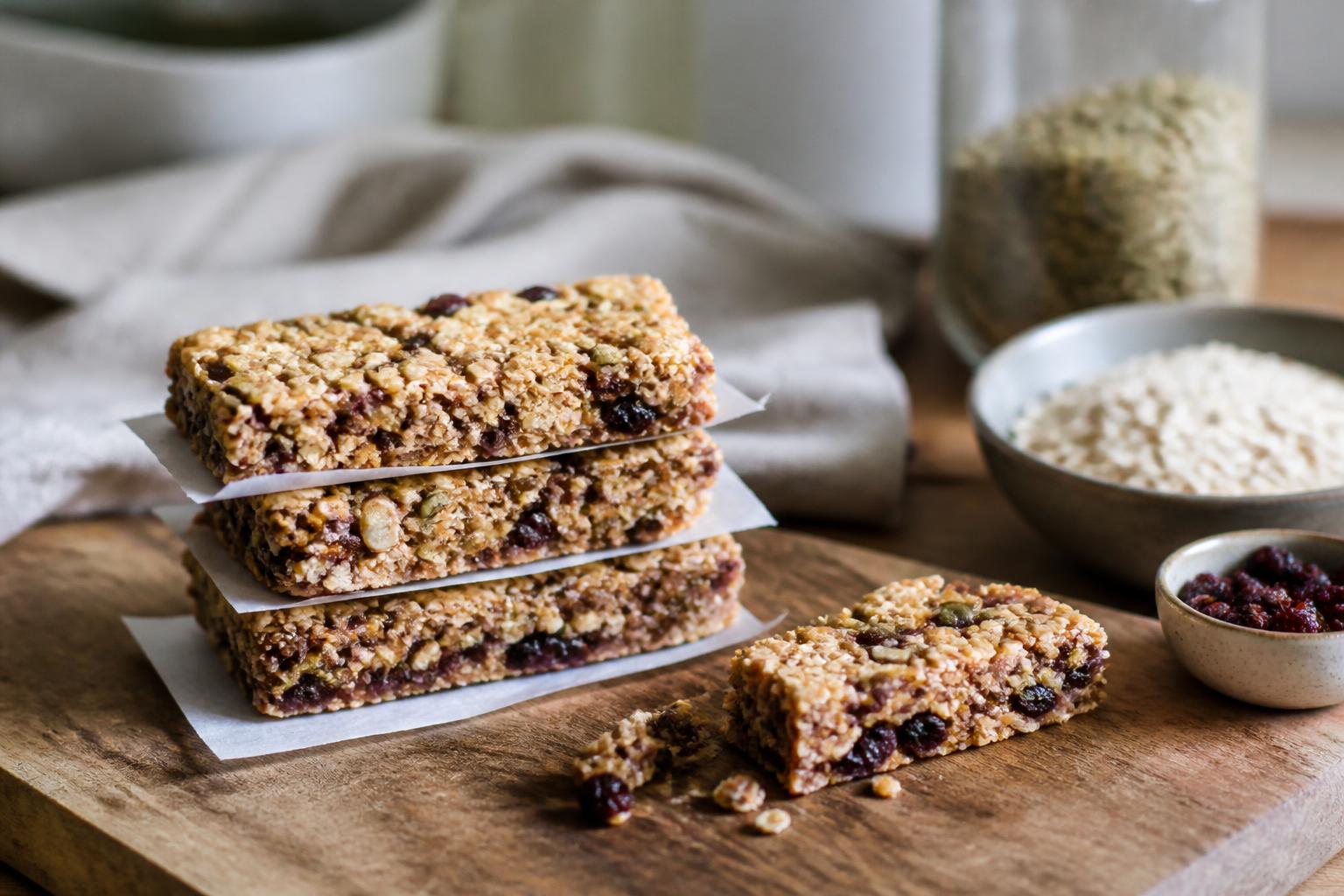
For something portable, a small pot of plain yoghurt with seeds and a few raspberries is often easier to manage than a commercial breakfast bar. If you do like make-ahead options, our guide on how to make a healthier breakfast bar at home is useful, although bars and flapjacks are usually better thought of as moderate-carb options rather than truly low-carb ones.
If you want a lower-carb breakfast but still enjoy some carbohydrate, keep the portion deliberate. Half a slice of dense rye toast with eggs, or a small serving of berries with yoghurt, can sit comfortably in a balanced breakfast. Lower-carb eating does not have to become all-or-nothing.
Which breakfast foods can raise carbs faster than people expect?
Some breakfast foods look healthy on the packet or in a café display, but contribute more carbohydrate than people realise.
Granola is one of the most common examples. Even when it contains nuts and seeds, it often also contains oats, dried fruit, syrups or honey. The serving size on the pack may be much smaller than what people actually pour into a bowl. A generous serving of granola with milk and banana can add up quickly.
Flavoured yoghurt is another. Many fruit yoghurts, “protein” yoghurts and breakfast yoghurt pots contain added sugars, fruit purée or crunchy toppings that push carbohydrate well beyond what you would get from plain yoghurt alone. Looking at the carbohydrate and sugars per 100g on the label is often revealing. If label-reading feels hit and miss, our piece on using food labels to add more fibre at breakfast and lunch helps with the basics.
Fruit juice can raise carbs quickly because it removes much of the fibre you would get from whole fruit, while making it easy to drink a larger amount. A glass of orange juice may feel light and virtuous, but it is not especially filling and can deliver a lot of sugar in a short time.
Pastries, breakfast muffins and café banana bread are obvious once you think about them, but they are still often treated as normal weekday breakfasts. They are usually built from refined flour and sugar, and they are easy to eat quickly without much fullness afterwards.
Breakfast bars can also be misleading. Many are essentially compact cereal products with syrups, dates or other sweeteners holding them together. Some are useful for convenience, but they are rarely low in carbs. The same goes for many flapjacks, even those marketed as wholesome.
Large portions of fruit can surprise people too. Whole fruit is not equivalent to sweets, and we would not discourage fruit in general. But if you are trying to keep breakfast lower in carbohydrates, a smoothie made with banana, mango and juice, or a large bowl of grapes and tropical fruit, will contribute more than a few berries or half an apple with yoghurt.
Even foods with a healthy reputation can tip the balance through portion creep. Porridge with nut butter, banana, honey and raisins may be nutritious in some contexts, but it is not a low-carb breakfast. The same applies to toast that starts as one slice and quietly becomes three.
Who should be careful with low-carb breakfasts?
A lower-carb breakfast can be a practical option for many adults, but it is not automatically right for everyone, and in some situations it needs more care.
Anyone taking medication for diabetes should be cautious about making a significant change to carbohydrate intake without proper advice. Insulin and some other glucose-lowering medicines may need review if meal patterns change. In the UK, that conversation should usually be with your GP, diabetes nurse or specialist team, rather than based on general online advice.
Pregnancy is another time to avoid rigid self-imposed restrictions unless they have been discussed with a midwife, GP or dietitian. Nausea, appetite changes and increased nutritional needs can make highly controlled breakfast rules unrealistic or unhelpful. The priority is usually regular, nourishing intake, not aggressive carb cutting.
People with a history of eating disorders or disordered eating may also find that strict low-carb rules become mentally costly, even if they begin as a plan to “eat healthier”. If breakfast choices are becoming anxious, punitive or overly narrow, that matters more than whether the meal meets a low-carb label.
Very active people may need more carbohydrate than a desk-based adult, especially if they train in the morning, do physical work or have long periods between meals. A lower-carb breakfast that feels satisfying on a quiet office day may feel inadequate before a run, a gym session or a manual shift. Context matters.
Some medical conditions also affect what works well at breakfast. Digestive conditions, reduced appetite, food intolerances and recovery from illness can all change the picture. For some people, a plain bowl of porridge may be more manageable than eggs and vegetables. For others, dairy may be a poor fit. A healthy low carb breakfast is only healthy if it suits the person eating it.
For most readers, the sensible middle ground is simple. Build breakfast around protein, include fibre, be realistic about portions, and treat sugary or starchy breakfast foods as optional rather than automatic. That usually leads to a breakfast that keeps you fuller for longer, without turning the morning into a nutrition exam.

Questions about this article or a correction to suggest? Get in touch. Read more about our editorial approach.