Cooked lentils are usually safe in the fridge for 3 to 4 days, provided they were cooled promptly, stored in a clean covered container, and kept properly chilled. If they sat out for too long after cooking, went into the fridge while still warm enough to raise the fridge temperature, or have been handled repeatedly, that safe window shrinks.
That is the practical answer most people need when asking how long cooked lentils last in the fridge. The detail that matters is not just the number of days, but what happened between the pan and the plate. Lentils are inexpensive and versatile, but they are still a cooked, moist food, and moist cooked foods do not stay safe indefinitely.
The safe fridge window for cooked lentils
In a typical UK home kitchen, we would treat cooked lentils as a 3 to 4 day fridge food. Day 1 is the day they were cooked. By day 4, they should be eaten, frozen, or thrown away.
That timing reflects standard food safety practice for refrigerated leftovers. Once lentils have been cooked, they are no longer a dry cupboard ingredient with a long shelf life. They become a ready to eat or ready to reheat food with enough moisture to support bacterial growth if conditions allow.
The key condition is refrigeration at a genuinely cold temperature. In UK homes, the fridge should be kept at 5C or below. If your fridge runs warmer than that, leftovers become less predictable. The same applies if lentils are stored in the warmest part of the fridge, such as near the door, where temperatures fluctuate every time it is opened.
A few practical examples make the 3 to 4 day rule clearer:
- Lentils cooked on Sunday evening, cooled quickly and refrigerated, are usually fine through to Wednesday or Thursday.
- Lentils left on the hob for several hours before chilling are more of a risk, even if they still look normal the next day.
- Lentils cooked into a dish with vegetables, stock, coconut milk or meat should be judged by the most perishable ingredient and by the same 3 to 4 day limit, sometimes less if handling has been poor.
So when people ask how long cooked lentils last in the fridge, the honest answer is not simply “four days”. It is “3 to 4 days if stored properly, less if they have been left out, warmed repeatedly, or kept in poor fridge conditions”.
Why lentils do not stay safe indefinitely
The fridge slows bacterial growth, but it does not stop it completely. That is the main reason cooked lentils have a limited safe life.
Lentils are especially prone to this issue because once cooked they hold water well. Moisture matters. Bacteria need water to grow, and a pot of cooked lentils, particularly one stored with cooking liquid, creates a suitable environment if temperatures creep up.
Temperature is the next factor. Food safety guidance in the UK focuses heavily on keeping food out of the temperature range in which bacteria multiply most quickly. At room temperature, cooked foods become riskier with time. In the fridge, growth is slower, but not zero. A crowded fridge, frequent door opening, or a faulty thermostat can all make a difference.
Handling matters just as much. Every time we scoop lentils out with a spoon that has already touched another food, eat from the storage container, or leave the tub open on the worktop while making lunch, we increase the chance of contamination. Reheating the same batch again and again also adds risk, because the food spends more time warming and cooling.
There is also a common misunderstanding that visible spoilage is the only concern. It is not. Some unsafe food does not show obvious mould or dramatic changes in smell. Lentils can become unsafe before they become visibly unpleasant. That is why timing and storage practice matter just as much as appearance.
The type of lentil makes less difference than people often assume. Green, brown, black and red lentils all need the same basic caution once cooked. Red lentils may break down into a softer texture and seem to “go off” in quality sooner, but all cooked lentils should be treated as perishable leftovers.
If you regularly cook pulses in batches, it also helps to understand how lentils compare with similar ingredients. Our guide to which beans are highest in protein looks at the nutritional side, but from a storage point of view, cooked beans and lentils need much the same care once they are in the fridge.
How to cool and store cooked lentils properly
Safe storage starts as soon as cooking finishes. The goal is to get lentils cooled and chilled without leaving them sitting at room temperature for too long.
In a normal UK kitchen, this is the simplest routine:
First, take the lentils off the heat as soon as they are cooked. If they are in a large deep pan, do not leave the whole batch there for ages to “cool naturally”. Large volumes stay warm in the centre for too long.
Second, divide them into smaller portions. Shallow containers help heat escape faster than one large deep tub. If the lentils are very wet, leave enough room for steam to settle without spilling.
Third, allow steam to reduce briefly, but do not wait around for hours. Once the lentils have stopped actively steaming and are no longer piping hot, cover them and refrigerate. In most homes, that means getting them into the fridge within about 2 hours of cooking, sooner if the kitchen is warm.
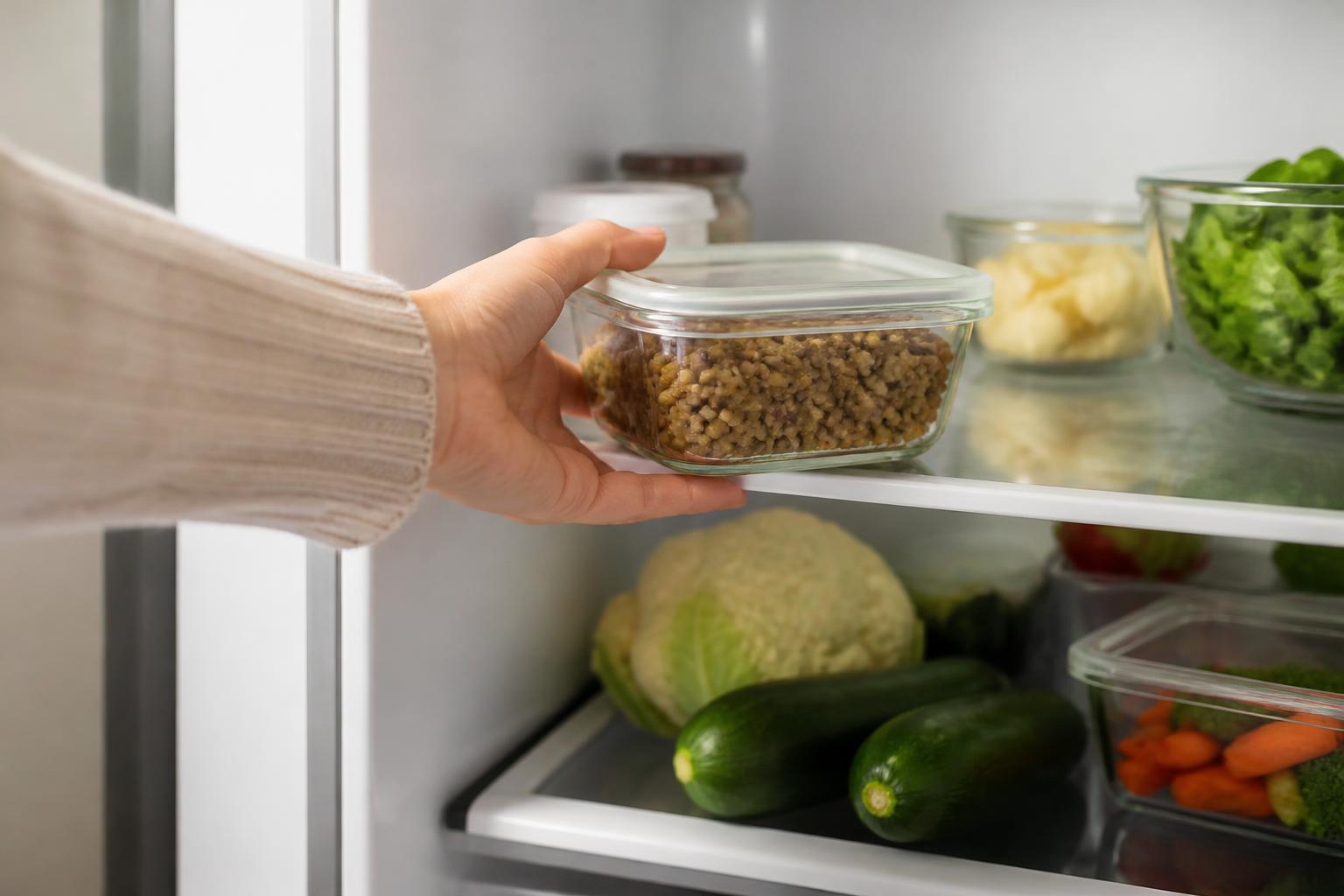
Fourth, use clean containers with tight fitting lids. Glass or food grade plastic both work. What matters is that the container is clean, can be sealed, and is not overfilled. If you do not have a lid, use a proper food cover rather than leaving the bowl open.
Fifth, label if needed. If you batch cook often, a small note with the date prevents the familiar “I think these were made on Tuesday” problem. Timing errors are one of the main reasons leftovers get pushed beyond a sensible limit.
A few extra points are worth keeping in mind:
- Store lentils on a shelf inside the fridge, not in the door.
- Keep raw meat and its juices well away from ready to eat leftovers.
- Use a clean spoon each time you serve some out.
- If you know you will not eat the full batch within 3 to 4 days, freeze some on the day of cooking rather than waiting until they are already near the limit.
People sometimes worry that putting warm food in the fridge is always wrong. In modern domestic fridges, the real issue is not that slightly warm food goes in, but that very hot food in a large mass can warm the surrounding contents and cool too slowly. Smaller portions solve most of that problem.
If your lentils are part of meal prep for the week, think in portions from the start. A tub for Monday, a tub for Tuesday, and a freezer portion for later is usually safer than one big container opened repeatedly.
For readers trying to make low cost batch cooking work in real life, our piece on eating well for less in the UK covers some practical habits that help reduce waste without stretching leftovers too far.
How to tell when cooked lentils should be thrown away
There are three main tests, timing, smell, and appearance. Timing comes first, because it is the most reliable.
If cooked lentils have been in the fridge for more than 4 days, we would throw them away. That is true even if they look acceptable. Once the safe window has passed, it is not worth relying on a quick sniff test.
Before that point, use your senses as a back up check. Throw lentils away if you notice any of the following:
- A sour, fermented or otherwise “off” smell
- Visible mould, even a small patch
- Sliminess or an unusually sticky surface
- Bubbling or signs of unexpected fermentation
- Discolouration that was not there when stored
- A container that spurts gas or seems pressurised when opened
Texture changes on their own are not always a safety issue. Lentils often thicken in the fridge as starches settle, and they may dry slightly around the edges. That can be normal. But a glossy slime, froth, or a clearly spoiled smell is different.
Use caution with mixed dishes. Lentils in soup, curry, dhal, bolognese style sauces or grain salads may spoil in a less obvious way because other ingredients mask the smell. If the dish has been in the fridge too long, the safest decision is still to bin it.
It is also sensible to throw lentils away if you are unsure how long they have been there. Uncertainty is a warning sign in itself. Most food waste can be reduced by better portioning and labelling earlier, not by taking chances later.
Do not try to “save” suspect lentils by boiling them hard or frying them thoroughly. Reheating can kill many bacteria, but it does not reliably undo every food safety problem, and it cannot make spoiled food fresh again.
Can you freeze and reheat cooked lentils?
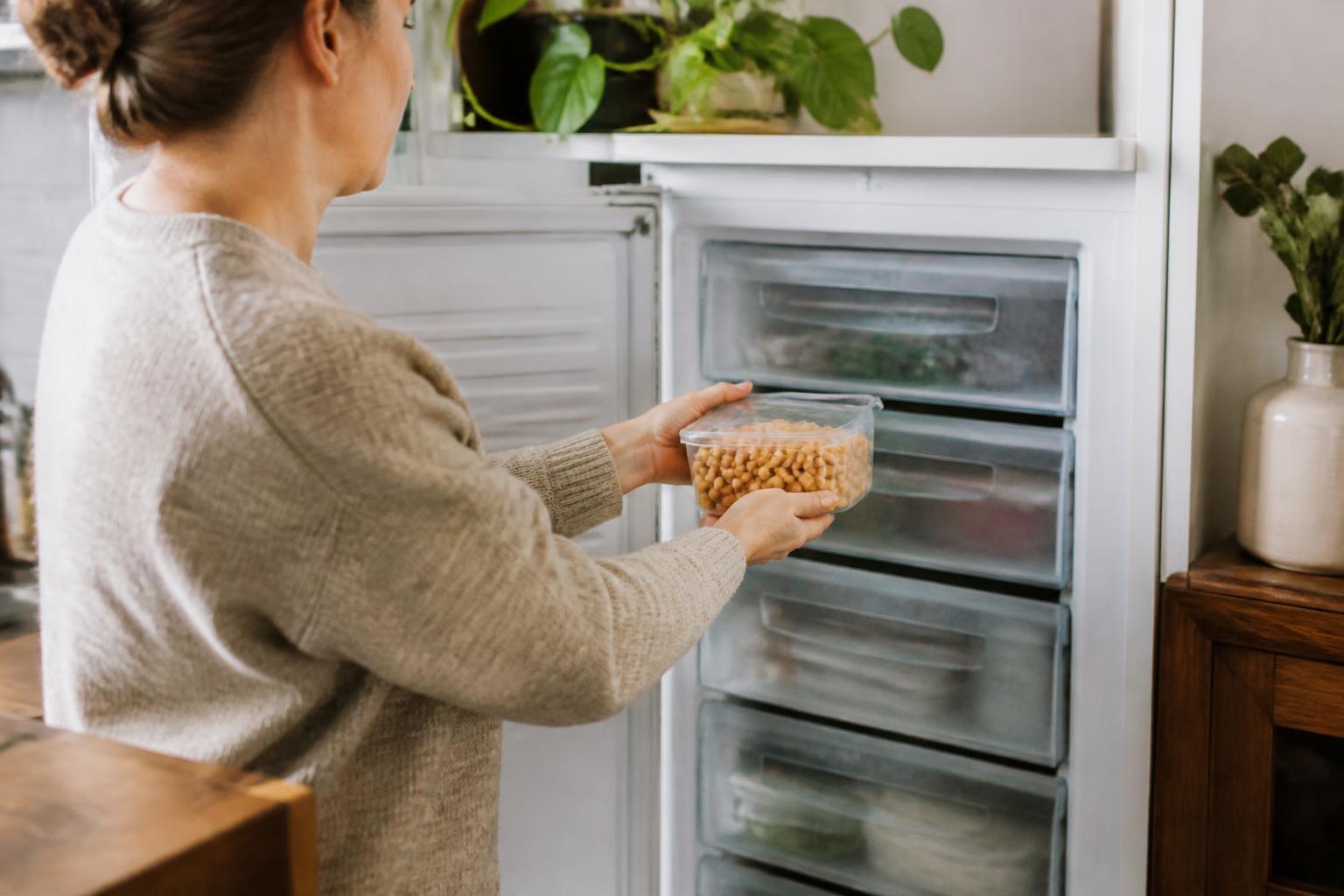
Yes, cooked lentils freeze well, and freezing is the best option if you have made more than you can use within the fridge window.
Freeze lentils once they have cooled fully. Portion them into freezer safe tubs or bags, seal well, and label with the date. Flat freezer bags are useful because they save space and thaw quickly. If the lentils are very dry, adding a spoonful of cooking liquid can help preserve texture. If they are already quite wet, leave a little headroom for expansion.
For best quality, we would use frozen cooked lentils within about 3 months. They may remain safe for longer if continuously frozen, but texture and flavour are usually better within that period.
You can freeze plain lentils or lentils already mixed into dishes such as soups and stews. The main question is whether the whole dish freezes well. Creamy sauces and some vegetables can change texture after thawing, even if they remain safe to eat.
To thaw safely, use one of these methods:
- Defrost overnight in the fridge
- Reheat from frozen on the hob or in the microwave
- Use a microwave defrost setting if you are reheating straight away
Avoid thawing lentils on the counter at room temperature. That leaves the outer layer warming up while the centre is still frozen, which is not ideal from a food safety point of view.
When reheating, make sure the lentils are hot all the way through. Stir well, especially in the microwave, where hot and cold spots are common. If they are in a sauce or soup, bring the dish up to a full steaming heat and check the centre is hot, not just the edges.
Only reheat the portion you plan to eat. Repeated cooling and reheating shortens the food’s safe life and affects quality. Once reheated, leftovers should be eaten promptly rather than left sitting out.
If freezing cooked pulses is part of your routine, our guide to freezing cooked chickpeas safely at home covers many of the same practical points, because the storage principles are very similar.
The short version is straightforward. Cooked lentils usually keep safely in the fridge for 3 to 4 days, if they were cooled quickly, covered properly and kept at 5C or below. After that, they are not worth the risk. If you will not use them in time, freeze them early, reheat only what you need, and let the date on the container make the decision before guesswork does.

Questions about this article or a correction to suggest? Get in touch. Read more about our editorial approach.